Instant
01 · Ask
Ask the AI a follow-up
Got more questions about garden planting? Describe the bit you're unsure about — the AI explains options, sequencing and what to ask the gardener.

Beds, borders or container planting — designed to season and aspect, planted to last.
You've read the brief on garden planting. Now lean on us to find the right gardener — and stay in control of the job.
Got more questions about garden planting? Describe the bit you're unsure about — the AI explains options, sequencing and what to ask the gardener.
Costs, timelines, pitfalls and the right questions to ask before any gardener starts on garden planting.
Itemised quotes from up to 3 local gardeners on garden planting — so you can compare like-for-like, not lump sums.
Ready when you are
Enter your postcode and get free quotes from local pros.
Four moves that separate a smooth job from a nightmare.
Planting in "sumps" where water sits can rot roots; professionals will install land drains or grit if needed.
Putting shade-loving ferns in a south-facing, full-sun border will lead to scorched leaves and plant death.
The first 12 months are critical; many DIY projects fail because a consistent watering schedule wasn't established.
Buying "pot-bound" plants from cheap outlets can lead to plants that never establish properly in the ground.
Indicative UK ranges and what affects price.
By job type
Quote spread is typically ± 18% — always get 3 quotes.
Gardener quick-view
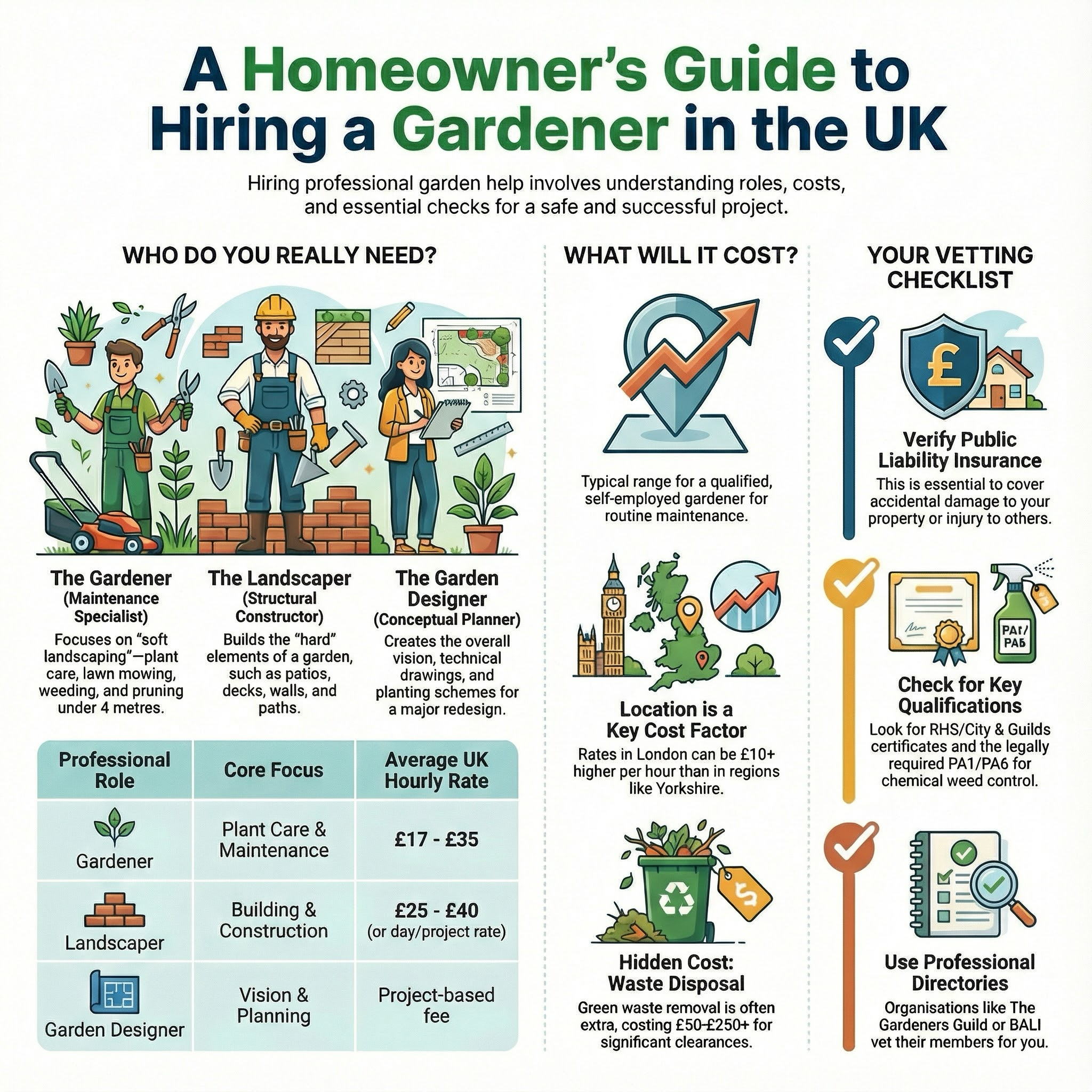
Gardener explained
Choosing the right plants for the British climate requires more than just a trip to the local garden centre. A professional gardener ensures your "right plant, right place" strategy works by matching species to your specific soil pH, sunlight levels, and exposure to the elements.
| Item | Low £ | High £ | Notes |
|---|---|---|---|
| Day Rate (Per Gardener) | £200 | £450 | Higher rates in London and the SE. |
| Hourly Rate | £30 | £60 | Minimum call-out fees often apply. |
| Small Border (Materials) | £150 | £400 | Includes basic shrubs, perennials, and compost. |
| Specimen Tree (Supplied & Planted) | £250 | £1,500+ | Depends heavily on age and rarity. |
| Waste Disposal | £40 | £120 | Cost of green waste bags or skip hire. |
| Average Total Project | £450 | £1,200 | Typical medium-sized garden refresh. |
The total cost is primarily driven by the maturity of the plants you choose; "instant impact" gardens using semi-mature specimens cost significantly more than those using younger, smaller pots. Additionally, heavy clay soils or sites with poor access will increase labour time and costs.
While basic bedding plants are easy for a DIYer, larger schemes often benefit from professional expertise. A gardener understands the eventual spread of plants, preventing the common mistake of overcrowding which leads to stunted growth and disease.
For large-scale projects involving mature trees or complex irrigation, a professional is essential to ensure the survival of your investment. Note that while there are no specific "building regs" for planting, any work near underground services or protected trees may require professional navigation of local bylaws.
Ask: "Can you provide a planting plan that considers how this garden will look in three to five years, not just next week?"
Autumn (October to November) is arguably the best time as the soil is still warm but moist, allowing roots to establish before winter. Spring is the second-best window, though you will need to be much more diligent with watering as the weather warms up.
Most gardeners prefer to source the plants themselves from trade nurseries. This usually ensures higher quality than retail garden centres and often comes with a limited "failure to thrive" guarantee that you won't get if you supply the plants yourself.
This depends on the design. A "low maintenance" garden usually features slow-growing shrubs and perennials. However, all new planting requires regular watering for the first full growing season (March to September) until the root systems are fully established.
Yes, but this is usually billed as "clearance" or "preparation" time. Be sure to agree in advance whether they will take the green waste away or if you want them to fill your own brown bins/compost heap to save on disposal costs.
Mulching involves spreading a 5-7cm layer of organic material over the soil surface. It is highly recommended as it suppresses weeds, retains moisture, and protects roots from frost, significantly increasing the survival rate of new plants.
This guide was written with AI assistance and is intended for general information only. Prices are estimates based on UK averages and may vary by region. Always get at least three quotes and consult a qualified professional before starting any work.
Ask follow-ups in plain English. The AI explains options, sequencing and what to ask the gardener — so you walk in informed.
Professional horticulture advice is the secret to a garden that thrives rather than just survives. While general gardening focuses on maintenance like mowing an...
READ GUIDE →GuideHedge removal is a common project for UK homeowners looking to reclaim garden space, replace an old boundary with a fence, or remove diseased species like Box b...
READ GUIDE →GuideA well-maintained garden is more than just a visual asset; it is a vital extension of your living space. For UK homeowners, a professional garden overhaul can t...
READ GUIDE →GuideMaintaining a tidy boundary and a manageable garden is essential for UK homeowners, especially given how quickly native species like privet, hawthorn, and leyla...
READ GUIDE →GuideBuxus sempervirens, or common Box, has been a staple of the British garden for centuries, providing structure through formal hedging and topiary. However, the r...
READ GUIDE →GuideMaintaining a lush, green lawn in the UK’s temperamental climate requires more than just regular mowing. Professional lawn fertilisation provides the essential ...
READ GUIDE →