Instant
01 · Ask
Ask the AI a follow-up
Got more questions about custom Kitchen Shelving Installation? Describe the bit you're unsure about — the AI explains options, sequencing and what to ask the handyman.

Bespoke kitchen shelving — wall-fixed, floating or alcove, in oak, painted MDF or steel.
You've read the brief on custom Kitchen Shelving Installation. Now lean on us to find the right handyman — and stay in control of the job.
Got more questions about custom Kitchen Shelving Installation? Describe the bit you're unsure about — the AI explains options, sequencing and what to ask the handyman.
Costs, timelines, pitfalls and the right questions to ask before any handyman starts on custom Kitchen Shelving Installation.
Itemised quotes from up to 3 local handymans on custom Kitchen Shelving Installation — so you can compare like-for-like, not lump sums.
Ready when you are
Enter your postcode and get free quotes from local pros.
Four moves that separate a smooth job from a nightmare.
In many modern UK homes, there is a gap between the plasterboard and the brick wall. Using standard plugs here causes the board to crush; specialised "Corefix" or similar spacers are required.
Using a hammer-action drill on tiles is a common error. Professionals use non-impact diamond bits.
Often caused by using the wrong fixings for plasterboard or exceeding the bracket's weight limit.
Kitchen walls are densely packed with pipes and wires. Accidental strikes are the most common cause of emergency call-outs during DIY shelving attempts.
Indicative UK ranges and what affects price.
By job type
Quote spread is typically ± 18% — always get 3 quotes.
Handyman quick-view
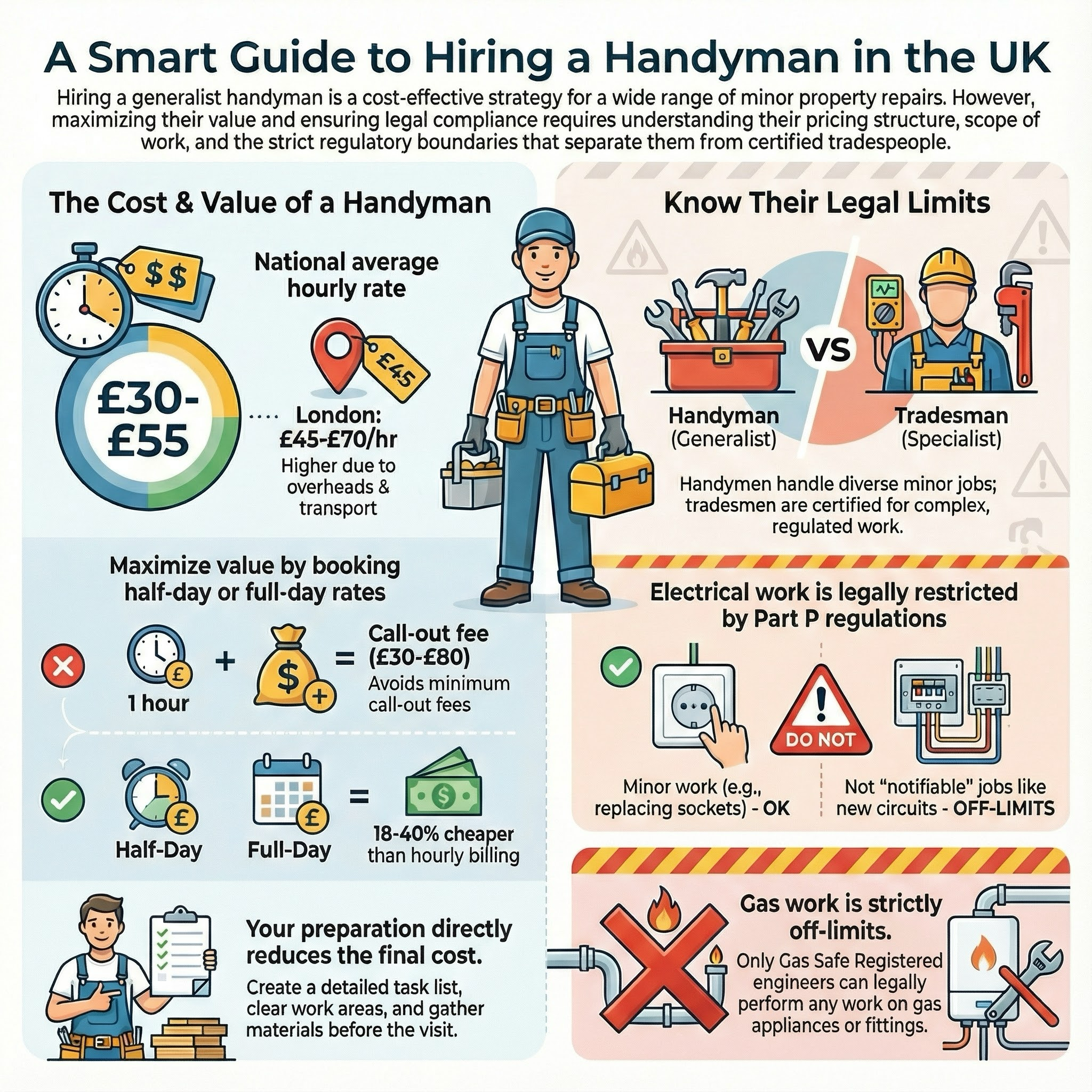
Handyman explained
In British kitchens, the challenge often lies in the wall construction. Navigating Victorian brickwork, modern plasterboard, or expensive tiled splashbacks requires the right tools and fixings to avoid costly damage or shelving that sags under pressure.
Prices for kitchen shelving installation vary based on your location in the UK and the complexity of the wall surface. Tiled walls or "floating" designs typically take longer and cost more in labour.
| Item | Low £ | High £ | Notes |
|---|---|---|---|
| Handyman Hourly Rate | £40 | £70 | Higher rates in London and SE. |
| Minimum Call-out Fee | £60 | £100 | Covers travel and first hour of work. |
| Standard Fixings Kit | £15 | £40 | Heavy-duty anchors or decorative brackets. |
| Installation (3 Shelves) | £150 | £280 | Labour only; excludes shelf purchase. |
| Full Feature Wall | £350 | £600 | Multiple levels with custom cutting. |
Factors that increase the price include drilling through porcelain or marble tiles, the need for bespoke timber cutting on-site, or walls that require significant reinforcement to hold heavy weight.
While putting up a basic shelf is a common DIY task, kitchen shelving often carries significant weight from plates and small appliances. If you are dealing with modern plasterboard (stud walls) or expensive tiles, a professional handyman is recommended.
Professional installation is vital for "floating" shelves, which lack visible brackets and rely entirely on perfectly level internal supports to prevent sagging.
Handymen also carry the necessary insurance and high-end detection tools to ensure you don't drill into a water pipe or a 230V kitchen ring main circuit, which could be a life-threatening and expensive mistake.
Yes, but it requires specialist diamond-tipped drill bits and a steady hand. The handyman will drill through the tile first without using "hammer" mode to prevent cracking, then switch to a masonry bit for the wall behind.
On a solid brick wall, a well-fixed shelf can often hold 30-50kg. On plasterboard, this drops significantly (10-20kg) unless the brackets are fixed directly into the timber studs behind the board.
Most homeowners supply the shelves and decorative brackets. The handyman will usually provide the "hidden" consumables like high-quality wall plugs and heavy-duty screws, as they know which brands work best.
Floating shelves use internal metal rods rather than visible brackets. They are sturdy enough for glasses and spices, but for heavy stacks of dinner plates, traditional brackets are often a safer choice in a busy kitchen.
A simple "tap test" usually works; a hollow sound indicates plasterboard (stud wall), while a dull thud indicates solid brick or stone. A handyman will confirm this using a professional wall scanner before drilling.
This guide was written with AI assistance and is intended for general information only. Prices are estimates based on UK averages and may vary by region. Always get at least three quotes and consult a qualified professional before starting any work.
Ask follow-ups in plain English. The AI explains options, sequencing and what to ask the handyman — so you walk in informed.
An emergency roof repair is often the only thing standing between a minor leak and a catastrophic repair bill. In the UK, where driving rain and high winds are ...
READ GUIDE →GuideLuggage Repair Guide Scope of Works Assess damage & quote – check zip, wheels, handle, shell cracks; photograph for records. Strip & clean component are...
READ GUIDE →GuideSofa Assembly Service Guide Scope of Works Check delivery note, photograph boxes and inspect for transit damage . Protect floors, then move boxed sofa to the as...
READ GUIDE →GuideWardrobe Assembly Costs Scope of Works Arrival & parts check – count panels, fixings and ensure no transit damage before work starts. Room protection & ...
READ GUIDE →GuideSetting up a professional workspace requires more than just a screwdriver and some patience. Commercial-grade furniture is often heavier, more complex, and subj...
READ GUIDE →GuideFor UK cyclists, a sturdy front or rear basket is essential for everything from the daily commute to local shopping trips. However, many standard baskets lack t...
READ GUIDE →