Instant
01 · Ask
Ask the AI a follow-up
Got more questions about wallpaper removal and plastering? Describe the bit you're unsure about — the AI explains options, sequencing and what to ask the plasterer.

Wallpaper stripped and walls re-skimmed — old wallpaper gone, walls ready for paint.
You've read the brief on wallpaper removal and plastering. Now lean on us to find the right plasterer — and stay in control of the job.
Got more questions about wallpaper removal and plastering? Describe the bit you're unsure about — the AI explains options, sequencing and what to ask the plasterer.
Costs, timelines, pitfalls and the right questions to ask before any plasterer starts on wallpaper removal and plastering.
Itemised quotes from up to 3 local plasterers on wallpaper removal and plastering — so you can compare like-for-like, not lump sums.
Ready when you are
Enter your postcode and get free quotes from local pros.
Four moves that separate a smooth job from a nightmare.
Stripping paper often pulls away loose chunks of old plaster. If this isn't hacked back to a solid edge, the new skim will eventually crack or fall off.
White salty deposits appearing on new plaster usually indicate a lingering damp issue that must be solved before skimming.
If a plasterer "works" the surface too much with water, it can create a finish so shiny that paint fails to adhere properly.
Small hairline cracks (crazing) can occur if the room is too hot or if the plaster dries too quickly due to a thirsty substrate.
Indicative UK ranges and what affects price.
By job type
Quote spread is typically ± 18% — always get 3 quotes.
Plasterer quick-view
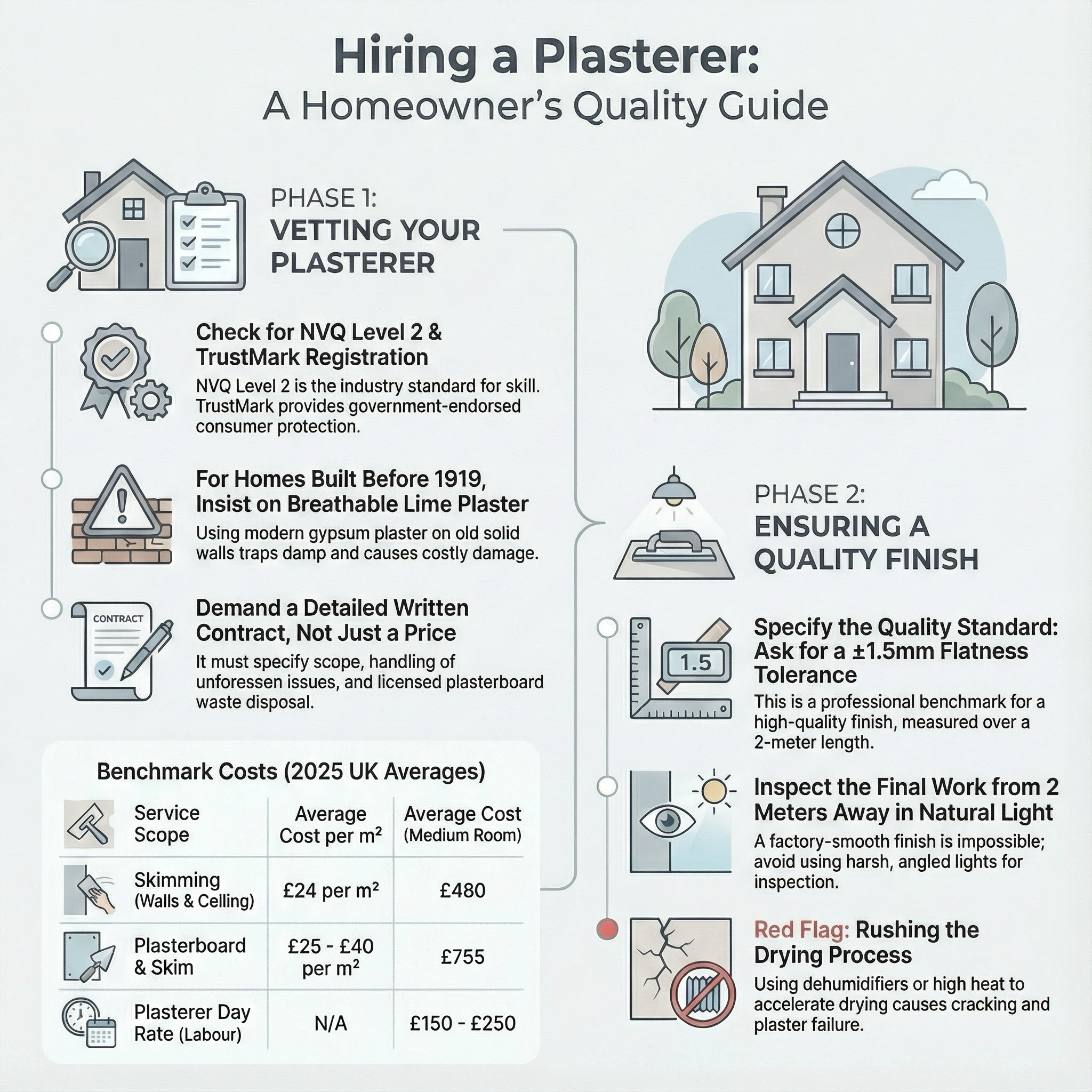
Plasterer explained
While wallpaper removal might seem like a simple weekend task, the state of the underlying plaster frequently requires professional intervention. A professional plasterer ensures that once the layers of paper and paste are gone, the wall is structurally sound, perfectly level, and finished to a "master" standard that DIY efforts rarely achieve.
Prices vary based on your location in the UK (with London and the South East commanding a 20-30% premium) and the condition of the walls beneath the paper. These estimates include VAT and materials for 2025/26.
| Item | Low £ | High £ | Notes |
|---|---|---|---|
| Small Room (Strip & Skim) | £450 | £700 | Includes basic ceiling and 4 walls. |
| Medium/Large Room | £750 | £1,200 | Assumes standard 2.4m ceiling height. |
| Day Rate (Per Plasterer) | £200 | £300 | Labour only; excludes materials. |
| Woodchip Surcharge | £100 | £250 | Added labour for notoriously difficult removal. |
| Waste Disposal | £40 | £100 | Removal of old paper and plaster debris. |
The primary cost drivers are the number of layers of paper and the state of the original lime or gypsum plaster. If the base plaster is failing extensively, you may require a full "hack-off and re-render," which can double the material and labour costs.
Homeowners can save money by stripping the wallpaper themselves, but the plastering stage is almost always best left to a professional. Plastering is a "perishable" skill; the material sets quickly, and achieving a flat, trowel-mark-free finish requires years of practice. Additionally, if your home was built before 1999, old textured wallpapers or decorative finishes (like Artex) may contain asbestos, requiring professional testing before disturbance.
Pro Tip: If you strip the paper yourself, be careful not to gouge the base plaster with a scraper, as this creates more work (and cost) for the plasterer to fill.
No. New plaster is highly absorbent. You must apply a "mist coat" (a mixture of watered-down emulsion) first. If you apply full-strength paint immediately, it will likely peel off in sheets later.
Gently tap the wall with your knuckles. If it sounds hollow or "drummy" compared to other areas, the plaster has detached from the brickwork or laths and needs to be replaced.
It is highly recommended. While you can plaster around them, you will never get a perfect finish, and the heat from a working radiator can cause the new plaster to crack. Most plasterers prefer them removed and capped off.
In the UK, you should wait until the plaster has turned from a dark brown/pink to a uniform light pink. This usually takes 3 to 7 days depending on the weather and ventilation.
Woodchip contains small pieces of wood that prevent steam from penetrating the paper easily. It often comes off in tiny fragments rather than full sheets, doubling the labour time.
Yes. Plastering involves water, wet mix, and dust. A professional will mask up the room, but you should ideally remove all soft furnishings and electronics from the area before work begins.
This guide was written with AI assistance and is intended for general information only. Prices are estimates based on UK averages and may vary by region. Always get at least three quotes and consult a qualified professional before starting any work.
Ask follow-ups in plain English. The AI explains options, sequencing and what to ask the plasterer — so you walk in informed.
Decorative coving and cornicing are more than just aesthetic flourishes; they provide a professional bridge between your walls and ceiling. For UK homeowners, c...
READ GUIDE →GuideWall Damage Repair Costs Scope of Works Assess & protect area – inspect crack or hole, test for background soundness, sheet floors/furniture. Prepare substr...
READ GUIDE →GuidePolished plastering, often referred to as Venetian plaster, is a high-end decorative finish that has seen a massive surge in popularity across UK homes. Unlike ...
READ GUIDE →GuidePlaster Repairs and Assessment Guide Scope of Works Survey & diagnose : tap‑test walls, use moisture meter, mark hollow/blown areas and hairline cracking. P...
READ GUIDE →GuideRender restoration is more than a cosmetic facelift; it is a critical maintenance task for protecting your home’s structural integrity. In the UK’s damp climate...
READ GUIDE →GuideVenetian plaster, often called polished plaster or marble plaster, is a premium wall finish that brings a touch of Italian luxury to UK homes. Unlike standard g...
READ GUIDE →