Instant
01 · Ask
Ask the AI a follow-up
Got more questions about house move and furniture assembly? Describe the bit you're unsure about — the AI explains options, sequencing and what to ask the removals.

House move plus flat-pack reassembly — for clients who want a full turnkey moving experience.
You've read the brief on house move and furniture assembly. Now lean on us to find the right removals — and stay in control of the job.
Got more questions about house move and furniture assembly? Describe the bit you're unsure about — the AI explains options, sequencing and what to ask the removals.
Costs, timelines, pitfalls and the right questions to ask before any removals starts on house move and furniture assembly.
Itemised quotes from up to 3 local removalss on house move and furniture assembly — so you can compare like-for-like, not lump sums.
Ready when you are
Enter your postcode and get free quotes from local pros.
Four moves that separate a smooth job from a nightmare.
Small screws often go missing during moves. Avoid this by insisting all fixings are bagged and taped to the corresponding furniture part.
Heavy furniture can scratch laminate or snag carpets. Ensure the team uses floor runners or felt pads.
Repeatedly dismantling flatpack can loosen joints. A professional will know when to reinforce a joint with wood glue or additional brackets.
If a wardrobe is assembled on an uneven floor, doors will not close. Professionals use shims or adjustable feet to correct this.
Indicative UK ranges and what affects price.
By job type
Quote spread is typically ± 18% — always get 3 quotes.
Removals quick-view
Removals explained
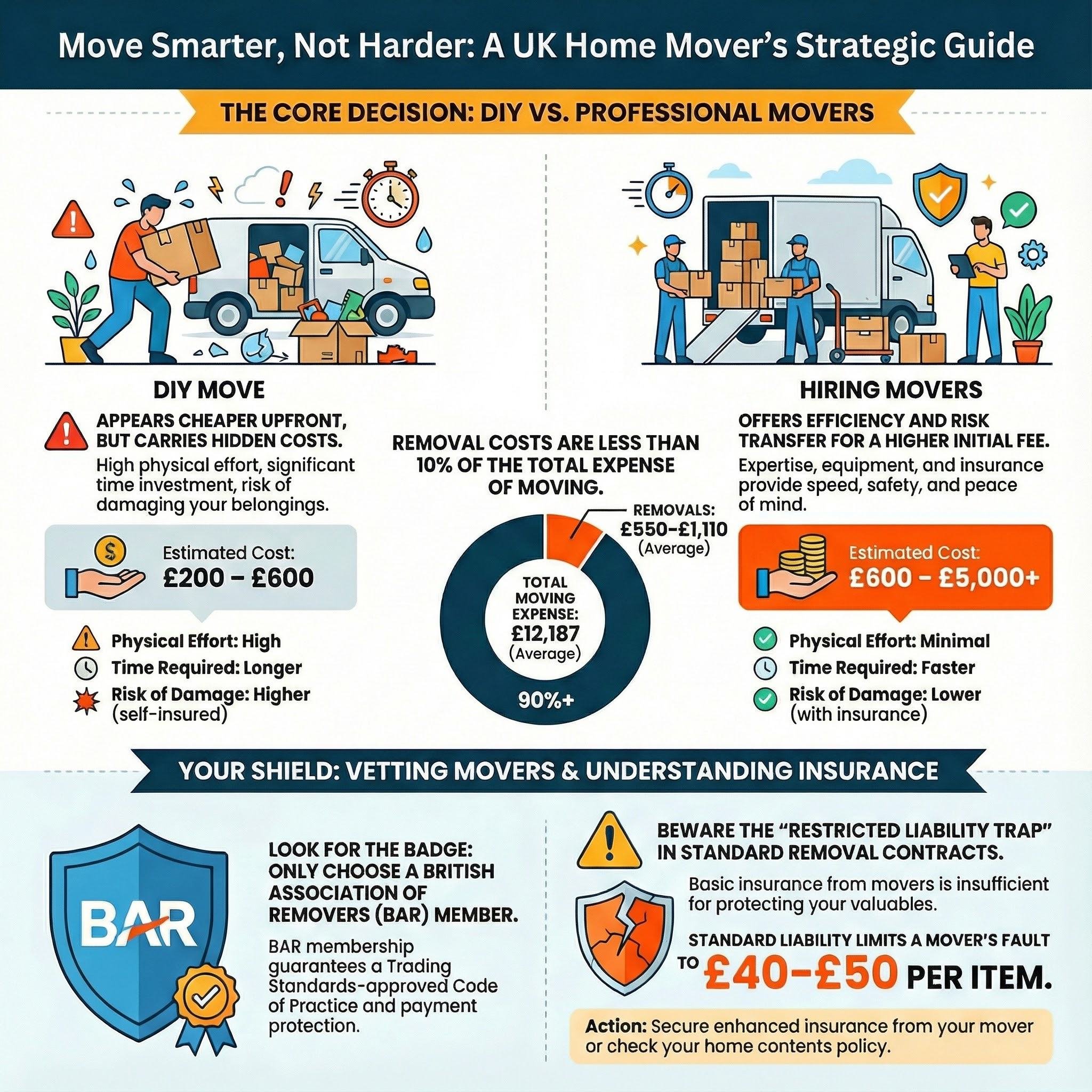
By hiring specialists, you protect your investment in furniture and avoid the common pitfalls of lost fixings or structural damage during transit. This guide outlines what to expect when booking a combined move and assembly service in the UK, including current market rates and essential safety considerations.
Prices for house moves and furniture assembly vary significantly based on your location and the volume of items. Most UK tradespeople charge either a flat fee per item for assembly or an hourly rate for the entire moving process.
| Item / Service | Low £ | High £ | Notes |
|---|---|---|---|
| Hourly Labour (per person) | £40 | £70 | Higher rates typically apply in London and the SE. |
| Minimum Call-out Fee | £80 | £130 | Usually covers the first hour or travel costs. |
| Standard Bed Assembly | £50 | £90 | Ottoman or storage beds sit at the higher end. |
| Large Wardrobe (3-4 Door) | £120 | £250 | Includes dismantling and re-levelling. |
| Wall Anchoring (per item) | £15 | £30 | Includes heavy-duty fixings and drilling. |
| Packaging Disposal | £20 | £60 | Removal of cardboard and polystyrene for recycling. |
Factors that will increase your quote include restricted access (e.g., third-floor flats without lifts), the need for a two-person team for heavy lifting, and the complexity of premium brands like IKEA PAX or BoConcept systems.
While DIY is feasible for small coffee tables or simple shelving, professional intervention is highly recommended for structural items. Modern flatpack furniture is often made of MDF or chipboard, which can easily crumble if dismantled incorrectly or forced during reassembly.
Expert Tip: Professional movers carry "Goods in Transit" insurance, which covers your furniture if it is damaged while being moved—a protection you do not have when doing it yourself.
Furthermore, professionals understand the nuances of UK housing, such as how to safely anchor furniture into lath and plaster walls versus modern dry-lined breeze blocks. If your move involves Gas or Electrical appliances, ensure you hire a Gas Safe or Part P registered professional, as standard movers are not permitted to disconnect or reconnect these items.
Questions to ask:
Yes, all furniture must be completely empty. Moving furniture with items inside puts immense strain on the joints and can lead to permanent structural failure or damage to the contents.
Most experienced assembly professionals can build furniture without manuals by identifying the components. However, it may take slightly longer, so it is best to provide the brand or model name beforehand.
They can, but you must have written permission from your landlord first. Professionals will usually require you to sign a waiver or confirm that the wall type is suitable for drilling.
A professional will measure the space before attempting assembly. If it won't fit, they can advise on alternative layouts or help you move the item to a garage or storage unit.
In most cases, yes. You must arrange any necessary parking suspensions or permits with your local council to ensure the removal van can park close to your property entrance.
Many removal and assembly specialists can handle multi-gyms, treadmills, and trampolines. These often require specialist tools and longer timeframes, so mention them during the quoting process.
This guide was written with AI assistance and is intended for general information only. Prices are estimates based on UK averages and may vary by region. Always get at least three quotes and consult a qualified professional before starting any work.
Ask follow-ups in plain English. The AI explains options, sequencing and what to ask the removals — so you walk in informed.
Role Responsibilities • Coordinate international removal projects and scheduling • Liaise with clients, suppliers and transport providers to ensure smooth opera...
READ GUIDE →GuideMoving a sofa or a heavy dresser can be one of the most stressful parts of a home refresh or relocation. Beyond the physical strain, these bulky items often req...
READ GUIDE →GuideMoving home in the UK often presents a logistical challenge, particularly when navigating narrow hallways, steep Victorian staircases, or modern apartment lifts...
READ GUIDE →GuideMoving house is widely regarded as one of life’s most stressful events, and the bulk of that pressure stems from packing. A professional packing service does mo...
READ GUIDE →GuideCold chain logistics is the science of transporting temperature-sensitive goods within a strictly controlled thermal environment. For UK homeowners, this specia...
READ GUIDE →GuideScope of Services • Evaluate the volume of furniture and boxes to plan the move efficiently • Ensure your items are pre-packed and labelled for smoother handlin...
READ GUIDE →