Instant
01 · Ask
Ask the AI a follow-up
Got more questions about roof Installation Cost & Work? Describe the bit you're unsure about — the AI explains options, sequencing and what to ask the roofer.

What a new roof actually costs in 2026 — by material, complexity, scaffold and access.
You've read the brief on roof Installation Cost & Work. Now lean on us to find the right roofer — and stay in control of the job.
Got more questions about roof Installation Cost & Work? Describe the bit you're unsure about — the AI explains options, sequencing and what to ask the roofer.
Costs, timelines, pitfalls and the right questions to ask before any roofer starts on roof Installation Cost & Work.
Itemised quotes from up to 3 local roofers on roof Installation Cost & Work — so you can compare like-for-like, not lump sums.
Ready when you are
Enter your postcode and get free quotes from local pros.
Four moves that separate a smooth job from a nightmare.
Once the tiles are off, "hidden" rot in the rafters may be discovered, leading to extra costs.
Reusing old lead flashing is a common shortcut that leads to leaks around chimneys within a few years.
Modern breathable membranes still require proper eaves ventilation to prevent condensation and "loft damp."
UK rain can stop work instantly; ensure your roofer has high-quality tarpaulins to "dry-in" the house overnight.
Indicative UK ranges and a typical week-by-week schedule.
By job type
Quote spread is typically ± 18% — always get 3 quotes.
Semi-detached full re-roof · week by week
Schedule slips on dependencies — pad each phase by 10–20% for real-world delays.
Roofer quick-view
Roofer explained
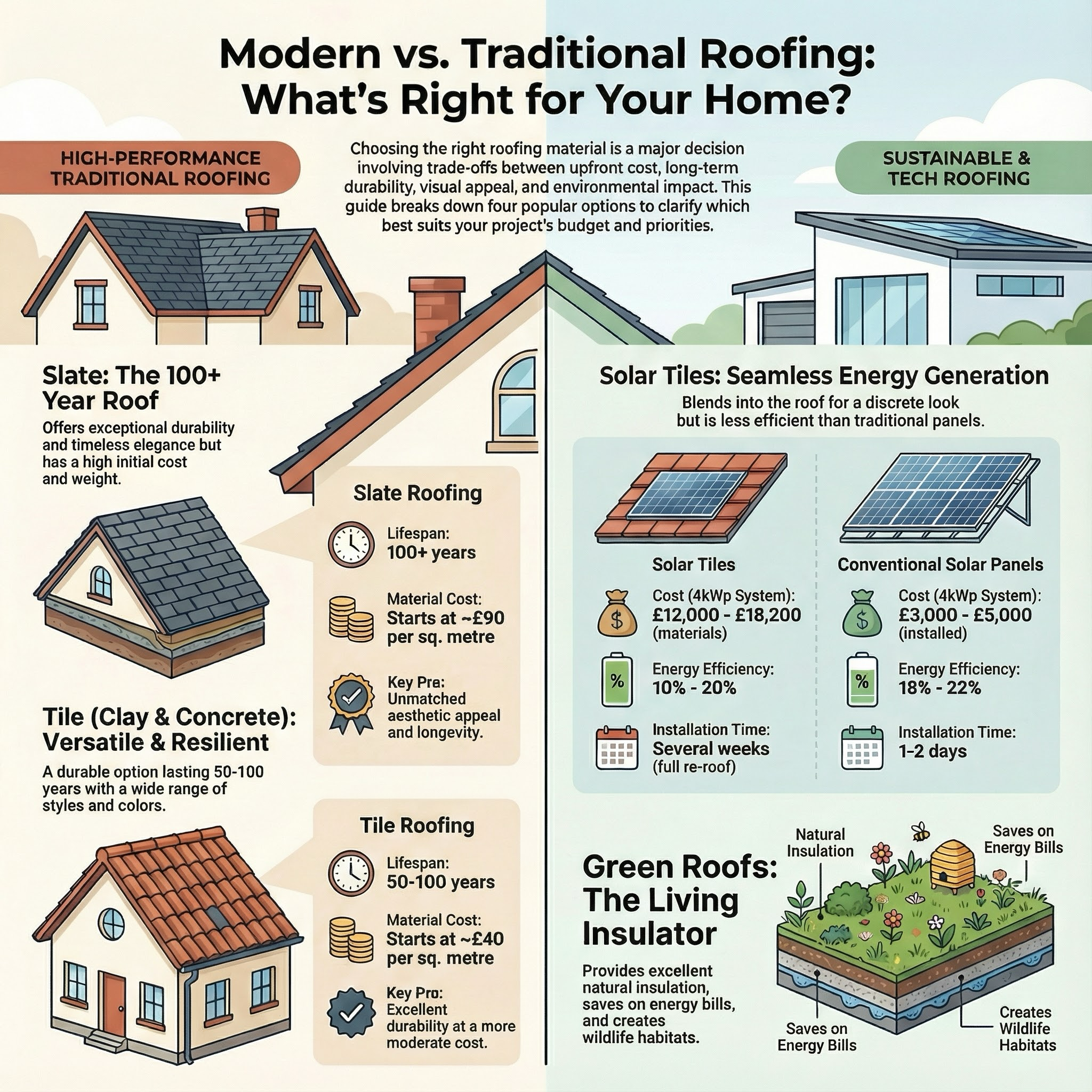
Whether you are replacing an ageing slate roof or installing modern concrete tiles, understanding the process and costs helps you avoid "cowboy" builders and ensures your home remains watertight for decades to come.
| Item / Project Type | Low £ | High £ | Notes |
|---|---|---|---|
| 3-Bed Semi (Concrete Tiles) | £6,500 | £9,500 | Includes scaffolding and waste removal. |
| Detached Home (Natural Slate) | £12,000 | £20,000+ | High material costs and specialist labour. |
| Terraced House (Mid-roof) | £5,000 | £7,500 | Smaller surface area but access can be tricky. |
| Flat Roof (EPDM Rubber) | £1,800 | £3,500 | Based on a standard double garage size. |
| Scaffolding Only | £900 | £1,800 | Varies by height and number of lifts. |
| Skip Hire (8-yard) | £280 | £450 | Regional price differences apply. |
Prices are influenced heavily by your location (London and the SE are typically 20% higher) and the complexity of the roof's pitch and valleys. If your existing rafters need structural reinforcement, expect the total cost to increase by 15-20%.
Replacing more than 25% of your roof usually requires an upgrade to your loft insulation to meet current UK Building Regulations, which may add to the initial quote.
Roofing is not a DIY job. Beyond the extreme risks of working at height, an incorrectly installed roof can lead to catastrophic water damage and void your home insurance.
Professional roofers provide "workmanship guarantees" and are familiar with Part L of the Building Regulations regarding thermal insulation. Furthermore, a professional installation is often required to obtain the necessary completion certificates for future house sales.
Generally, no. As long as the height of the roof doesn't change and the materials are similar in appearance to the original, it falls under "Permitted Development." However, if you live in a Conservation Area or a Listed Building, you must check with your local council first.
No. This is known as "overlaying" and is rarely recommended in the UK. It adds significant weight to the structure and prevents you from inspecting the timber and underlay for damage. Most reputable roofers will refuse to do this.
Wet-fix uses traditional mortar to secure ridge tiles. Dry-fix uses mechanical screws and plastic unions. Dry-fix is now the industry standard as it doesn't crack over time and is more resistant to high winds.
A concrete tile roof typically lasts 50–60 years. Natural slate can last 80–100 years. Modern EPDM flat roofs usually come with a 20–30 year guarantee.
Not necessarily. While some roofers may have more availability, the shorter daylight hours and increased risk of rain delays can actually make the project more expensive due to extended scaffolding hire and labour inefficiency.
This guide was written with AI assistance and is intended for general information only. Prices are estimates based on UK averages and may vary by region. Always get at least three quotes and consult a qualified professional before starting any work.
Ask follow-ups in plain English. The AI explains options, sequencing and what to ask the roofer — so you walk in informed.
Chimney stacks are among the most exposed elements of a UK property, constantly battling high winds, driving rain, and freeze-thaw cycles. Over time, the mortar...
READ GUIDE →GuideA leaking roof is more than just a nuisance; it is a direct threat to your home’s structural integrity. In the UK’s damp climate, even a minor drip can quickly ...
READ GUIDE →GuideInstalling a new chimney is a significant structural upgrade for any UK home, whether you are adding a traditional masonry stack or a modern twin-wall flue syst...
READ GUIDE →GuideReplacing a roof is one of the most significant investments a UK homeowner can make in their property. Beyond simply keeping out the rain, a new roof ensures st...
READ GUIDE →GuidePitched roof shingles, often made from bitumen (felt) or cedar, offer a lightweight and cost-effective alternative to traditional clay tiles or slate. In the UK...
READ GUIDE →GuideRoof tile repair is a critical maintenance task for UK homeowners, especially given our unpredictable weather. Even a single cracked or displaced tile can allow...
READ GUIDE →