Instant
01 · Ask
Ask the AI a follow-up
Got more questions about synthetic Roofing Installation? Describe the bit you're unsure about — the AI explains options, sequencing and what to ask the roofer.

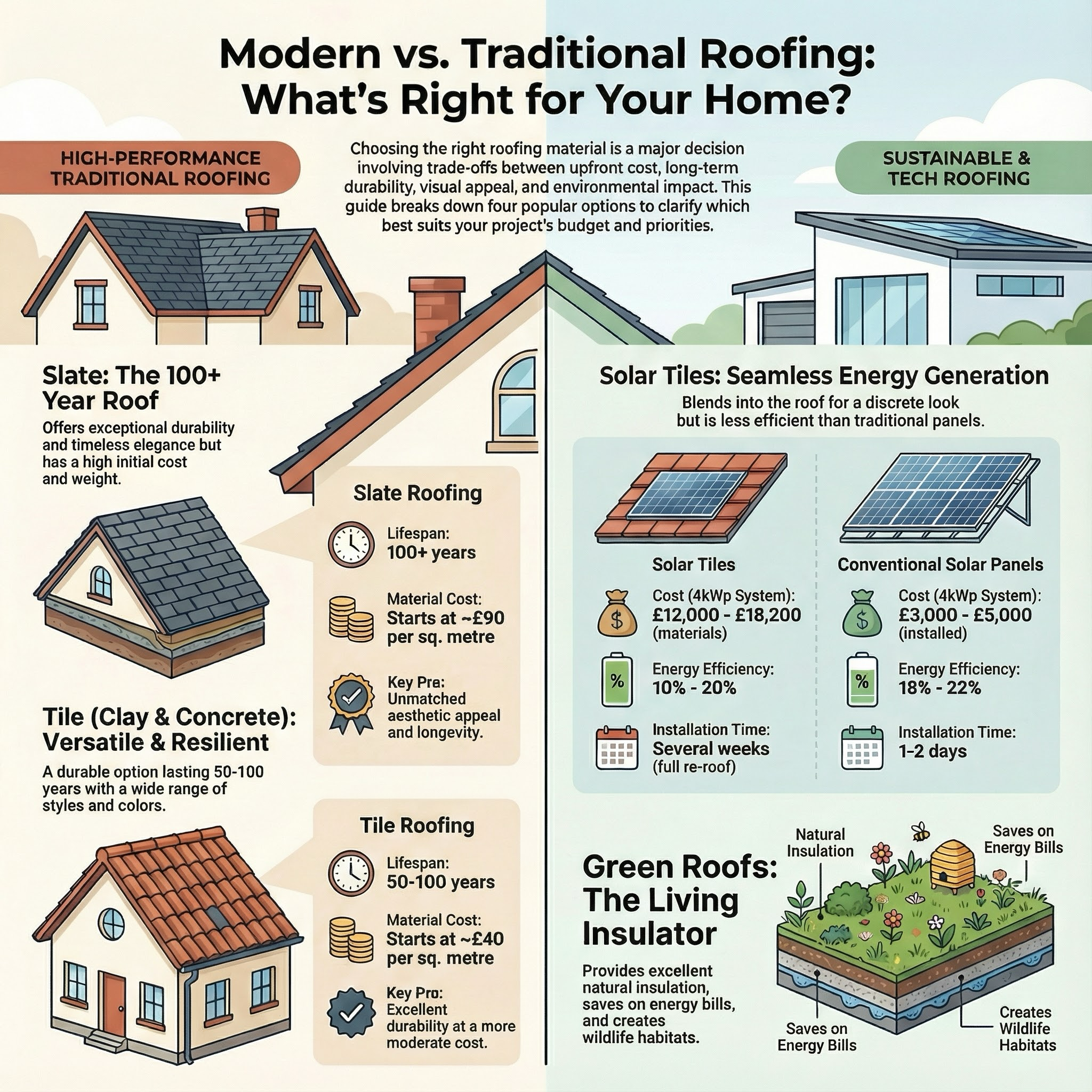
Synthetic slate, composite tile or rubber roofing — modern alternatives to natural materials.
You've read the brief on synthetic Roofing Installation. Now lean on us to find the right roofer — and stay in control of the job.
Got more questions about synthetic Roofing Installation? Describe the bit you're unsure about — the AI explains options, sequencing and what to ask the roofer.
Costs, timelines, pitfalls and the right questions to ask before any roofer starts on synthetic Roofing Installation.
Itemised quotes from up to 3 local roofers on synthetic Roofing Installation — so you can compare like-for-like, not lump sums.
Ready when you are
Enter your postcode and get free quotes from local pros.
Four moves that separate a smooth job from a nightmare.
Synthetic tiles expand and contract more than natural stone; failing to leave the correct gap between tiles can cause the roof to "wave."
Modern roofs are tightly sealed; without proper ridge or soffit vents, condensation can rot your roof timbers from the inside out.
Using cheap, non-breathable felt can lead to moisture traps in the roof void.
Using standard nails instead of stainless steel or copper can lead to "nail sickness," where the fixings rust and tiles slip.
Indicative UK ranges and a typical week-by-week schedule.
By job type
Quote spread is typically ± 18% — always get 3 quotes.
Semi-detached full re-roof · week by week
Schedule slips on dependencies — pad each phase by 10–20% for real-world delays.
Roofer quick-view
Roofer explained
Whether you are renovating a period property or building a modern extension, synthetic tiles offer a lightweight, eco-friendly alternative that is often easier and faster to install than traditional materials. This guide covers everything you need to know about the installation process, costs, and regulations in the UK.
| Item | Low £ | High £ | Notes |
|---|---|---|---|
| Full Re-roof (Average Semi) | £6,500 | £12,000 | Includes materials, labour, and waste removal. |
| Synthetic Slate (per m²) | £85 | £145 | Supply and fit only. |
| Scaffolding Hire | £900 | £2,000 | Depends on height and duration. |
| Skip Hire / Waste Disposal | £300 | £600 | Based on an 8-yard skip. |
| Minimum Call-out Charge | £200 | £350 | For minor repairs or assessments. |
Several factors will influence your final quote, including the pitch of the roof, the complexity of the design (such as dormers or valleys), and the specific brand of synthetic material chosen. Prices in London and the South East typically carry a 15-20% premium compared to the rest of the UK.
Note: UK weather is the biggest variable. Roofers cannot work in heavy rain or high winds, so always factor in a "buffer" period for your project timeline.
While DIY enthusiasts can handle minor repairs, a full synthetic roof installation should always be left to a professional roofer. Synthetic materials have specific expansion and contraction rates that require precise spacing; getting this wrong can lead to buckling or leaks.
Furthermore, if you are replacing more than 25% of your roof, you must comply with UK Building Regulations regarding thermal insulation. Professional roofers can often self-certify their work through schemes like CompetentRoofer, saving you the hassle of independent inspections.
Questions to ask:
Most high-quality synthetic roofing systems come with a manufacturer's warranty of 30 to 50 years. When installed correctly, they can easily last 50+ years, often outperforming natural materials in terms of impact resistance.
Modern manufacturing uses moulds taken from real slate and wood, capturing authentic textures and edges. From the ground, it is often impossible to distinguish high-end synthetic tiles from natural ones.
Generally, yes. Synthetic tiles are much more durable than natural slate and won't crack under foot pressure. However, care should still be taken, and professionals should use crawling boards to avoid scuffing the finish.
Yes, many brands use up to 80% recycled plastics and rubbers. Additionally, because they are lightweight, the carbon footprint of transporting them to your site is significantly lower than heavy natural stone.
No, quite the opposite. Synthetic tiles are much lighter than natural slate or concrete tiles, meaning they put less stress on your roof structure. They are an excellent choice for older homes with slight structural sagging.
This guide was written with AI assistance and is intended for general information only. Prices are estimates based on UK averages and may vary by region. Always get at least three quotes and consult a qualified professional before starting any work.
Ask follow-ups in plain English. The AI explains options, sequencing and what to ask the roofer — so you walk in informed.
Chimney stacks are among the most exposed elements of a UK property, constantly battling high winds, driving rain, and freeze-thaw cycles. Over time, the mortar...
READ GUIDE →GuideA leaking roof is more than just a nuisance; it is a direct threat to your home’s structural integrity. In the UK’s damp climate, even a minor drip can quickly ...
READ GUIDE →GuideInstalling a new chimney is a significant structural upgrade for any UK home, whether you are adding a traditional masonry stack or a modern twin-wall flue syst...
READ GUIDE →GuideReplacing a roof is one of the most significant investments a UK homeowner can make in their property. Beyond simply keeping out the rain, a new roof ensures st...
READ GUIDE →GuidePitched roof shingles, often made from bitumen (felt) or cedar, offer a lightweight and cost-effective alternative to traditional clay tiles or slate. In the UK...
READ GUIDE →GuideRoof tile repair is a critical maintenance task for UK homeowners, especially given our unpredictable weather. Even a single cracked or displaced tile can allow...
READ GUIDE →