Instant
01 · Ask
Ask the AI a follow-up
Got more questions about custom Stone Carving? Describe the bit you're unsure about — the AI explains options, sequencing and what to ask the stonemason.

Hand-carved memorial, sign or feature stone — by a master stonemason.
You've read the brief on custom Stone Carving. Now lean on us to find the right stonemason — and stay in control of the job.
Got more questions about custom Stone Carving? Describe the bit you're unsure about — the AI explains options, sequencing and what to ask the stonemason.
Costs, timelines, pitfalls and the right questions to ask before any stonemason starts on custom Stone Carving.
Itemised quotes from up to 3 local stonemasons on custom Stone Carving — so you can compare like-for-like, not lump sums.
Ready when you are
Enter your postcode and get free quotes from local pros.
Four moves that separate a smooth job from a nightmare.
If the stone is carved and set against its natural grain (face-bedded), it will flake and deteriorate rapidly in the frost.
Using a hard stone next to a soft original stone can cause the original masonry to crumble due to uneven moisture evaporation.
Carvings without proper "drips" or sheds will allow water to pool, leading to moss growth and freeze-thaw damage.
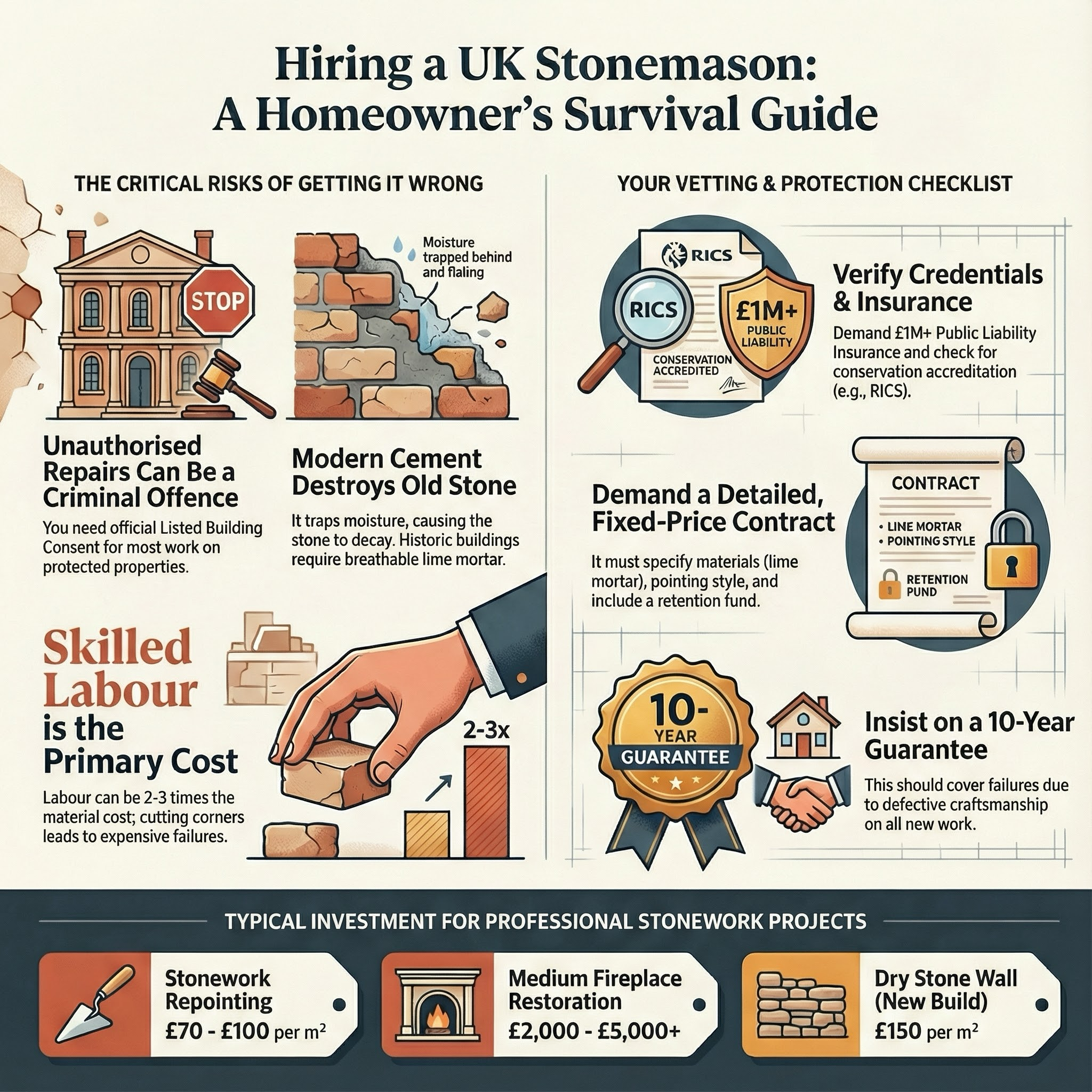
Using modern cement to fix carved stone prevents the stone from "breathing," trapping moisture and causing salt damage.
Indicative UK ranges and what affects price.
By job type
Quote spread is typically ± 18% — always get 3 quotes.
Stonemason quick-view
Stonemason explained
In the UK, our rich architectural heritage means that stone carving is not just about aesthetics; it is often about preserving the structural integrity and historical accuracy of our housing stock. From soft Bath stone to durable Yorkstone, selecting the right mason and material is critical for a lasting finish.
| Item | Low £ | High £ | Notes |
|---|---|---|---|
| Small House Sign/Date Stone | £250 | £650 | Simple lettering on limestone or slate. |
| Bespoke Fireplace Surround | £1,800 | £6,000+ | Depends on stone type and carving complexity. |
| Architectural Detail (Corbel/Finial) | £450 | £1,500 | Replacement of existing weathered features. |
| Daily Labour Rate | £250 | £450 | Highly skilled artisan rates (inc. VAT). |
| Material Costs (per m³) | £600 | £2,500 | Varies wildly from soft chalk to rare granites. |
Pricing is primarily driven by the "carvability" of the stone and the complexity of the design. Harder stones like granite take significantly longer to work than softer limestones, while intricate relief carving requires many more hours of skilled labour than simple chamfered edges.
Always confirm if the quote includes "fixing" (installation). A heavy stone lintel or fireplace requires specialist lifting equipment and structural knowledge that adds to the base carving cost.
Stone carving is not a DIY-friendly task. Unlike wood, stone is unforgiving; one misplaced strike with a mallet can cause a "stun" or a fracture that ruins the entire block of expensive material.
Professional stonemasons understand the geological properties of the stone, ensuring it is laid on its natural bed to prevent delamination. For structural elements like lintels or mullions, a professional is essential to ensure the safety of the building and compliance with UK building standards.
Questions to ask:
Generally, no. Most UK limestones and sandstones should be allowed to breathe. Sealing can trap moisture inside the stone, leading to internal pressure and "spalling" (surface peeling) during winter frosts.
Yes, this is known as "in-situ" carving. It is common for adding date stones or decorative flourishes to existing buildings, though it is more difficult and expensive due to the awkward working position.
Avoid harsh chemicals or household cleaners. Use a soft brush and clean water. For stubborn soot, a specialized "vulcanized latex" sponge or a very mild non-ionic detergent is usually recommended by masons.
Portland stone and Yorkstone are classic choices for the UK climate. They are durable enough to withstand heavy rain and frost while being "fine-grained" enough to hold intricate carved detail.
You are paying for three things: the high cost of quarrying/transporting heavy stone, the years of apprenticeship required to master the craft, and the significant risk the mason takes—if they make a mistake in the final hour, the entire project is a loss.
This guide was written with AI assistance and is intended for general information only. Prices are estimates based on UK averages and may vary by region. Always get at least three quotes and consult a qualified professional before starting any work.
Ask follow-ups in plain English. The AI explains options, sequencing and what to ask the stonemason — so you walk in informed.
Stone is a defining feature of British architecture, from the honey-coloured limestone of the Cotswolds to the robust granite of Aberdeen. While incredibly dura...
READ GUIDE →GuideNatural stone flooring is a premium feature in many UK homes, from Victorian hallways with original encaustic tiles to modern open-plan kitchens finished in lim...
READ GUIDE →GuideStone is one of the most durable building materials used across the UK, from Cotswold cottages to Victorian terraces. However, even the toughest granite or sand...
READ GUIDE →GuideHeritage stone restoration is more than just a repair job; it is the essential preservation of a building’s character and structural integrity. In the UK, our a...
READ GUIDE →GuideChoosing a memorial is a deeply personal task, but ensuring its safe and lasting installation is a technical job for a skilled stonemason. In the UK, strict cem...
READ GUIDE →GuideStone repointing maintains heritage buildings. UK costs, lime mortar and why cement mortar damages old stone.
READ GUIDE →