Instant
01 · Ask
Ask the AI a follow-up
Got more questions about commercial Cleaning Services? Describe the bit you're unsure about — the AI explains options, sequencing and what to ask the cleaning services.

Daily, weekly or monthly contracts for offices, shops and small commercial sites.
You've read the brief on commercial Cleaning Services. Now lean on us to find the right cleaning services — and stay in control of the job.
Got more questions about commercial Cleaning Services? Describe the bit you're unsure about — the AI explains options, sequencing and what to ask the cleaning services.
Costs, timelines, pitfalls and the right questions to ask before any cleaning services starts on commercial Cleaning Services.
Itemised quotes from up to 3 local cleaning servicess on commercial Cleaning Services — so you can compare like-for-like, not lump sums.
Ready when you are
Enter your postcode and get free quotes from local pros.
Four moves that separate a smooth job from a nightmare.
Often caused by high staff turnover; look for companies with good staff retention and regular audits.
Using the wrong chemical on natural stone or anti-static flooring can be costly; ensure the team is trained in surface-specific care.
Issues often arise when there is no clear channel for reporting missed areas or specific requests.
Ensure there is a strict protocol for key-holding, alarm setting, and securing the building after an out-of-hours clean.
Indicative UK ranges and what affects price.
By job type
Quote spread is typically ± 18% — always get 3 quotes.
Cleaning Services quick-view
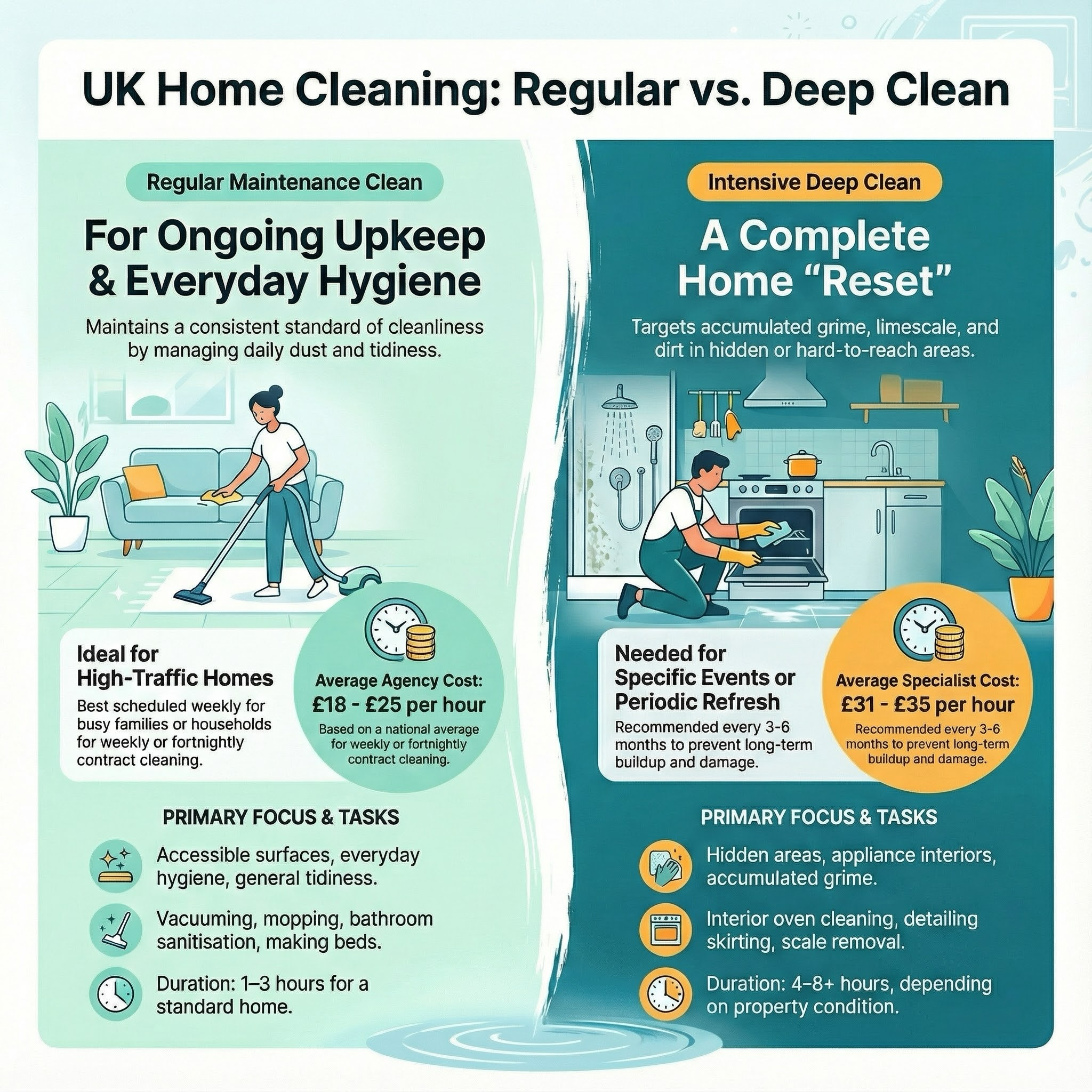
Cleaning Services explained
Whether you require a daily maintenance contract or a one-off deep clean, understanding the scope of professional services is essential. This guide outlines the costs, timeframes, and regulatory standards associated with commercial cleaning in the UK to help you make an informed decision for your premises.
Commercial cleaning rates in the UK vary based on the size of the premises, the frequency of the service, and your geographic location, with London and the South East typically seeing a 15–20% uplift. Most contractors offer either a fixed hourly rate for regular maintenance or a project-based fee for specialist deep cleans.
| Service Type | Low £ | High £ | Notes |
|---|---|---|---|
| Regular Office Cleaning (per hour) | £18 | £35 | Per cleaner; includes basic materials and insurance. |
| One-off Deep Clean (Small Office) | £300 | £750 | Intensive sanitisation of all surfaces and carpets. |
| End of Tenancy Commercial Clean | £500 | £2,500+ | Dependent on square footage and level of soilage. |
| Commercial Carpet Cleaning (per m²) | £2.50 | £6.00 | Often subject to a minimum call-out fee of £80. |
| Window Cleaning (External/Internal) | £60 | £450 | Higher costs for reach-and-wash systems or cradles. |
| Biohazard / Fogging Service | £400 | £1,500 | Specialist viral decontamination and PPE required. |
Specialist equipment hire, such as scissor lifts for high-level warehouse cleaning or industrial pressure washers, will be quoted as additional line items. Always confirm if the quote includes the cost of consumables like hand towels, soap, and bin liners.
While small home-based offices can be managed independently, commercial premises require a professional approach for legal and practical reasons. Commercial cleaners use industrial-grade chemicals and machinery—such as HEPA-filter vacuums and floor scrubbers—that are far more effective than domestic alternatives.
Professional cleaning is often a requirement of commercial lease agreements and insurance policies to ensure the property is maintained to a specific standard.
Furthermore, businesses must comply with the Health and Safety at Work Act 1974. Hiring professionals ensures that COSHH (Control of Substances Hazardous to Health) data sheets are maintained and that all staff are trained in safe working practices, reducing the liability for the business owner.
3 Questions to Ask:
Most offices require a daily clean for high-traffic areas like kitchens and washrooms. General desk areas and floors can often be managed 2–3 times per week, depending on staff density.
Most professional commercial cleaners provide their own industrial equipment and chemicals. However, you can negotiate to provide your own if you have specific eco-friendly preferences or storage constraints.
A standard clean covers surface-level tasks like vacuuming and dusting. A deep clean involves intensive sanitisation, steam cleaning carpets, scrubbing grout, and cleaning behind large appliances or furniture.
Yes, most commercial cleaning takes place early in the morning or late in the evening to minimise disruption. Some companies operate 24/7 to accommodate night shifts or weekend requirements.
Many UK contractors now offer "Green Cleaning" which uses biodegradable, non-toxic chemicals and microfibre technology to reduce water and chemical consumption. Always ask to see their environmental policy.
Commercial quotes are often presented excluding VAT, as most businesses can reclaim it. Always check the final "total" to avoid budgeting surprises if your organisation cannot reclaim VAT.
This guide was written with AI assistance and is intended for general information only. Prices are estimates based on UK averages and may vary by region. Always get at least three quotes and consult a qualified professional before starting any work.
Ask follow-ups in plain English. The AI explains options, sequencing and what to ask the cleaning services — so you walk in informed.
Leather furniture is a significant investment for any UK home, offering durability and timeless style. However, scuffs, scratches, and fading are inevitable ove...
READ GUIDE →GuideThe kitchen and lounge are the hardest-working rooms in any UK home. While the lounge is your primary space for relaxation, the kitchen is a high-traffic zone t...
READ GUIDE →GuideMaintaining a professional workspace is about more than just aesthetics; it is essential for employee health, productivity, and making the right impression on c...
READ GUIDE →GuideMoving house is one of life’s most stressful events, and the final hurdle is often the most daunting: the end-of-tenancy deep clean. This isn't a standard weekl...
READ GUIDE →GuideA flat deep clean is more than just a quick vacuum and a wipe-down of surfaces. It is a comprehensive, "top-to-bottom" sanitisation of your home, designed to ta...
READ GUIDE →GuideIn the damp UK climate, external surfaces quickly succumb to moss, algae, and lichen. Beyond looking unsightly, these growths can make paths dangerously slipper...
READ GUIDE →