Instant
01 · Ask
Ask the AI a follow-up
Got more questions about lounge and kitchen cleaning? Describe the bit you're unsure about — the AI explains options, sequencing and what to ask the cleaning services.

Two main rooms deep-cleaned in one visit — surfaces, floors, oven and grout.
You've read the brief on lounge and kitchen cleaning. Now lean on us to find the right cleaning services — and stay in control of the job.
Got more questions about lounge and kitchen cleaning? Describe the bit you're unsure about — the AI explains options, sequencing and what to ask the cleaning services.
Costs, timelines, pitfalls and the right questions to ask before any cleaning services starts on lounge and kitchen cleaning.
Itemised quotes from up to 3 local cleaning servicess on lounge and kitchen cleaning — so you can compare like-for-like, not lump sums.
Ready when you are
Enter your postcode and get free quotes from local pros.
Four moves that separate a smooth job from a nightmare.
Using abrasive pads or acidic cleaners on delicate surfaces like stainless steel, wood, or natural stone.
Failing to clean the top of kitchen wall units or extractor filters, which can become a fire hazard.
Using the same cloths for the bathroom and the kitchen; ensure your cleaner uses a colour-coded cloth system.
Not clearing clutter before the cleaner arrives, which prevents them from reaching the actual surfaces that need cleaning.
Indicative UK ranges and what affects price.
By job type
Quote spread is typically ± 18% — always get 3 quotes.
Cleaning Services quick-view
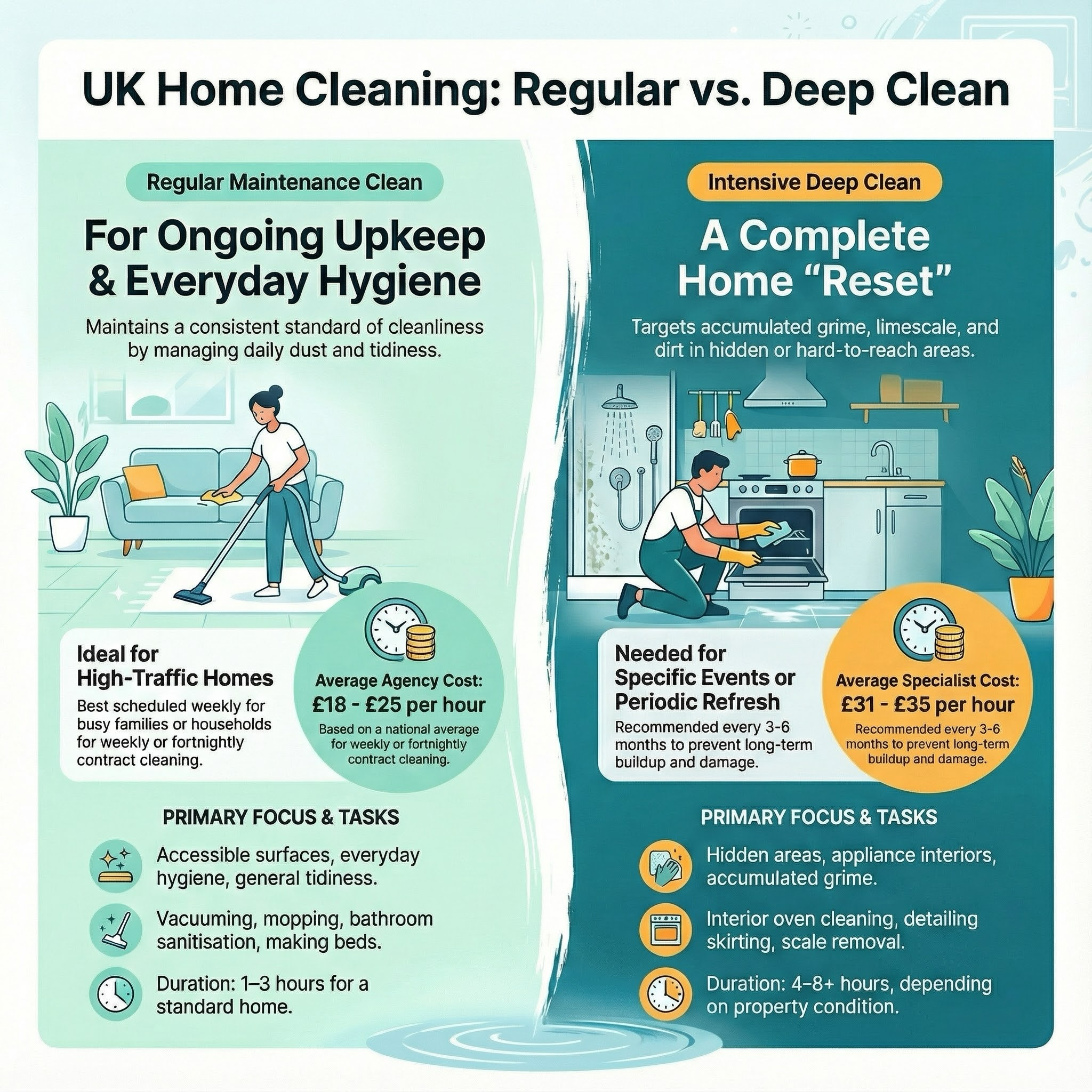
Cleaning Services explained
Professional cleaning of these areas goes beyond a quick tidy-up. It involves deep-level sanitisation, degreasing of cooking zones, and meticulous dusting of living areas to improve indoor air quality and maintain the condition of your fixtures and fittings.
Cleaning costs in the UK vary based on your location (London and the SE usually command a premium) and the current condition of the rooms. Prices below include VAT and assume standard domestic room sizes.
| Item | Low £ | High £ | Notes |
|---|---|---|---|
| Hourly Labour Rate | £25 | £45 | Per cleaner; includes basic supplies. |
| Minimum Call-out Fee | £50 | £85 | Covers travel and first hour of work. |
| Standard Maintenance Clean | £70 | £130 | Lounge & kitchen (approx. 3 hours). |
| Deep Clean / Move-in | £180 | £380 | Includes inside cupboards and intensive degreasing. |
| Oven Cleaning (Extra) | £50 | £95 | Single or double oven deep clean. |
| Carpet Steam Cleaning | £40 | £80 | Per room (usually the lounge). |
Deep cleans are significantly more expensive than regular maintenance visits because they require specialised chemicals and significantly more "elbow grease" to remove carbon deposits and limescale.
While weekly vacuuming and surface wiping are standard DIY tasks, professional cleaners bring industrial-grade equipment and chemicals that yield superior results. Professionals use HEPA-filter vacuums to trap allergens and high-alkaline degreasers that are more effective than supermarket brands.
Warning: If you are cleaning yourself, be cautious with "hacks" involving vinegar or lemon juice on natural stone surfaces like granite or marble, as these can cause permanent etching. Professionals will know which pH-neutral cleaners to use on specific materials.
While general domestic cleaning isn't heavily regulated, certain standards apply to professional services:
No, most professional cleaners are happy to work while you are out. You can arrange a key collection or use a secure key-safe, provided you have vetted the company and confirmed their insurance coverage.
Usually, no. A standard clean covers the exterior of the oven and the hob. Internal oven cleaning is a specialist, messy task that requires specific soaking tanks and is almost always charged as an additional service.
It is best to keep pets in a separate room or out for a walk. This prevents them from tripping the cleaner, getting stressed by vacuum noise, or coming into contact with wet floors and cleaning chemicals.
For most UK households, a professional deep clean of the kitchen and lounge is recommended every 6 months. This prevents the long-term build-up of grime and dust in hard-to-reach areas.
Independent cleaners often ask you to provide the vacuum and basic sprays, whereas cleaning agencies typically bring their own professional-grade kits. Always clarify this at the point of booking to avoid a "dry" call-out.
Pro Tip: To get the best value for money, clear your kitchen worktops of small appliances (toasters, kettles) and remove lounge clutter before the cleaner arrives. This allows them to focus on deep cleaning rather than moving your belongings.
This guide was written with AI assistance and is intended for general information only. Prices are estimates based on UK averages and may vary by region. Always get at least three quotes and consult a qualified professional before starting any work.
Ask follow-ups in plain English. The AI explains options, sequencing and what to ask the cleaning services — so you walk in informed.
Leather furniture is a significant investment for any UK home, offering durability and timeless style. However, scuffs, scratches, and fading are inevitable ove...
READ GUIDE →GuideMaintaining a clean commercial environment is about more than just appearances; it is a fundamental requirement for health, safety, and operational efficiency. ...
READ GUIDE →GuideMaintaining a professional workspace is about more than just aesthetics; it is essential for employee health, productivity, and making the right impression on c...
READ GUIDE →GuideMoving house is one of life’s most stressful events, and the final hurdle is often the most daunting: the end-of-tenancy deep clean. This isn't a standard weekl...
READ GUIDE →GuideA flat deep clean is more than just a quick vacuum and a wipe-down of surfaces. It is a comprehensive, "top-to-bottom" sanitisation of your home, designed to ta...
READ GUIDE →GuideIn the damp UK climate, external surfaces quickly succumb to moss, algae, and lichen. Beyond looking unsightly, these growths can make paths dangerously slipper...
READ GUIDE →