Instant
01 · Ask
Ask the AI a follow-up
Got more questions about drain and Sewer Clearance? Describe the bit you're unsure about — the AI explains options, sequencing and what to ask the drain specialist.

Domestic and commercial blockages — rod, jet, auger and CCTV check. Fixed price, signed waste-transfer note.
You've read the brief on drain and Sewer Clearance. Now lean on us to find the right drain specialist — and stay in control of the job.
Got more questions about drain and Sewer Clearance? Describe the bit you're unsure about — the AI explains options, sequencing and what to ask the drain specialist.
Costs, timelines, pitfalls and the right questions to ask before any drain specialist starts on drain and Sewer Clearance.
Itemised quotes from up to 3 local drain specialists on drain and Sewer Clearance — so you can compare like-for-like, not lump sums.
Ready when you are
Enter your postcode and get free quotes from local pros.
Four moves that separate a smooth job from a nightmare.
Caused by pouring cooking fats and oils down the sink which solidify and trap "unflushables" like wet wipes.
Tiny hair-roots enter pipe joints in search of water, eventually expanding and cracking the pipework.
Common in older "pitch fibre" or clay pipes where the ground shifts or the material degrades over 50+ years.
Washing machines or toilets plumbed into rainwater drains, which can lead to heavy fines from local authorities.
Indicative UK ranges and what affects price.
By job type
Quote spread is typically ± 18% — always get 3 quotes.
Drain Specialist quick-view
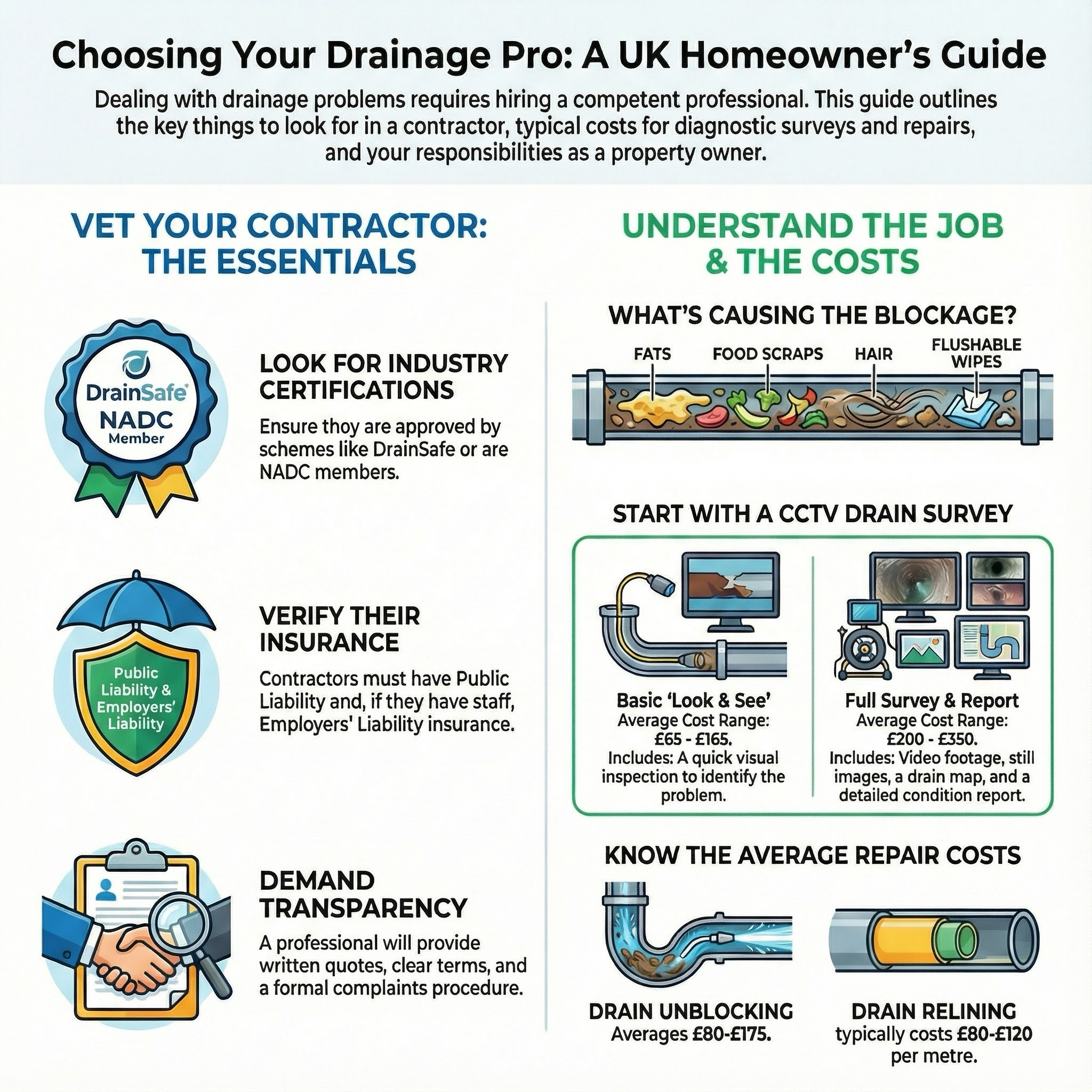
Drain Specialist explained
Modern drainage specialists use a combination of traditional rodding and advanced technology like CCTV surveys to identify and clear obstructions. Addressing these issues early prevents the risk of sewage backflow and structural damage to your home’s foundations.
Prices for drainage work in the UK vary based on your location and the severity of the blockage. Emergency out-of-hours call-outs typically carry a premium compared to scheduled maintenance.
| Item | Low £ | High £ | Notes |
|---|---|---|---|
| Standard Drain Jetting | £120 | £220 | Basic blockage removal (1 hour) |
| Emergency Call-Out | £180 | £350 | Evenings, weekends, or bank holidays |
| CCTV Drain Survey | £150 | £300 | Includes digital report and footage |
| Mechanical Root Removal | £250 | £550 | Depending on extent of infiltration |
| Drain Lining (per metre) | £80 | £160 | "No-dig" repair for cracked pipes |
Factors affecting the final bill include ease of access to manholes, the distance the jetting hose must travel, and whether heavy-duty descaling chemicals are required for "fatbergs."
Minor sink or toilet clogs can often be cleared with a domestic plunger or basic drain snake. However, main sewer lines require professional intervention due to the high-pressure equipment needed and the health risks associated with raw sewage.
Professional Tip: Never attempt to use professional-grade chemical cleaners if you plan on calling a pro later; these chemicals can cause "blowback" and injure the technician or damage your pipes.
Professional drainage engineers are trained to handle hazardous waste and understand the legalities of the Water Industry Act 1991 regarding shared sewers.
You are responsible for the drains within your property boundary that serve only your home. Once the pipe leaves your boundary or joins a pipe serving another property, it usually becomes the responsibility of the local water authority.
Standard domestic pressure washers lack the "flow rate" and specialised nozzles required to clear heavy blockages. Professional jetters use high-volume pumps that pull the hose into the drain while scouring the pipe walls.
Recurrent blockages usually indicate a structural issue, such as a partial collapse, a "belly" (dip) in the pipe where debris settles, or invasive tree roots. A CCTV survey is essential to find the root cause.
As long as the technician has access to the manholes (usually located in the garden or driveway), you often do not need to be inside. However, access to a garden tap is usually required for the jetting equipment.
Yes. Most "flushable" wipes do not break down like toilet paper and are the leading cause of residential blockages in the UK. They snag on pipe imperfections and create immediate obstructions.
This guide was written with AI assistance and is intended for general information only. Prices are estimates based on UK averages and may vary by region. Always get at least three quotes and consult a qualified professional before starting any work.
Ask follow-ups in plain English. The AI explains options, sequencing and what to ask the drain specialist — so you walk in informed.
A blocked drain is more than just a nuisance; it is a potential health hazard and a risk to your property’s structural integrity. Whether it is a slow-draining ...
READ GUIDE →GuideFor many rural UK homeowners, a septic tank is an essential piece of infrastructure that remains out of sight and out of mind until something goes wrong. Howeve...
READ GUIDE →GuideA CCTV drain survey is the most effective way for UK homeowners to identify hidden issues within their drainage system without the need for disruptive excavatio...
READ GUIDE →GuideDrain relining, often called "no-dig" technology, is a modern method of repairing damaged pipes without the need for disruptive excavations. For UK homeowners, ...
READ GUIDE →GuideA drainage survey is often the only way to see what is happening beneath your property. Whether you are buying a new home or dealing with a stubborn blockage, a...
READ GUIDE →GuideA faulty drainage system is one of those household issues that remains invisible until it becomes a crisis. Whether it is a slow-draining sink, a persistent fou...
READ GUIDE →