Instant
01 · Ask
Ask the AI a follow-up
Got more questions about garden lawn cutting? Describe the bit you're unsure about — the AI explains options, sequencing and what to ask the grass cutting.

Standard lawn mow and edges — regular or one-off visit by a local gardener.
You've read the brief on garden lawn cutting. Now lean on us to find the right grass cutting — and stay in control of the job.
Got more questions about garden lawn cutting? Describe the bit you're unsure about — the AI explains options, sequencing and what to ask the grass cutting.
Costs, timelines, pitfalls and the right questions to ask before any grass cutting starts on garden lawn cutting.
Itemised quotes from up to 3 local grass cuttings on garden lawn cutting — so you can compare like-for-like, not lump sums.
Ready when you are
Enter your postcode and get free quotes from local pros.
Four moves that separate a smooth job from a nightmare.
If the mower is set too low on uneven ground, it cuts into the soil, leaving brown patches and encouraging weed growth.
Cutting grass while saturated can "clump" and tear the turf, though sometimes unavoidable in the UK climate.
Dull blades shred the grass tips, turning them white or brown and leaving the lawn susceptible to disease.
A lawn looks messy regardless of how short the grass is if the edges against paths and borders aren't strimmed.
Indicative UK ranges and what affects price.
By job type
Quote spread is typically ± 18% — always get 3 quotes.
Grass Cutting quick-view
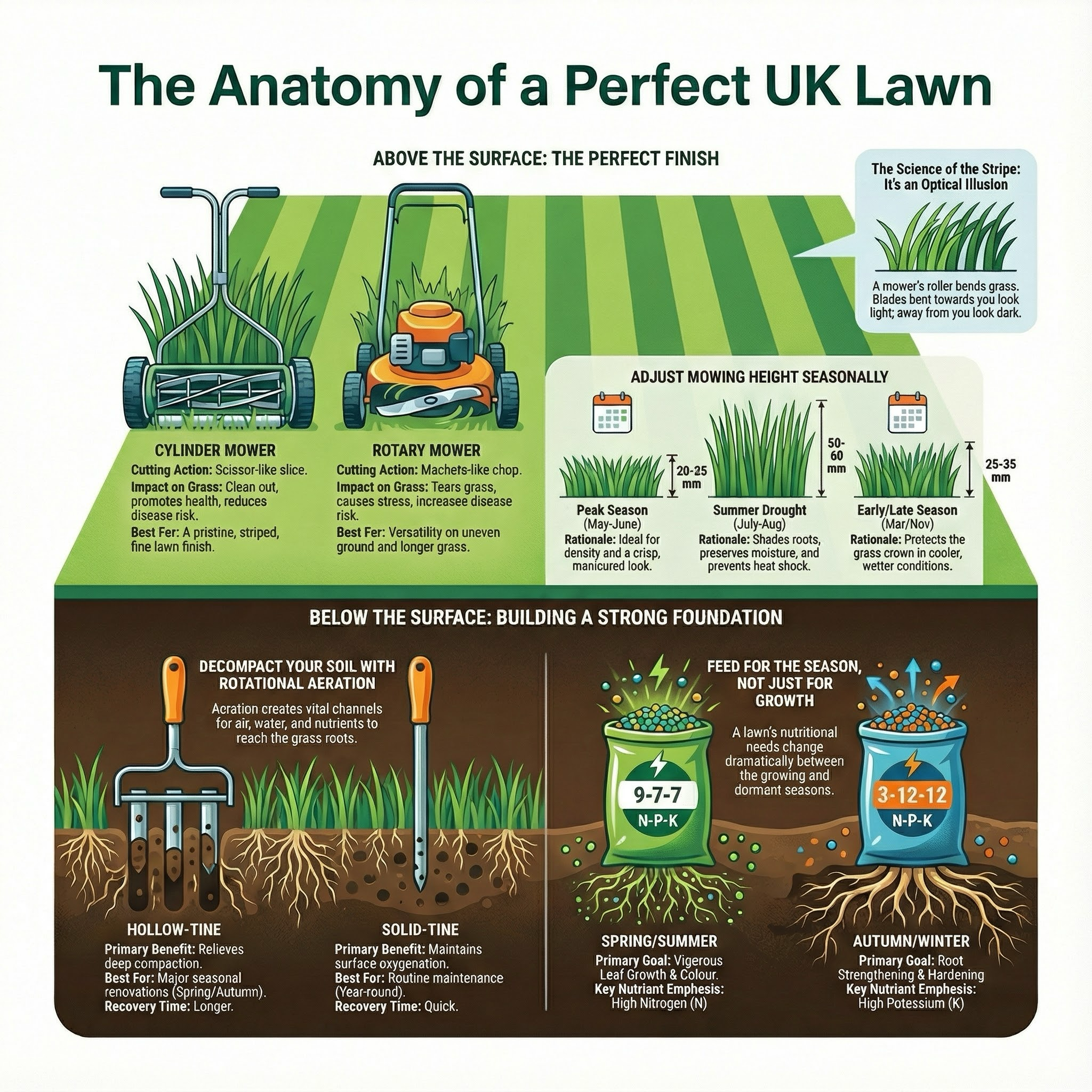
Grass Cutting explained
Whether you require a one-off "jungle clearance" or a fortnightly maintenance contract, hiring a professional ensures the job is done with precision tools that produce a far superior finish to standard domestic machinery.
| Service Type | Low £ | High £ | Notes |
|---|---|---|---|
| Small Lawn (up to 50m²) | £25 | £45 | Typically 20–30 mins work. |
| Medium Lawn (50–150m²) | £45 | £75 | The average UK suburban garden. |
| Large / Acreage | £80 | £250+ | Often requires ride-on machinery. |
| Overgrown Clearance | £60 | £200 | One-off fee for "first cuts" of the season. |
| Green Waste Removal | £5 | £20 | Per visit if not using a council bin. |
Prices are influenced primarily by the size of the lawn and the frequency of visits. Fortnightly contracts are usually cheaper per-visit than ad-hoc call-outs, as the grass is easier to manage when maintained regularly.
Pro Tip: Most gardeners charge a minimum call-out fee (typically £25–£35) regardless of how small the lawn is, to cover travel time and fuel costs.
While most homeowners own a lawnmower, professional services offer significant advantages. Commercial mowers have sharper, more powerful blades that "cut" rather than "tear" the grass, leading to a greener lawn and fewer brown tips.
Professionals also handle the back-breaking task of disposing of heavy, wet grass clippings. If you have a large garden, the cost of a professional-grade ride-on mower can run into thousands of pounds, making a regular service more cost-effective over several years.
Questions to ask:
During the peak growing season (April to September), once a week or once every fortnight is standard. In early spring and late autumn, once every three weeks is usually sufficient.
Most professionals will avoid cutting in heavy rain as it can smear the soil and clog the mower. However, light drizzle is usually fine, provided the ground isn't waterlogged.
Mulching returns nutrients to the soil but requires more frequent mowing. Collection is better for longer grass or if you want a pristine, "clean" finish for children or pets to play on.
Basic grass cutting doesn't usually include weed killing or scarifying. You should ask for a "Lawn Treatment" or "Lawn Care" package if you need chemical applications or moss removal.
Generally no, provided there is clear access to the garden (e.g., an unlocked side gate) and any pets are kept indoors during the service.
The first cut usually involves clearing winter debris, tackling much longer growth, and performing the first edge-shaping of the season, which takes significantly more time and fuel.
This guide was written with AI assistance and is intended for general information only. Prices are estimates based on UK averages and may vary by region. Always get at least three quotes and consult a qualified professional before starting any work.
Ask follow-ups in plain English. The AI explains options, sequencing and what to ask the grass cutting — so you walk in informed.
Lawn Treatment Guide Scope of Works Site walk‑through & debris removal – clear stones, toys and branches before machinery starts. Set mower height & cut...
READ GUIDE →GuideRegular lawn mowing is the foundation of a healthy, attractive UK garden. Beyond simple aesthetics, a consistent cutting regime encourages thicker growth, suppr...
READ GUIDE →GuideMaintaining a lush, healthy lawn is a priority for many UK homeowners, but the British climate often makes grass cutting a relentless chore. Between the "spring...
READ GUIDE →GuideMaintaining a lawn in the UK’s damp, temperate climate is a year-round commitment that significantly impacts your property's kerb appeal. Professional grass and...
READ GUIDE →GuideA lush, neatly edged lawn is the centrepiece of any British garden, providing a clean backdrop for flower beds and a safe space for families to relax. Keeping o...
READ GUIDE →GuideMaintaining a neat, healthy lawn is a priority for many UK homeowners, but the British climate means grass growth can be aggressive and unpredictable. Professio...
READ GUIDE →