Instant
01 · Ask
Ask the AI a follow-up
Got more questions about grass Cutting Service? Describe the bit you're unsure about — the AI explains options, sequencing and what to ask the grass cutting.

What grass cutting costs in 2026 — by frequency, lawn size and what's included.
You've read the brief on grass Cutting Service. Now lean on us to find the right grass cutting — and stay in control of the job.
Got more questions about grass Cutting Service? Describe the bit you're unsure about — the AI explains options, sequencing and what to ask the grass cutting.
Costs, timelines, pitfalls and the right questions to ask before any grass cutting starts on grass Cutting Service.
Itemised quotes from up to 3 local grass cuttings on grass Cutting Service — so you can compare like-for-like, not lump sums.
Ready when you are
Enter your postcode and get free quotes from local pros.
Four moves that separate a smooth job from a nightmare.
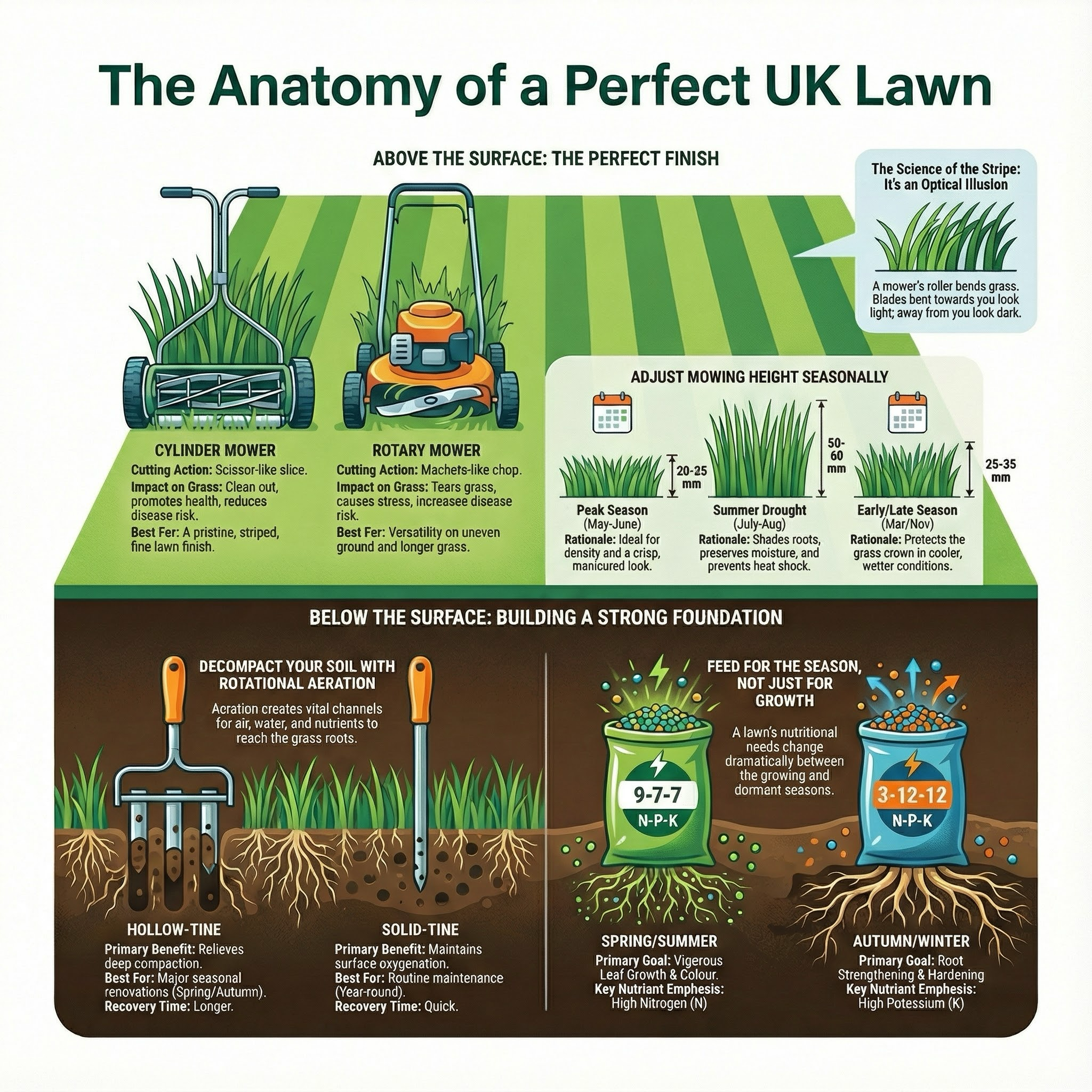
Cutting the grass too short, especially on uneven ground, which exposes the soil and encourages weeds.
Tearing the grass rather than cutting it, which leaves the lawn looking grey or silvery and makes it susceptible to disease.
This can lead to soil compaction and "clumping," where wet grass gets stuck in the mower and drops in unsightly heaps.
A neatly cut lawn looks unfinished if the edges aren't strimmed or clipped back from the borders.
Indicative UK ranges and what affects price.
By job type
Quote spread is typically ± 18% — always get 3 quotes.
Grass Cutting quick-view
Grass Cutting explained
For many UK homeowners, outsourcing this task to a professional gardener ensures the lawn is cut at the correct height for the season using industrial-grade machinery. This guide covers everything you need to know about professional mowing services, from current UK pricing to choosing the right contractor.
Prices for grass cutting in the UK have risen slightly for 2025/26, reflecting increased fuel and equipment maintenance costs. Most gardeners offer a fixed price per visit based on lawn size, though some still operate on an hourly basis.
| Service Item | Low £ | High £ | Notes |
|---|---|---|---|
| Small Lawn (up to 50m²) | £25 | £40 | Fixed price per visit. |
| Medium Lawn (100m² - 200m²) | £45 | £75 | Includes edging and blowing. |
| Large Lawn (Over 400m²) | £80 | £150+ | Often requires ride-on machinery. |
| Hourly Rate (per gardener) | £25 | £45 | Higher in London and SE. |
| Green Waste Removal | £5 | £20 | Per visit if not using your bin. |
| Initial "Jungle" Clear-out | £100 | £300 | One-off for overgrown lawns. |
Factors affecting the price include the slope of the garden, the frequency of the visits (fortnightly is usually cheaper per visit than ad-hoc), and whether the gardener needs to bring their own mower through a terraced house.
Mowing the lawn yourself is a common DIY task, but it requires a significant upfront investment in a quality mower (£300–£600 for a decent petrol or cordless model) and annual servicing costs. Professionals use commercial-grade machinery that provides a cleaner cut and can handle damp grass far more effectively than domestic models.
Professional gardeners carry Public Liability Insurance, protecting you if a stone is flicked through a window or a flowerbed is accidentally damaged.
3 Questions to Ask:
During the peak growing season (April to September), once a week or once every fortnight is standard. In early spring and late autumn, this can be reduced to once every three weeks.
Most professionals will postpone if the rain is heavy to avoid damaging your soil or "smearing" the lawn. However, high-end commercial mowers can handle light drizzle without issue.
This is called "mulching." It returns nutrients to the soil but should only be done if the grass is cut frequently. If the grass is long, clippings should be collected to prevent them from choking the turf.
It is a campaign to help pollinators by letting wildflowers grow. If you participate, warn your gardener in advance, as the first cut in June will be much harder work and may cost more.
Generally no, provided the gardener has clear access to the lawn and any pets are kept indoors. Most regular clients pay via bank transfer after the job is completed.
For a standard family lawn, 2.5cm to 4cm is ideal. In hot, dry spells, the height should be raised to 5cm+ to help the grass retain moisture and shade the roots.
This guide was written with AI assistance and is intended for general information only. Prices are estimates based on UK averages and may vary by region. Always get at least three quotes and consult a qualified professional before starting any work.
Ask follow-ups in plain English. The AI explains options, sequencing and what to ask the grass cutting — so you walk in informed.
Lawn Treatment Guide Scope of Works Site walk‑through & debris removal – clear stones, toys and branches before machinery starts. Set mower height & cut...
READ GUIDE →GuideRegular lawn mowing is the foundation of a healthy, attractive UK garden. Beyond simple aesthetics, a consistent cutting regime encourages thicker growth, suppr...
READ GUIDE →GuideMaintaining a lush, healthy lawn is a priority for many UK homeowners, but the British climate often makes grass cutting a relentless chore. Between the "spring...
READ GUIDE →GuideMaintaining a lawn in the UK’s damp, temperate climate is a year-round commitment that significantly impacts your property's kerb appeal. Professional grass and...
READ GUIDE →GuideA lush, neatly edged lawn is the centrepiece of any British garden, providing a clean backdrop for flower beds and a safe space for families to relax. Keeping o...
READ GUIDE →GuideMaintaining a neat, healthy lawn is a priority for many UK homeowners, but the British climate means grass growth can be aggressive and unpredictable. Professio...
READ GUIDE →