Instant
01 · Ask
Ask the AI a follow-up
Got more questions about lawn cutting? Describe the bit you're unsure about — the AI explains options, sequencing and what to ask the grass cutting.

Standard lawn mow and edges — regular weekly or fortnightly slot by a local gardener.
You've read the brief on lawn cutting. Now lean on us to find the right grass cutting — and stay in control of the job.
Got more questions about lawn cutting? Describe the bit you're unsure about — the AI explains options, sequencing and what to ask the grass cutting.
Costs, timelines, pitfalls and the right questions to ask before any grass cutting starts on lawn cutting.
Itemised quotes from up to 3 local grass cuttings on lawn cutting — so you can compare like-for-like, not lump sums.
Ready when you are
Enter your postcode and get free quotes from local pros.
Four moves that separate a smooth job from a nightmare.
Cutting the grass too short on uneven ground, which exposes the soil and encourages moss and weeds.
Causes "white tipping," where the grass leaf shreds and turns brown, making the lawn look unhealthy.
Results in uneven cuts and soil compaction; a professional will usually advise waiting for a dry spell.
Leaving long tufts around trees or fences ruins the aesthetic of an otherwise clean cut.
Indicative UK ranges and what affects price.
By job type
Quote spread is typically ± 18% — always get 3 quotes.
Grass Cutting quick-view
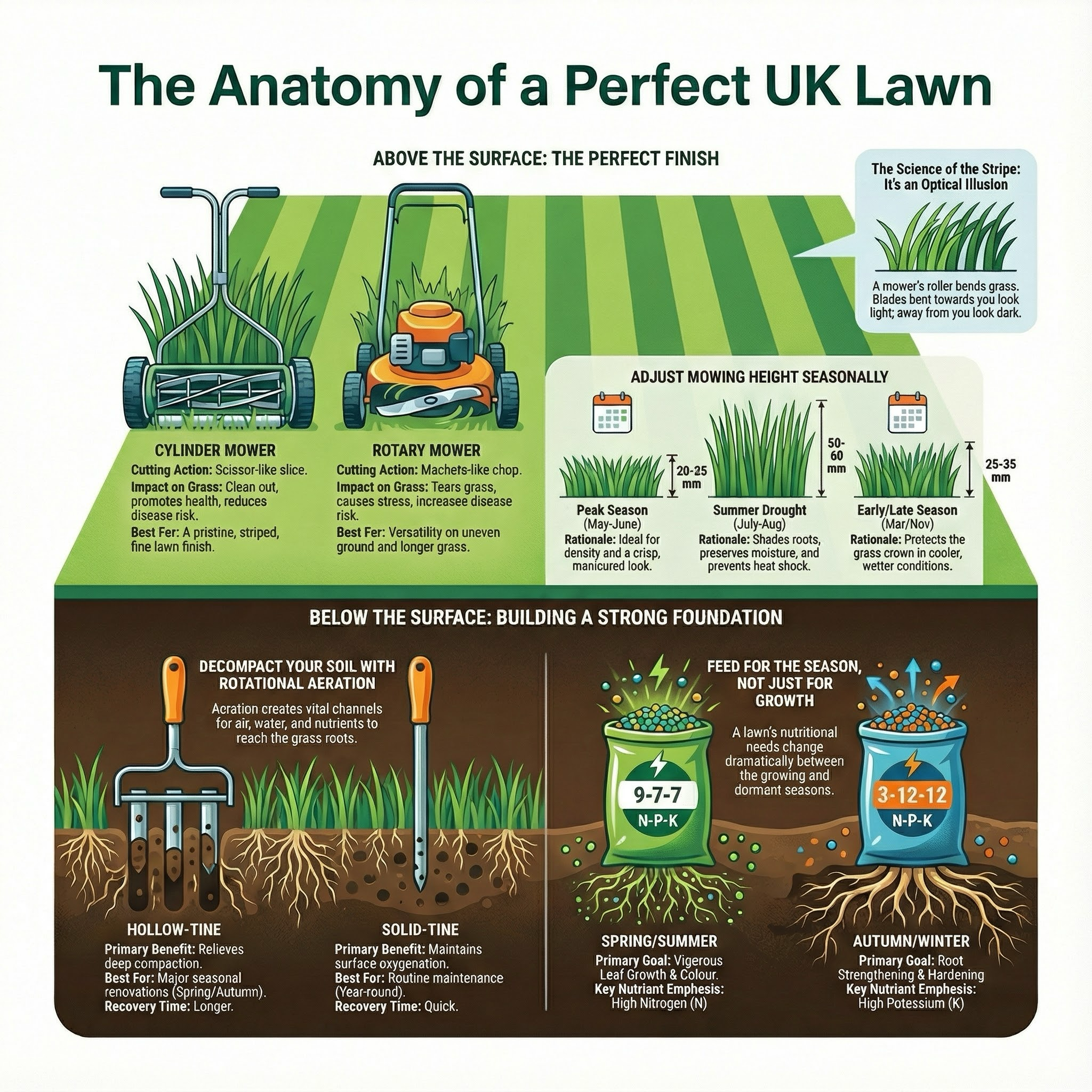
Grass Cutting explained
In the UK, the mowing season typically runs from March to October. Hiring a professional ensures the use of high-end machinery and expert techniques, such as precision edging and striping, which are difficult to achieve with standard domestic equipment.
| Service Type | Low £ | High £ | Notes |
|---|---|---|---|
| Small Lawn (<100m²) | £35 | £55 | Typical front or back terrace garden. |
| Medium Lawn (100-300m²) | £50 | £85 | Standard semi-detached or detached garden. |
| Large Lawn (300m²+) | £80 | £200+ | Often requires ride-on mowers or multiple staff. |
| Overgrown Clearance | £60 | £150 | One-off fee for "jungle" recovery jobs. |
| Waste Removal | £10 | £30 | Per visit if using the pro's waste carrier licence. |
Prices vary based on your location in the UK and the complexity of the terrain. Steep banks, narrow access for machinery, and the presence of many flower beds will generally increase the labour time and total cost.
While DIY mowing is common, many UK homeowners opt for professional services to save time and achieve a "bowling green" finish. Professionals use commercial-grade petrol or battery mowers with sharper blades that slice rather than tear the grass, reducing the risk of disease.
If a contractor takes your grass clippings away, they must legally hold a valid Waste Carrier Licence issued by the Environment Agency.
Questions to ask:
During the peak growing season (May to August), once a week is ideal. In early spring and autumn, once every fortnight is usually sufficient to maintain a tidy appearance.
It is generally avoided. Mowing wet grass can smear the soil, clog the mower, and lead to an uneven finish. Most professionals will reschedule for the next dry day.
No, as long as there is clear access to the lawn and any pets are secured inside. Most gardeners are happy to work while you are out and send an invoice electronically.
This is usually caused by blunt mower blades tearing the grass instead of cutting it. It can also happen if more than one-third of the grass height is removed in a single session.
Most professionals offer this service for a small fee, provided they have a waste carrier licence. Alternatively, they can place them in your brown council bin or compost heap.
This guide was written with AI assistance and is intended for general information only. Prices are estimates based on UK averages and may vary by region. Always get at least three quotes and consult a qualified professional before starting any work.
Ask follow-ups in plain English. The AI explains options, sequencing and what to ask the grass cutting — so you walk in informed.
Lawn Treatment Guide Scope of Works Site walk‑through & debris removal – clear stones, toys and branches before machinery starts. Set mower height & cut...
READ GUIDE →GuideRegular lawn mowing is the foundation of a healthy, attractive UK garden. Beyond simple aesthetics, a consistent cutting regime encourages thicker growth, suppr...
READ GUIDE →GuideMaintaining a lush, healthy lawn is a priority for many UK homeowners, but the British climate often makes grass cutting a relentless chore. Between the "spring...
READ GUIDE →GuideMaintaining a lawn in the UK’s damp, temperate climate is a year-round commitment that significantly impacts your property's kerb appeal. Professional grass and...
READ GUIDE →GuideA lush, neatly edged lawn is the centrepiece of any British garden, providing a clean backdrop for flower beds and a safe space for families to relax. Keeping o...
READ GUIDE →GuideMaintaining a neat, healthy lawn is a priority for many UK homeowners, but the British climate means grass growth can be aggressive and unpredictable. Professio...
READ GUIDE →