Instant
01 · Ask
Ask the AI a follow-up
Got more questions about general labour? Describe the bit you're unsure about — the AI explains options, sequencing and what to ask the handyman.

Site labour, moving, lifting and general assist — by the hour or half-day.
You've read the brief on general labour. Now lean on us to find the right handyman — and stay in control of the job.
Got more questions about general labour? Describe the bit you're unsure about — the AI explains options, sequencing and what to ask the handyman.
Costs, timelines, pitfalls and the right questions to ask before any handyman starts on general labour.
Itemised quotes from up to 3 local handymans on general labour — so you can compare like-for-like, not lump sums.
Ready when you are
Enter your postcode and get free quotes from local pros.
Four moves that separate a smooth job from a nightmare.
Pulling up old carpets or moving heavy wardrobes can reveal damp or structural issues. Be prepared for the scope of work to change.
Narrow hallways or lack of parking can double the time a job takes. Always inform the tradesperson of access constraints beforehand.
Dust and debris can spread quickly. Ensure the labourer uses heavy-duty floor protectors and plastic sheeting for nearby furniture.
Waste often takes up more space once it is dismantled. A "small pile" might require a much larger skip than anticipated.
Indicative UK ranges and what affects price.
By job type
Quote spread is typically ± 18% — always get 3 quotes.
Handyman quick-view
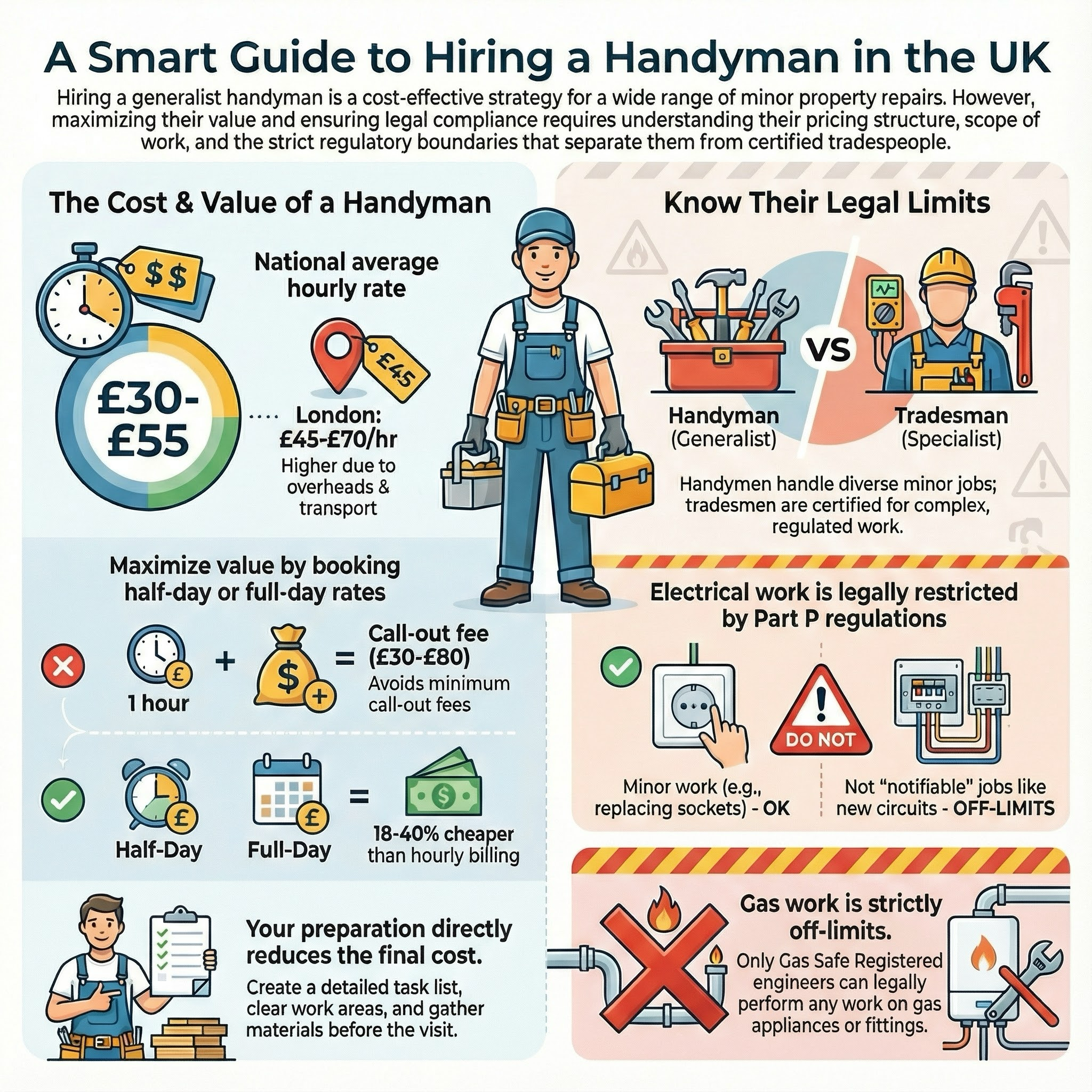
Handyman explained
While these tasks don't usually require a degree, they do require stamina, the right tools, and an understanding of site safety. For many UK homeowners, hiring a labourer is the most cost-effective way to handle "grunt work" that doesn't necessitate the higher hourly rates of a specialist electrician or plumber.
Pricing for general labour in the UK is typically based on an hourly or daily rate. Costs vary significantly depending on your location—expect to pay 20-30% more in London and the South East compared to the North of England.
| Item | Low £ | High £ | Notes |
|---|---|---|---|
| Call-out / Minimum Charge | £80 | £150 | Includes the first 60 minutes of work. |
| Labour (per hour) | £30 | £55 | Per operative; standard daytime rate. |
| Half-Day Rate (4 hours) | £120 | £220 | Often discounted compared to hourly rates. |
| Full-Day Rate (8 hours) | £220 | £400 | Best value for large clearances or prep work. |
| Waste Disposal Fee | £40 | £180 | Dependent on weight and volume of rubbish. |
| Consumables | £10 | £60 | Dust sheets, tape, rubble bags, and fixings. |
Several factors influence the final price, including the difficulty of access (e.g., third-floor flats without lifts), the need for specialist PPE, and whether the tradesperson needs to provide their own vehicle for waste removal.
Most general labour tasks are physically possible for a fit DIYer, but the "hidden" costs of doing it yourself include tool hire, skip permits, and potential trips to the local tip. Professionals are faster, have the correct lifting techniques to avoid back injuries, and carry Public Liability insurance.
Note: General labourers should never undertake gas, electrical, or structural work. Ensure any task involving these elements is handled by a Gas Safe engineer, a Part P registered electrician, or a qualified builder.
Most professional handymen and labourers will bring basic tools like hammers, screwdrivers, crowbars, and cleaning equipment. However, if you need specialist tools like a breaker or a pressure washer, confirm this beforehand as they may charge a hire fee.
Items like fridges, freezers, and televisions are classified as hazardous waste (WEEE). Many labourers will charge an extra fee for these as they require specialist disposal at a recycling centre.
No, a professional tradesperson is responsible for providing their own Personal Protective Equipment, including steel-toed boots, gloves, and dust masks. If they turn up without these for a heavy job, it is a significant red flag.
Only if they have Public Liability insurance. Always ask to see their certificate before they start work. Your own home insurance may not cover damage caused by a tradesperson who is not properly insured.
Extremely heavy or specialist items often require a two-person team or specialist equipment. Always be honest about the weight of items to ensure the right number of people are sent to the job.
This guide was written with AI assistance and is intended for general information only. Prices are estimates based on UK averages and may vary by region. Always get at least three quotes and consult a qualified professional before starting any work.
Ask follow-ups in plain English. The AI explains options, sequencing and what to ask the handyman — so you walk in informed.
An emergency roof repair is often the only thing standing between a minor leak and a catastrophic repair bill. In the UK, where driving rain and high winds are ...
READ GUIDE →GuideLuggage Repair Guide Scope of Works Assess damage & quote – check zip, wheels, handle, shell cracks; photograph for records. Strip & clean component are...
READ GUIDE →GuideSofa Assembly Service Guide Scope of Works Check delivery note, photograph boxes and inspect for transit damage . Protect floors, then move boxed sofa to the as...
READ GUIDE →GuideWardrobe Assembly Costs Scope of Works Arrival & parts check – count panels, fixings and ensure no transit damage before work starts. Room protection & ...
READ GUIDE →GuideCustom kitchen shelving has become a staple of modern UK home design. Whether you are looking to create an open-plan feel with oak "floating" shelves or need he...
READ GUIDE →GuideSetting up a professional workspace requires more than just a screwdriver and some patience. Commercial-grade furniture is often heavier, more complex, and subj...
READ GUIDE →