Instant
01 · Ask
One job or a long list?
Describe what needs doing — the AI tells you whether it's a 1-hour visit, a full day, or jobs that actually need a specialist trade.

Wall-mounted bike rack — secure anchors for 1-6 bikes, plus accessory hooks where requested.
Read the brief on scope, insurance and hourly minimums — then let Three local handymen quote.
Describe what needs doing — the AI tells you whether it's a 1-hour visit, a full day, or jobs that actually need a specialist trade.
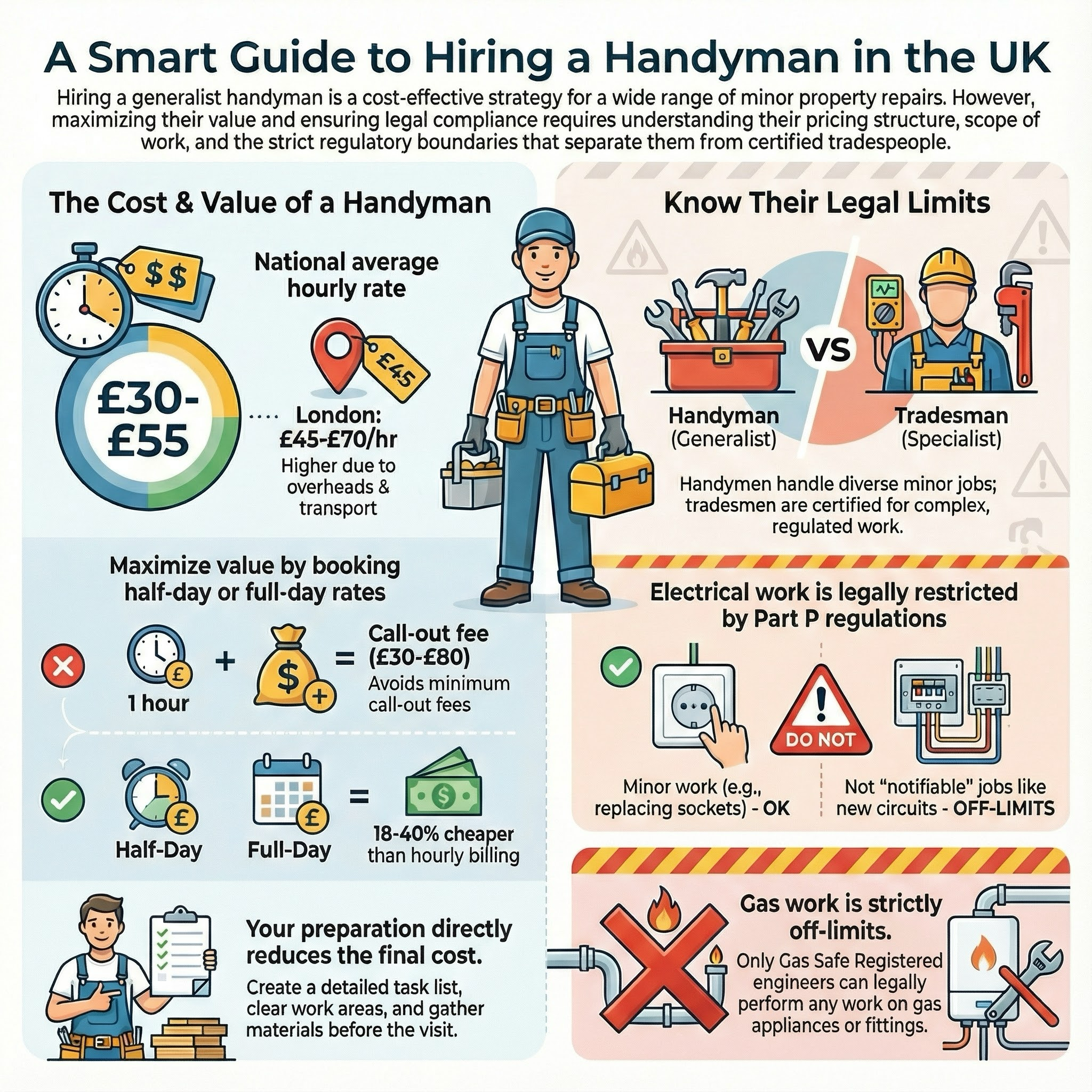
Public liability, DBS, hourly minimums, certifications. Know when to use a handyman and when to call a specialist.
Three local handymen quote on the same list — hours, materials, call-out — so you compare cleanly.
Ready when you are
Enter your postcode and get free quotes from local pros.
Four moves that separate a smooth job from a nightmare.
A handyman is great for assembly, small repairs, picture hanging. A handyman is NOT for gas, electrical or structural work — those need certified trades.
Most handymen have a 1-hour minimum or call-out fee. Confirm the rate AND the minimum before agreeing the visit.
£1m+ public liability is standard. Without it, an accidental damage repair comes out of your pocket — even if it's their fault.
If they'll be in the house with kids or vulnerable adults, a DBS check matters. Reputable handymen mention this on their profile.
Indicative UK ranges and what affects price.
By job type
Quote spread is typically ± 18% — always get 3 quotes.
Handyman quick-view
Handyman explained
Wall-mounted bike rack installation in a UK garage typically costs £60–£250 depending on rack type, wall material, and number of bikes. Single bike hooks run £40-£90 fitted; multi-bike pulley/lift systems are £150-£350 fitted. The skill is choosing fixings appropriate to the wall (concrete, brick, plasterboard, breeze block) and getting heights right for the bikes you want to store.
UK garages typically have masonry walls (brick, concrete block, or rendered finish), which makes mounting solid — but cheap rawl plugs and short screws are still the most common installation mistake.
| Type | Material cost | Fitted |
|---|---|---|
| Wall hook (single bike, vertical) | £10–£35 | £40–£90 |
| Wall mount (single bike, horizontal) | £20–£60 | £50–£120 |
| 2-3 bike wall rack system | £40–£120 | £80–£200 |
| Floor-to-ceiling pole rack (2 bikes) | £60–£140 | £100–£200 |
| Pulley / lift system (1-2 bikes) | £40–£120 | £100–£250 |
| Premium powder-coated rack systems | £100–£250 | £150–£350 |
Plan before drilling:
Standard garage hooks: 15-25 kg per hook (rated). For e-bikes (20-30 kg), use heavy-duty hooks rated for 35-50 kg, fitted into solid masonry with M8 fixings or larger.
No — the bike's wheel is designed to take the weight of the bike (and rider) anyway. Hanging by the wheel is the most space-efficient method and cycling shops do exactly this. Avoid hanging by the saddle (stress on saddle rails).
Single hook: 30-45 minutes. Multi-bike rack: 1-2 hours. Pulley / lift system: 1.5-2.5 hours. Quick once the wall is identified, the level is set, and the right fixings are sourced.
Yes, with the right fixings. Heavy-duty hollow-wall toggle bolts (Snaptoggle, Geefix) can hold 30-40 kg per fixing in plasterboard. For loads above this, fixing into studs or the masonry behind is essential.
Wall hooks for daily-use bikes (quick access). Pulley / lift systems for occasional bikes you want out of the way (kids' bikes, winter storage of summer bikes). Pulley systems clear floor and wall space but are slower to use day-to-day.
Yes, with basic DIY skills — masonry drill, level, suitable fixings. The job is straightforward on solid brick or concrete. Worth a handyman if you're unsure about the wall material or want multiple bikes hung neatly to a plan.
Want a local pro to handle this? A handyman or carpenter will install a single hook in under an hour or a multi-bike system in a half-day. Best value when bundled with other small jobs around the garage.
This guide was written with AI assistance and is intended for general information only. Prices are estimates based on UK averages and may vary by region. Always get at least three quotes and consult a qualified professional before starting any work.
Ask follow-ups in plain English. The AI explains options, sequencing and what to ask the handyman — so you walk in informed.
An emergency roof repair is often the only thing standing between a minor leak and a catastrophic repair bill. In the UK, where driving rain and high winds are ...
READ GUIDE →GuideLuggage Repair Guide Scope of Works Assess damage & quote – check zip, wheels, handle, shell cracks; photograph for records. Strip & clean component are...
READ GUIDE →GuideSofa Assembly Service Guide Scope of Works Check delivery note, photograph boxes and inspect for transit damage . Protect floors, then move boxed sofa to the as...
READ GUIDE →GuideWardrobe Assembly Costs Scope of Works Arrival & parts check – count panels, fixings and ensure no transit damage before work starts. Room protection & ...
READ GUIDE →GuideCustom kitchen shelving has become a staple of modern UK home design. Whether you are looking to create an open-plan feel with oak "floating" shelves or need he...
READ GUIDE →GuideSetting up a professional workspace requires more than just a screwdriver and some patience. Commercial-grade furniture is often heavier, more complex, and subj...
READ GUIDE →