Instant
01 · Ask
Ask the AI a follow-up
Got more questions about crane Hire Cost & Work? Describe the bit you're unsure about — the AI explains options, sequencing and what to ask the hire services.

Mobile or static crane for heavy lifts — engineered lift plan, banksman and operator included.
You've read the brief on crane Hire Cost & Work. Now lean on us to find the right hire services — and stay in control of the job.
Got more questions about crane Hire Cost & Work? Describe the bit you're unsure about — the AI explains options, sequencing and what to ask the hire services.
Costs, timelines, pitfalls and the right questions to ask before any hire services starts on crane Hire Cost & Work.
Itemised quotes from up to 3 local hire servicess on crane Hire Cost & Work — so you can compare like-for-like, not lump sums.
Ready when you are
Enter your postcode and get free quotes from local pros.
Four moves that separate a smooth job from a nightmare.
Cranes exert massive pressure; if they are set up over old Victorian drains or septic tanks without proper matting, the ground can collapse.
Every crane has a maximum wind speed limit (usually around 9–12 m/s); if it's too gusty, the lift must be postponed for safety.
If the crane arm swings over a neighbour's land, you technically need their permission, though most neighbours are accommodating if asked early.
Narrow UK residential streets often require a "Spotter" to guide the crane to the property, or temporary parking suspensions.
Indicative UK ranges and what affects price.
By job type
Quote spread is typically ± 18% — always get 3 quotes.
Hire Services quick-view
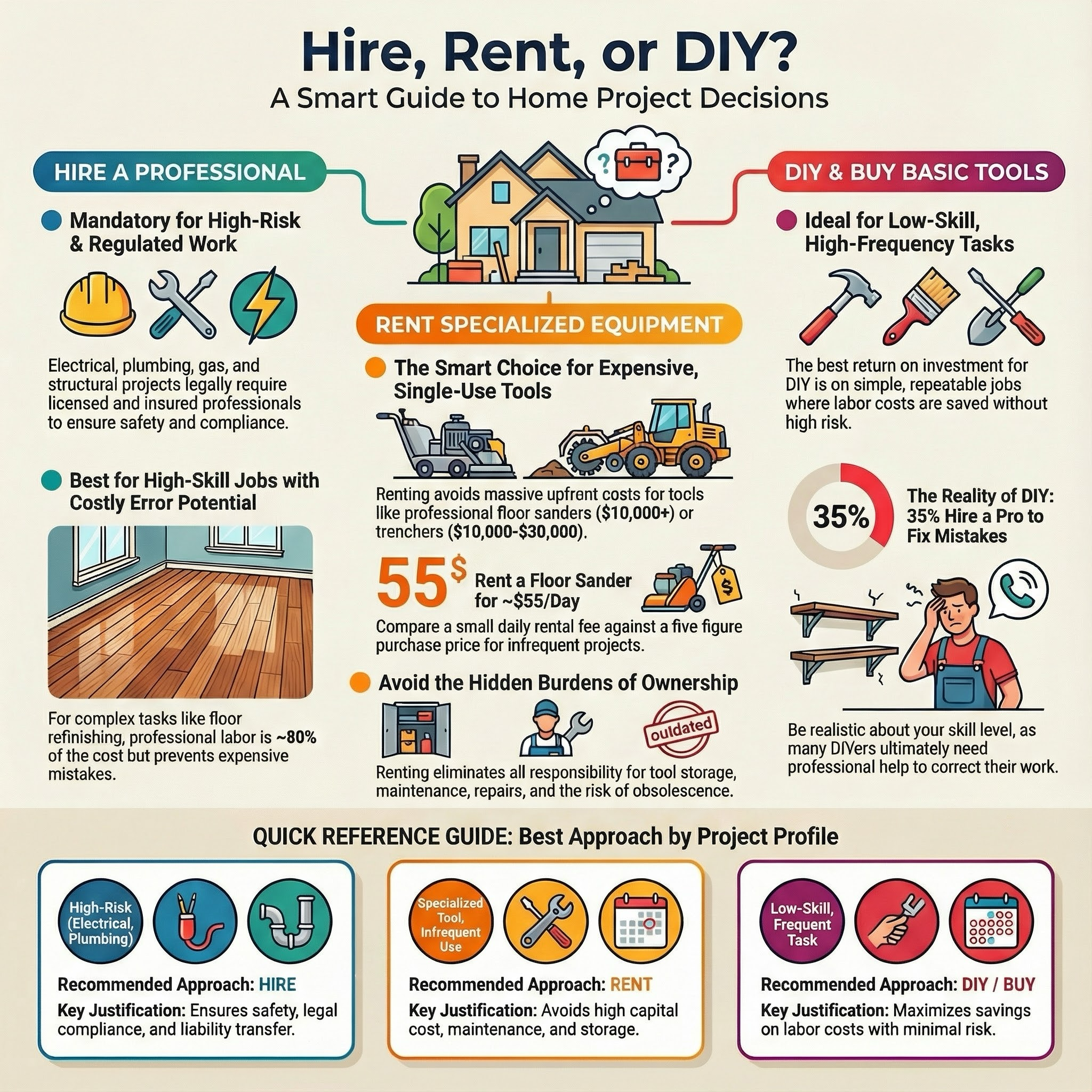
For most homeowners, the choice isn't just about the size of the crane, but the level of service required. Understanding the difference between a simple machine hire and a fully managed contract lift is essential to protect your home and satisfy your insurer.
| Item | Low £ | High £ | Notes |
|---|---|---|---|
| Small Mobile Crane (35t-40t) | £550 | £950 | Daily hire rate for CPA Crane Hire (machine only). |
| Contract Lift (Fully Managed) | £1,200 | £3,000 | Includes planning, insurance, and all personnel. Recommended for homeowners. |
| Slinger / Signaller Fee | £200 | £350 | Daily rate for the person directing the operator. |
| Council Road Permit | £150 | £650 | Varies significantly by local authority and duration. |
| Heavy Lift / Long Reach Crane | £1,500 | £4,500 | For very large distances or weights (e.g., 100t+ cranes). |
Prices depend heavily on the "radius" (the distance from the crane's centre to the drop-off point). The further the reach, the larger and more expensive the crane required. Always ensure quotes include VAT and any potential "minimum hire" periods, which are usually 8 hours.
Crane operation is strictly a professional-only service. There is no DIY path for crane hire due to the extreme risks involved and the specialist qualifications required to operate and signal the machinery.
Critical Advice: Homeowners should almost always opt for a Contract Lift rather than CPA Crane Hire. Under CPA hire, you are responsible for the lift plan and insurance; under a Contract Lift, the crane company takes full legal and financial responsibility for the entire operation.
Yes, provided the crane has the necessary capacity and reach. A "Contract Lift" will include a plan that ensures the load stays at a safe height and follows a pre-determined path to avoid risks to the structure.
It is highly recommended. If the boom of the crane "oversails" their property, you technically need permission. Most companies will help you manage these conversations during the site survey.
Rain is rarely an issue, but wind and lightning are. If wind speeds exceed the crane's safe operating limit, the lift will be cancelled. Check your contract for "weather cancellation" fees.
Cranes are very heavy. Professional companies use "outrigger mats" to spread the load, but there is always a small risk to thin tarmac or decorative paving. Discuss ground protection during the site survey.
A typical 35-tonne crane needs a footprint of roughly 6m x 6m once its outriggers are fully extended. The site surveyor will measure your specific space to ensure the machine fits safely.
This guide was written with AI assistance and is intended for general information only. Prices are estimates based on UK averages and may vary by region. Always get at least three quotes and consult a qualified professional before starting any work.
Ask follow-ups in plain English. The AI explains options, sequencing and what to ask the hire services — so you walk in informed.
Scope of Services Assess client’s tool requirements based on project scope and duration Recommend suitable tools and hire packages to meet budget and timeline C...
READ GUIDE →GuideHiring a cherry picker, technically known as a Mobile Elevating Work Platform (MEWP), is often the safest and most efficient way for UK homeowners to tackle hig...
READ GUIDE →GuideHiring a mini or micro digger is a game-changer for UK homeowners tackling landscaping, extensions, or driveway renovations. These compact machines can do the w...
READ GUIDE →GuideScope of Hire Inspect equipment condition and functionality before hire Confirm delivery, setup and return times Provide operational instructions and safety gui...
READ GUIDE →GuideFor UK homeowners embarking on major landscaping, extensions, or driveway renovations, plant hire is the most efficient way to handle heavy-duty tasks. Whether ...
READ GUIDE →GuideScaffolding for a gable end is a critical requirement for any significant work on the side of a UK property, including repointing, bargeboard replacement, or ch...
READ GUIDE →