Instant
01 · Ask
Ask the AI a follow-up
Got more questions about website Design Project Overview? Describe the bit you're unsure about — the AI explains options, sequencing and what to ask the it & consultancy.

What a website project looks like — brief, design, build, launch — and what it costs at each tier.
You've read the brief on website Design Project Overview. Now lean on us to find the right it & consultancy — and stay in control of the job.
Got more questions about website Design Project Overview? Describe the bit you're unsure about — the AI explains options, sequencing and what to ask the it & consultancy.
Costs, timelines, pitfalls and the right questions to ask before any it & consultancy starts on website Design Project Overview.
Itemised quotes from up to 3 local it & consultancys on website Design Project Overview — so you can compare like-for-like, not lump sums.
Ready when you are
Enter your postcode and get free quotes from local pros.
Four moves that separate a smooth job from a nightmare.
Adding new features mid-project can lead to spiralling costs and missed deadlines; agree on a fixed scope early.
Some agencies charge high monthly fees for "proprietary" CMS platforms that make it difficult for you to leave later.
Using oversized images or too many "plugins" can frustrate users and hurt your Google ranking.
Over 50% of UK web traffic is mobile; a site that looks poor on a phone will lose you business.
Indicative UK ranges and what affects price.
By job type
Quote spread is typically ± 18% — always get 3 quotes.
IT & Consultancy quick-view
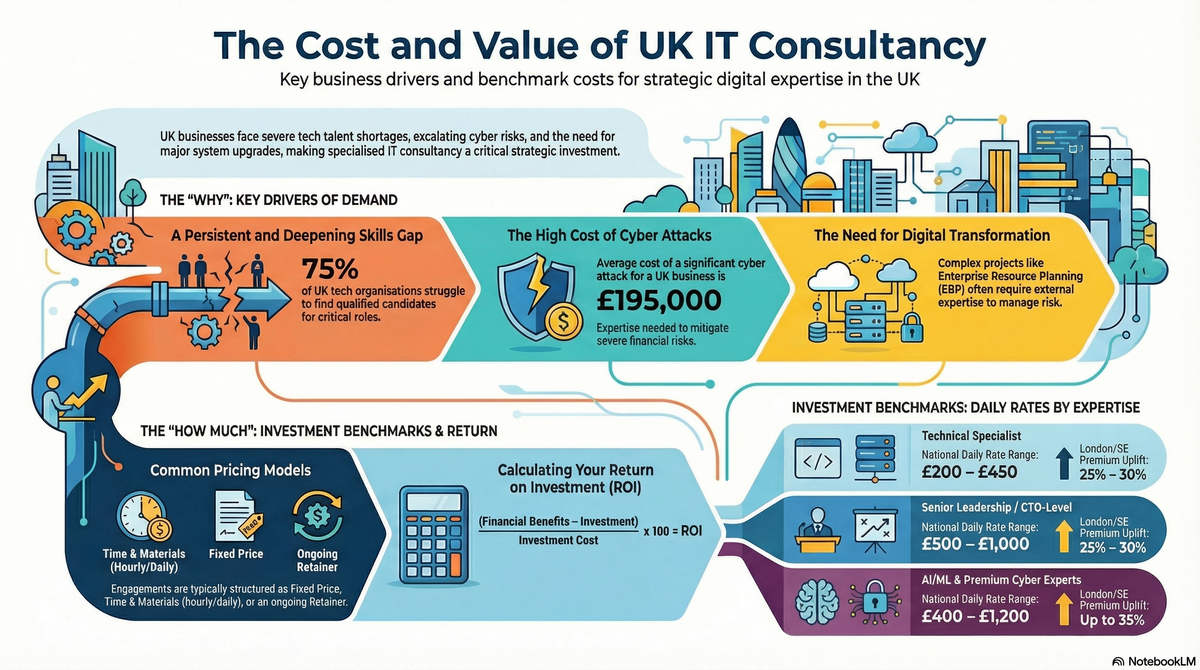
IT & Consultancy explained
A successful project requires a balance of aesthetic design, technical performance, and user experience. This guide outlines the typical journey of a website build, the investment required in the current UK market, and how to avoid common pitfalls when hiring a developer.
| Item | Low £ | High £ | Notes |
|---|---|---|---|
| Basic Brochure Site (1-5 pages) | £750 | £2,000 | Ideal for local trades and small portfolios. |
| Standard Business Site (10-20 pages) | £2,500 | £6,000 | Includes custom design and SEO setup. |
| E-commerce Store | £4,000 | £15,000+ | Depends on product volume and payment complexity. |
| Monthly Maintenance & Hosting | £30 | £250 | Includes security updates and backups. |
| Copywriting (per page) | £50 | £150 | Professional SEO-optimised content. |
Pricing is primarily driven by the level of customisation required. While template-based sites are more affordable, bespoke designs tailored to your specific brand identity require more design hours and command a higher premium.
Always clarify if the price includes VAT, as many UK agencies quote "plus VAT" while independent freelancers may not be VAT-registered.
DIY platforms like Wix or Squarespace are excellent for beginners with a limited budget and simple needs. However, these platforms often have limitations regarding deep SEO optimisation and site speed, which can hinder your visibility on Google.
Hiring a professional ensures your site is built on a scalable platform like WordPress or Shopify. A pro will handle the technical "heavy lifting," such as schema markup, image compression, and security protocols that protect your business from cyber threats.
3 Questions to Ask:
It is usually best to purchase your own domain (e.g., via Namecheap or GoDaddy) so you maintain full legal ownership. Your developer can then link this to the website they build for you.
A new website provides the foundation for SEO, but ranking on page one usually requires ongoing work. A good developer will ensure the site is "search engine friendly" at launch.
Most professionals offer a 30-day "bug-fix" period. Beyond that, it is wise to sign a maintenance agreement to ensure software and security patches are applied regularly.
Yes, provided the site is built on a Content Management System (CMS). Ensure your developer provides a short training session or video guide on how to use the dashboard.
Usually not. Hosting is a recurring utility bill for the "space" your website occupies on the internet. Expect to pay this monthly or annually as a separate cost.
This guide was written with AI assistance and is intended for general information only. Prices are estimates based on UK averages and may vary by region. Always get at least three quotes and consult a qualified professional before starting any work.
Ask follow-ups in plain English. The AI explains options, sequencing and what to ask the it & consultancy — so you walk in informed.
Setting up a new home office or upgrading a family workstation is no longer just about plugging in a power lead. With the rise of remote working and high-perfor...
READ GUIDE →GuideSmartphones are the central hub of the modern UK home, managing everything from smart heating and security cameras to mobile banking and work communications. Wh...
READ GUIDE →GuideRegular computer maintenance is the digital equivalent of a boiler service or a car MOT. For UK homeowners, a well-maintained PC or laptop ensures longevity, pr...
READ GUIDE →GuideLosing access to precious family photos, critical financial documents, or years of work files is a distressing experience for any UK homeowner. Whether it is a ...
READ GUIDE →GuideLaptops are essential tools for modern life, serving as our offices, entertainment hubs, and connection to the world. When they fail, the disruption to your wor...
READ GUIDE →GuideSmart home integration has evolved from a luxury novelty to a practical investment for UK homeowners. Beyond the convenience of voice-activated lighting, a prof...
READ GUIDE →