Instant
01 · Ask
One service or full management?
Just need a CP12, or full lettings + management? Describe and the AI tells you who to call.

Full written and photographic inventory — protects landlord and tenant when the tenancy ends.
Read the brief on the legal certificate cycle and management options — then let Three local firms quote.
Just need a CP12, or full lettings + management? Describe and the AI tells you who to call.
CP12 annual, EICR 5-year, EPC 10-year, MEES rules, deposit protection schemes. Know the calendar.
Three local firms quote on the same services — fees, response SLA, included works — so you compare like-for-like.
Ready when you are
Enter your postcode and get free quotes from local pros.
Four moves that separate a smooth job from a nightmare.
Every let with gas needs an annual Gas Safety Cert. £80–£140. Without it, you face £6k fines and possible prosecution.
Electrical Installation Condition Report — legally required since 2020 for English rentals. £150–£300 per property.
MEES rules require EPC E or above to legally let. Below E, you can't let. Plan upgrades before listing.
England-only: check tenant immigration status before move-in. Penalties up to £20k per illegal tenant if you skip this.
Indicative UK ranges and what affects price.
By job type
Quote spread is typically ± 18% — always get 3 quotes.
Landlord Services quick-view
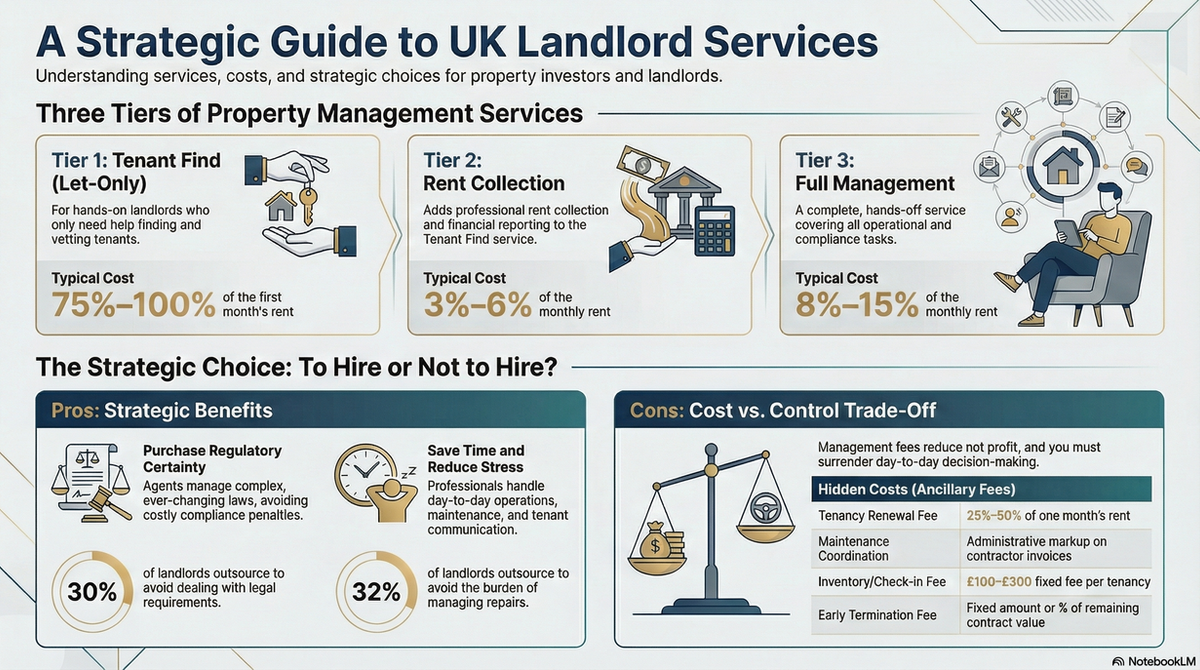
Landlord Services explained
An inventory report (also called "schedule of condition") is the document compiled before a UK tenancy that records the property's condition and contents. Professional inventory services typically cost £80–£250 for check-in inventory, with check-out reports £80-£200, and mid-term inspections £40-£120. Most landlords find it the single most cost-effective protection against deposit disputes.
Without a properly compiled inventory, landlords routinely lose deposit disputes — the burden of proof for damage at check-out sits with the landlord, and "the tenant moved in like that" is impossible to argue without baseline documentation.
| Service | Typical price |
|---|---|
| Check-in inventory (1-bed flat, unfurnished) | £80–£140 |
| Check-in inventory (2-bed, unfurnished) | £100–£180 |
| Check-in inventory (3-bed, furnished) | £140–£250 |
| Mid-term inspection visit | £40–£100 |
| Check-out report (1-2 bed) | £80–£180 |
| Check-out report (3-4 bed) | £120–£250 |
| HMO inventory (per room + common areas) | £40–£90 per room |
| DIY inventory app subscription | £10–£40/year |
An optional mid-tenancy visit (typically 6 months in, then yearly) to:
£40-£100 per visit; recommended at least annually for any tenancy.
The end-of-tenancy comparison document, comparing condition at move-out against the original check-in. The check-out clerk:
This document is the basis for any deposit deductions and is the primary evidence in deposit disputes.
Not legally required, but strongly recommended. Without one, deposit disputes almost always go in favour of the tenant because the landlord can't prove pre-existing condition. Modern Tenancy Deposit Schemes (DPS, MyDeposits, TDS) treat absence of inventory as a strong tenant defence.
Independent professional clerks ~£80-£250 carry materially more weight in disputes than self-compiled. For 1-2 properties, the £150 spend is typically saved many times over in fewer disputes. For 5+ properties, building an in-house process with apps may be more economical.
Typically every 6-12 months. Tenancy agreements should specify frequency and notice (24 hours notice is the standard legal minimum for routine inspections). More frequent inspections look intrusive and damage tenant relationships.
Reach informal agreement first. If unresolved, the deposit scheme provides free Alternative Dispute Resolution (ADR). Adjudicators look for evidence — independent inventory + photos + receipts for repairs almost always wins. No documentation almost always loses.
Yes — apps like Inventory Hive, Imfuna, and similar generate professional-looking reports with timestamped photos. Adjudicators accept them. The advantage of independent clerks is impartiality, not just the document quality.
No — each new tenancy needs a fresh check-in inventory documenting condition at start. Reusing old inventories means you can't prove changes that happened between tenancies vs during them.
Want a local pro to handle this? An independent inventory clerk is the right call for any landlord property. The £80-£250 fee at check-in is consistently the best-value spend in landlord property management — pays for itself many times over in protected deposit deductions.
This guide was written with AI assistance and is intended for general information only. Prices are estimates based on UK averages and may vary by region. Always get at least three quotes and consult a qualified professional before starting any work.
Ask follow-ups in plain English. The AI explains options, sequencing and what to ask the landlord services — so you walk in informed.
For UK landlords, a professional inventory assessment is the frontline of defence for your investment. It provides a legally robust, photographic, and written r...
READ GUIDE →GuideElectrical appliance testing, commonly known as PAT (Portable Appliance Testing), is a vital safety procedure for UK landlords and homeowners. While not a stric...
READ GUIDE →GuideUrgent Assistance Tasks • Secure the property immediately by checking all entry points and isolating any hazards. • Contact emergency services where there is an...
READ GUIDE →GuideA property condition inspection is an essential safeguard for UK landlords and homeowners alike. These assessments provide a professional snapshot of a building...
READ GUIDE →GuideAnnual gas safety inspection for landlords. UK costs.
READ GUIDE →Guide5-year electrical safety report for landlords. UK costs.
READ GUIDE →