Instant
01 · Ask
Ask the AI a follow-up
Got more questions about property Condition Inspection? Describe the bit you're unsure about — the AI explains options, sequencing and what to ask the landlord services.

Quarterly, mid-tenancy or pre-sale property inspection — written report identifies issues before they escalate.
You've read the brief on property Condition Inspection. Now lean on us to find the right landlord services — and stay in control of the job.
Got more questions about property Condition Inspection? Describe the bit you're unsure about — the AI explains options, sequencing and what to ask the landlord services.
Costs, timelines, pitfalls and the right questions to ask before any landlord services starts on property Condition Inspection.
Itemised quotes from up to 3 local landlord servicess on property Condition Inspection — so you can compare like-for-like, not lump sums.
Ready when you are
Enter your postcode and get free quotes from local pros.
Four moves that separate a smooth job from a nightmare.
Often masked by fresh paint; professionals look for salt staining and use moisture probes to find the truth.
Lofts or cellars blocked by clutter prevent a full assessment; ensure these are cleared before the inspector arrives.
Reports without clear photos or specific descriptions are often useless in legal or insurance disputes.
Lack of proper notice can lead to refused entry; always provide at least 24 hours' written notice to tenants.
Indicative UK ranges and what affects price.
By job type
Quote spread is typically ± 18% — always get 3 quotes.
Landlord Services quick-view
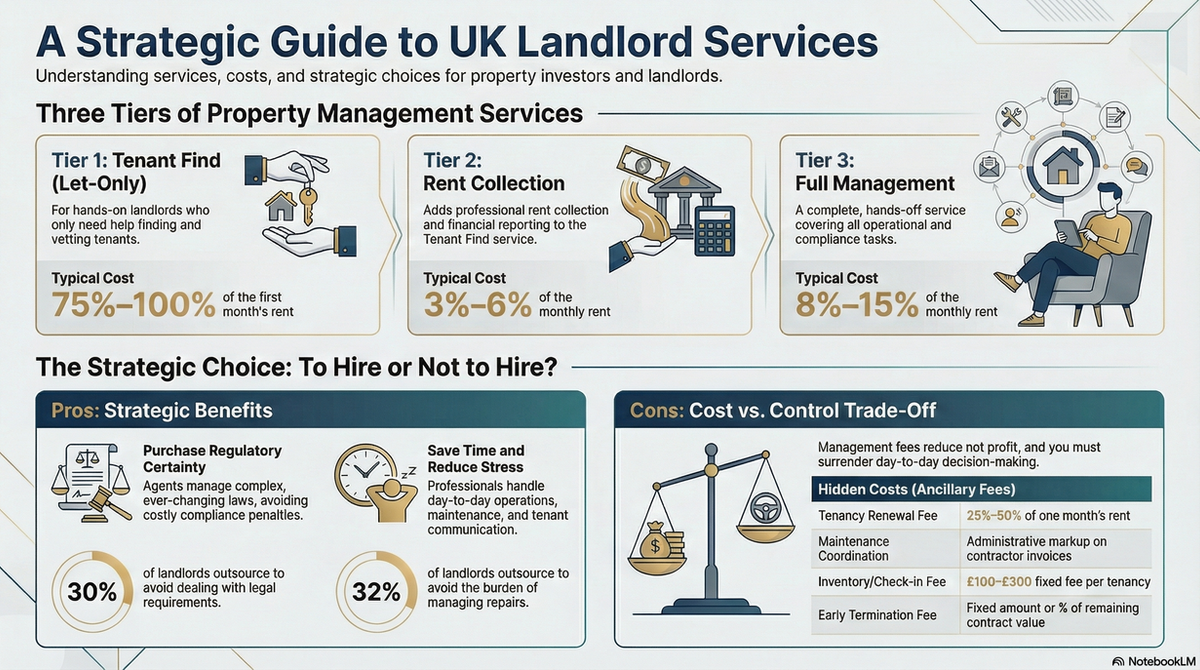
Landlord Services explained
For landlords, these inspections are vital for complying with "Fitness for Human Habitation" standards and protecting their investment. For homeowners, they offer peace of mind and a clear roadmap for future maintenance, ensuring the property retains its value in the competitive UK market.
| Item | Low £ | High £ | Notes |
|---|---|---|---|
| Studio / 1-Bed Flat | £100 | £150 | Basic visual report and photos. |
| 3-Bed Semi-Detached | £180 | £250 | Comprehensive interior and exterior check. |
| Large Detached / HMO | £300 | £500+ | Detailed room-by-room assessment. |
| Follow-up Hourly Rate | £40 | £70 | For specific defect investigations. |
Prices generally include VAT and a digital report. Total costs are influenced by the property's square footage, its age, and whether you require a simple condition summary or a full RICS-standard survey.
While a homeowner can spot obvious leaks, a professional inspector uses specialist tools like thermal imaging cameras and moisture meters to find hidden issues. For landlords, a professional report provides impartial evidence that is legally defensible in deposit disputes or "Fitness for Human Habitation" claims.
Professional inspections are highly recommended every 12 months for tenanted properties to ensure compliance with evolving UK safety legislation.
For landlords, a formal inspection is recommended every 6 to 12 months. Homeowners should consider a professional check every 3 to 5 years to stay on top of preventative maintenance.
No. An inventory focuses on the presence and condition of furniture and fittings. A condition inspection focuses on the fabric of the building, safety, and maintenance needs.
Yes. An inspector will identify the root cause, such as a leaking gutter or poor ventilation, helping you fix the problem rather than just cleaning the symptoms.
It isn't strictly necessary if the inspector has access, but being there allows you to discuss findings in real-time. For tenanted properties, the inspector usually works independently.
Usually, yes. Providing proof of regular maintenance and professional inspections can be vital when making claims for water damage or structural issues.
This guide was written with AI assistance and is intended for general information only. Prices are estimates based on UK averages and may vary by region. Always get at least three quotes and consult a qualified professional before starting any work.
Ask follow-ups in plain English. The AI explains options, sequencing and what to ask the landlord services — so you walk in informed.
For UK landlords, a professional inventory assessment is the frontline of defence for your investment. It provides a legally robust, photographic, and written r...
READ GUIDE →GuideInventory Report Compilation Steps • Gather complete inventory records from all departments • Verify accuracy and completeness of records; rectify discrepancies...
READ GUIDE →GuideElectrical appliance testing, commonly known as PAT (Portable Appliance Testing), is a vital safety procedure for UK landlords and homeowners. While not a stric...
READ GUIDE →GuideUrgent Assistance Tasks • Secure the property immediately by checking all entry points and isolating any hazards. • Contact emergency services where there is an...
READ GUIDE →GuideAnnual gas safety inspection for landlords. UK costs.
READ GUIDE →Guide5-year electrical safety report for landlords. UK costs.
READ GUIDE →