Instant
01 · Ask
Ask the AI a follow-up
Got more questions about access Ramp Installation? Describe the bit you're unsure about — the AI explains options, sequencing and what to ask the mobility aids.

Wheelchair or scooter access ramp — modular metal or built-in concrete, designed to BS 8300 spec.
You've read the brief on access Ramp Installation. Now lean on us to find the right mobility aids — and stay in control of the job.
Got more questions about access Ramp Installation? Describe the bit you're unsure about — the AI explains options, sequencing and what to ask the mobility aids.
Costs, timelines, pitfalls and the right questions to ask before any mobility aids starts on access Ramp Installation.
Itemised quotes from up to 3 local mobility aidss on access Ramp Installation — so you can compare like-for-like, not lump sums.
Ready when you are
Enter your postcode and get free quotes from local pros.
Four moves that separate a smooth job from a nightmare.
A common error where the ramp is too short for the height, making it impossible for manual wheelchair users to climb.
Ramps that "dam" water against the house, leading to damp issues or ice rinks in winter.
Forgetting a level 1.2m x 1.2m platform at the top, which makes opening the door while on the slope dangerous.
Using standard timber or smooth concrete without high-friction inserts or "broom" finishes.
Indicative UK ranges and what affects price.
By job type
Quote spread is typically ± 18% — always get 3 quotes.
Mobility Aids quick-view
Mobility Aids explained
A professional installation goes beyond just "building a slope." It involves careful calculation of gradients, selection of weather-resistant materials, and strict adherence to UK building standards to prevent accidents and ensure long-term durability.
Prices for access ramps vary significantly based on the material chosen and the length required to achieve a safe 1:12 or 1:15 gradient. The following estimates include VAT and professional installation for 2025/26.
| Item | Low £ | High £ | Notes |
|---|---|---|---|
| Portable/Suitcase Ramp | £150 | £450 | Temporary use; no installation required. |
| Modular Metal Ramp (3m) | £800 | £2,200 | Fast install, semi-permanent, galvanized steel. |
| Treated Timber Ramp (3m) | £1,200 | £3,500 | Includes non-slip "grip strips" and handrails. |
| Permanent Concrete Ramp | £1,800 | £5,000+ | Most durable; requires significant groundworks. |
| Initial Site Survey/Design | £0 | £250 | Often deducted from final bill if work proceeds. |
The primary cost drivers are the total rise (height) and the material. A higher step requires a longer ramp to remain safe, which increases material costs and labour time. VAT Relief: Many homeowners with a chronic illness or disability are eligible for 0% VAT on these works—always check your eligibility with the installer.
While a simple threshold ramp can be a DIY task, constructing a permanent access ramp is best left to professionals. Incorrect gradients are the leading cause of ramp accidents in the UK. A professional ensures the ramp meets Part M of the Building Regulations, handles complex drainage issues, and guarantees the structure can support the weight of heavy powered wheelchairs.
Pro Tip: If the ramp is for a disabled person, you may be exempt from paying VAT. Ensure you sign a VAT relief declaration form before the work begins.
Questions to ask:
In most cases, a ramp is considered "permitted development." However, if the ramp is exceptionally high, affects a public pavement, or your home is a Listed Building, you must consult your local planning office first.
Galvanized steel or aluminium modular ramps are the lowest maintenance options. They don't rot like timber, won't crack like concrete, and the mesh flooring allows rain and snow to fall through.
If the ramp is being installed to help a person with a disability or chronic condition (e.g., arthritis, MS, heart condition) move around their home, the work is usually zero-rated for VAT. You simply need to sign a self-declaration form provided by the contractor.
The absolute maximum for a permanent ramp is 1:12 (1 inch of rise for every 12 inches of length). However, for independent manual wheelchair users, a 1:15 or 1:20 gradient is much safer and less exhausting.
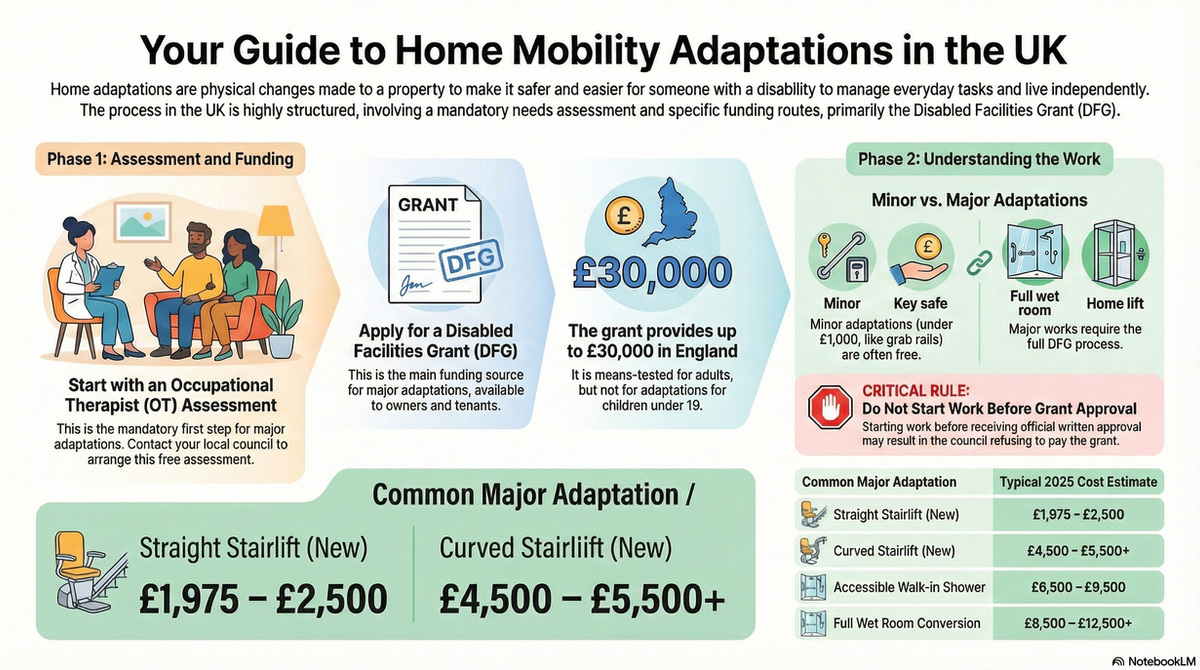
Yes, you may be eligible for a Disabled Facilities Grant (DFG) from your local council. This can cover some or all of the costs, though it is usually means-tested and requires an Occupational Therapist assessment.
This guide was written with AI assistance and is intended for general information only. Prices are estimates based on UK averages and may vary by region. Always get at least three quotes and consult a qualified professional before starting any work.
Ask follow-ups in plain English. The AI explains options, sequencing and what to ask the mobility aids — so you walk in informed.
A stairlift is a transformative investment for UK homeowners facing mobility challenges. It restores full access to the home, provides peace of mind for family ...
READ GUIDE →GuideRecliner Chair Repair Guide Scope of Works Verify proof of ownership and carry out a brief fault interview. Remove base‑cover and inspect mechanism, cabling, mo...
READ GUIDE →GuideFor many UK homeowners, a mobility scooter is more than just a vehicle; it is a lifeline to independence and the local community. Ensuring your scooter is profe...
READ GUIDE →GuideFlat-pack furniture has become a staple of UK homes, offering stylish designs at accessible price points. However, the complexity of modern assembly—often invol...
READ GUIDE →GuideWheelchair Tyre Replacement Costs Scope of Works Initial inspection & sizing – confirm wheel diameter, tyre type (pneumatic, solid, puncture‑proof), hand‑ri...
READ GUIDE →GuideA stairlift is a vital piece of equipment for maintaining independence in your home. Regular servicing ensures the unit remains reliable, safe, and whisper-quie...
READ GUIDE →