Instant
01 · Ask
Ask the AI a follow-up
Got more questions about interior wall plastering? Describe the bit you're unsure about — the AI explains options, sequencing and what to ask the plasterer.

Internal wall skim or full re-plaster — flat, smooth finish ready for paint or wallpaper.
You've read the brief on interior wall plastering. Now lean on us to find the right plasterer — and stay in control of the job.
Got more questions about interior wall plastering? Describe the bit you're unsure about — the AI explains options, sequencing and what to ask the plasterer.
Costs, timelines, pitfalls and the right questions to ask before any plasterer starts on interior wall plastering.
Itemised quotes from up to 3 local plasterers on interior wall plastering — so you can compare like-for-like, not lump sums.
Ready when you are
Enter your postcode and get free quotes from local pros.
Four moves that separate a smooth job from a nightmare.
Usually caused by the plaster drying too quickly in a heated room or being applied over a high-suction surface without priming.
A hollow sound when tapped, indicating the plaster has detached from the substrate, often due to historic damp or poor prep.
Using standard steel beads in a damp environment (like a bathroom) instead of stainless steel or plastic.
"Mapping" or visible lines where plasterboard sheets meet, often caused by failing to use "scrim tape" on the joints.
Indicative UK ranges and what affects price.
By job type
Quote spread is typically ± 18% — always get 3 quotes.
Plasterer quick-view
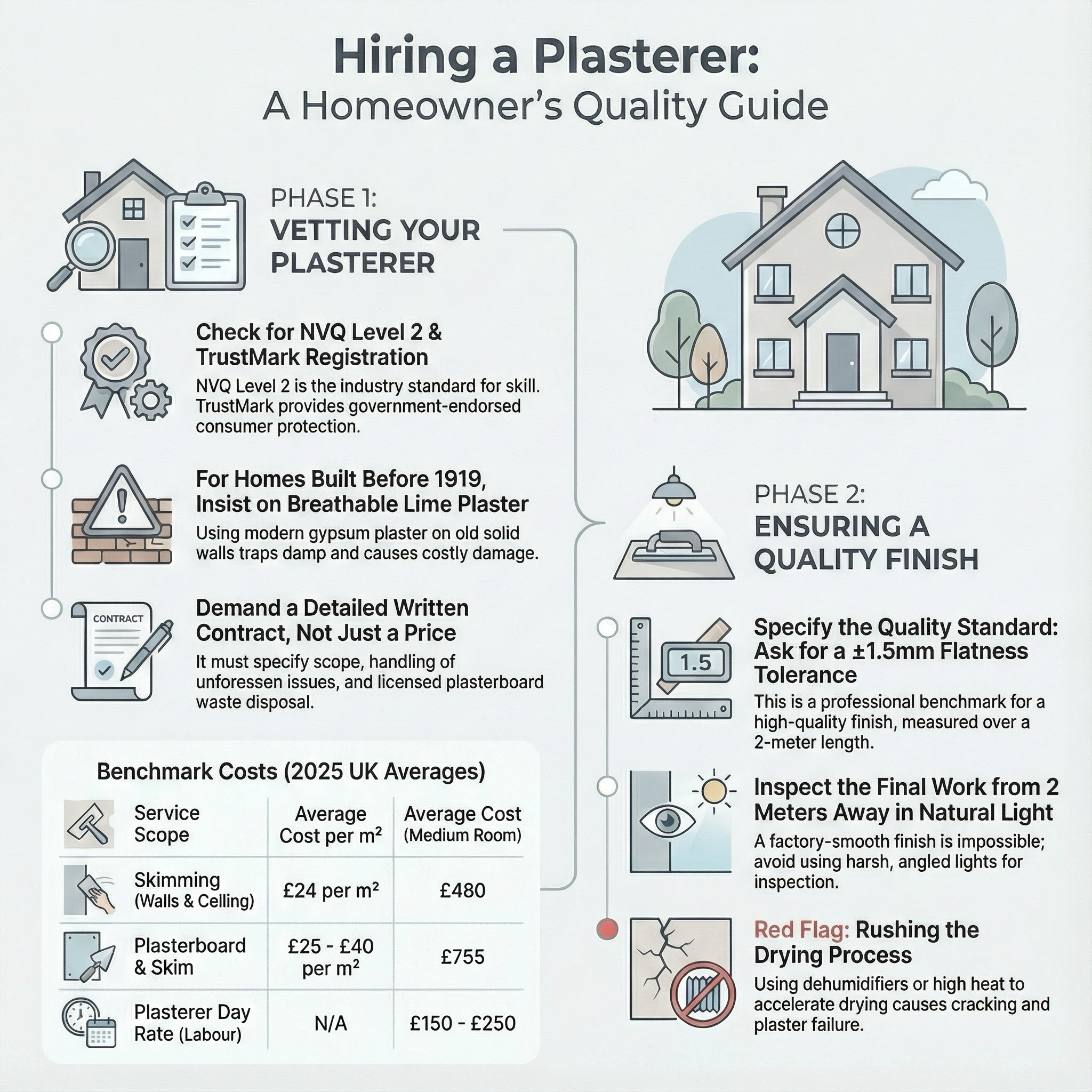
Plasterer explained
Whether you are skimming over old Artex, repairing "blown" plaster on a Victorian terrace, or finishing a new extension, the quality of the plasterwork dictates the final look of the room. Poor plastering cannot be hidden by paint; it requires a skilled hand to achieve a flawless, "mirror-like" finish.
| Item | Low £ | High £ | Notes |
|---|---|---|---|
| Small Patch Repair | £150 | £250 | Minimum call-out charge usually applies. |
| Skimming a Medium Room (Walls Only) | £450 | £750 | Assumes walls are in reasonable condition. |
| Skimming Walls & Ceiling | £700 | £1,100 | Ceilings are more labour-intensive. |
| Full Replaster (Board & Skim) | £900 | £1,600 | Includes removing old plaster and dry-lining. |
| Plasterer Day Rate | £200 | £350 | Varies by region (London/SE is higher). |
The total cost is primarily driven by the condition of your existing walls. If the plaster is "blown" (detached from the brickwork), it must be hacked off and replaced, which significantly increases labour time and waste disposal costs compared to a simple skim.
Plastering is one of the few trades where DIY is rarely recommended for visible finish coats. While a keen DIYer can manage "dot and dab" plasterboarding, achieving a flat, smooth skim coat requires muscle memory and perfect timing that only comes with years of experience.
Attempting to DIY a large ceiling often results in the plaster "going off" (setting) before you can smooth it, leading to visible ridges and a lot of dusty sanding later.
Typically 3 to 5 days for a skim coat, but it can take up to 2 weeks for deep backing coats. The plaster will turn from a dark "wet" pink to a uniform light pink/peach colour when dry.
Yes. You must apply a "mist coat" (watered-down emulsion) or a specialist plaster primer. If you apply thick undiluted paint directly, it will peel off like wallpaper because the plaster is too porous.
No. You must remove all wallpaper and paste residue. Plastering over paper will cause it to bubble and peel, and the new plaster will fall off the wall.
Skimming is a thin 2-3mm top coat applied over existing plaster or plasterboard. Replastering usually involves stripping the wall back to the brickwork and applying a thick backing coat before the skim.
This is common due to the vibration of the door slamming. A professional should use scrim tape across the corners of door frames to provide extra reinforcement against these structural movements.
This guide was written with AI assistance and is intended for general information only. Prices are estimates based on UK averages and may vary by region. Always get at least three quotes and consult a qualified professional before starting any work.
Ask follow-ups in plain English. The AI explains options, sequencing and what to ask the plasterer — so you walk in informed.
Decorative coving and cornicing are more than just aesthetic flourishes; they provide a professional bridge between your walls and ceiling. For UK homeowners, c...
READ GUIDE →GuideWall Damage Repair Costs Scope of Works Assess & protect area – inspect crack or hole, test for background soundness, sheet floors/furniture. Prepare substr...
READ GUIDE →GuidePolished plastering, often referred to as Venetian plaster, is a high-end decorative finish that has seen a massive surge in popularity across UK homes. Unlike ...
READ GUIDE →GuideStripping away old wallpaper often reveals more than just a change in decor; for many UK homeowners, it uncovers decades of hidden wear, blown plaster, or crumb...
READ GUIDE →GuidePlaster Repairs and Assessment Guide Scope of Works Survey & diagnose : tap‑test walls, use moisture meter, mark hollow/blown areas and hairline cracking. P...
READ GUIDE →GuideRender restoration is more than a cosmetic facelift; it is a critical maintenance task for protecting your home’s structural integrity. In the UK’s damp climate...
READ GUIDE →