Instant
01 · Ask
Ask the AI a follow-up
Got more questions about blocked Toilet Repair? Describe the bit you're unsure about — the AI explains options, sequencing and what to ask the plumber.

Toilet not flushing or repeatedly blocking — cleared with auger, rod or pressure tool.
You've read the brief on blocked Toilet Repair. Now lean on us to find the right plumber — and stay in control of the job.
Got more questions about blocked Toilet Repair? Describe the bit you're unsure about — the AI explains options, sequencing and what to ask the plumber.
Costs, timelines, pitfalls and the right questions to ask before any plumber starts on blocked Toilet Repair.
Itemised quotes from up to 3 local plumbers on blocked Toilet Repair — so you can compare like-for-like, not lump sums.
Ready when you are
Enter your postcode and get free quotes from local pros.
Four moves that separate a smooth job from a nightmare.
Despite the branding, most wipes do not break down like toilet paper and are the leading cause of UK household blockages.
Plastic rim-hangers (air fresheners) often fall into the bowl and snag paper, creating a persistent "trap" for blockages.
In older UK properties with clay pipes, roots can grow into the joints of the external pipes, catching waste and causing total failure.
In hard water areas, scale can narrow the diameter of the trap, making it much easier for small amounts of paper to cause a clog.
Indicative UK ranges and what affects price.
By job type
Quote spread is typically ± 18% — always get 3 quotes.
Plumber quick-view
Plumber explained
While a simple plunge might resolve minor issues, persistent or recurring blockages often need specialist tools to clear the obstruction without damaging the porcelain or the internal pipework. Prompt action prevents sewage back-flow and ensures your home’s sanitation system remains functional and safe.
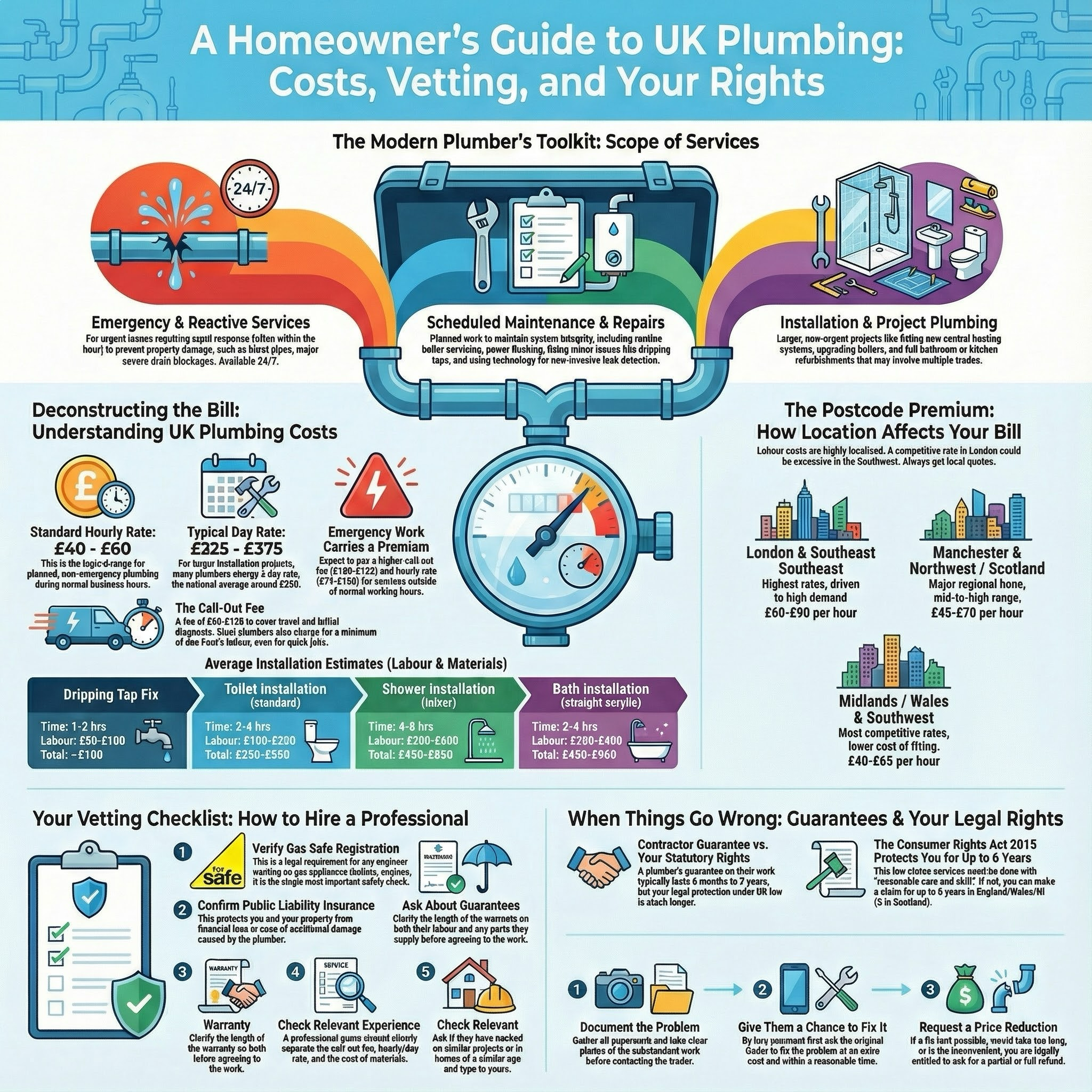
The cost of clearing a blocked toilet in the UK depends heavily on whether the issue is a simple "local" clog or a more complex problem in the external drainage system. Emergency call-outs after 6pm or on weekends typically command a 50% to 100% premium on the base rate.
| Item | Low £ | High £ | Notes |
|---|---|---|---|
| Standard Call-out (Inc. first hour) | £90 | £160 | Higher rates apply in London and the South East. |
| Emergency Call-out (Out of hours) | £150 | £250 | Flat fee for the first hour of attendance. |
| External Drain Rodding | £120 | £200 | Required if the blockage is outside the house. |
| CCTV Drain Survey | £150 | £300 | Used for recurring blockages to find structural issues. |
| Total Average Project Cost | £110 | £240 | Most standard blockages are cleared within one hour. |
Note: If your toilet is connected to a macerator (e.g., a Saniflo system), costs are generally higher as these units require specialist dismantling and cleaning.
Most homeowners can safely attempt to clear a minor blockage using a high-quality bellows plunger. However, you should call a professional if the water level rises to the brim and doesn't drain, or if sewage is backing up into your bath or shower tray.
Avoid using harsh chemical unblockers; they are rarely effective on total blockages and can damage older pipes or create a chemical hazard for the plumber who eventually has to fix the problem. If you suspect a foreign object (like a toy or air freshener) has fallen in, stop flushing immediately to prevent pushing it further into the system.
Questions to ask your plumber:
A standard plumber can handle most toilet blockages. However, if the issue is in the main sewer line or requires high-pressure jetting, a dedicated drainage specialist might be better equipped.
If the blockage occurs in a pipe shared with a neighbour or in the sewer main in the street, it is usually the responsibility of your water utility company. If it is within your property boundary and serves only your house, it is your responsibility.
Recurring blockages often suggest a structural issue, such as a collapsed pipe, a heavy build-up of limescale, or an object stuck in the "U-bend" that wasn't fully removed. A CCTV survey is recommended in these cases.
Most standard policies do not cover simple blockages as they are considered maintenance. However, if you have "Home Emergency" cover or if the blockage has caused significant water damage, you may be able to claim.
No. Bleach is a disinfectant, not a de-clogger. It will not dissolve hair, wipes, or solid obstructions and can be dangerous if mixed with other cleaning chemicals.
This guide was written with AI assistance and is intended for general information only. Prices are estimates based on UK averages and may vary by region. Always get at least three quotes and consult a qualified professional before starting any work.
Ask follow-ups in plain English. The AI explains options, sequencing and what to ask the plumber — so you walk in informed.
Upgrading a shower is one of the most impactful improvements you can make to a UK home. Whether you are replacing a tired electric unit or installing a high-end...
READ GUIDE →GuideUnderfloor heating (UFH) has moved from a luxury addition to a standard feature in modern British homes. It provides a consistent, radiant heat that eliminates ...
READ GUIDE →GuideSink Replacement Cost Guide Scope of Works Isolate water supplies and drain down local pipework. Remove the existing sink , taps, trap, silicone and fixings; ca...
READ GUIDE →GuideShower Repair Costs Guide Scope of Works Isolate water & electrics and protect adjacent finishes. Diagnose the fault (e.g. leaking mixer valve, cracked tray...
READ GUIDE →GuideA wet room is the ultimate upgrade for a modern UK home, offering a sleek, open-plan aesthetic and unparalleled accessibility. Unlike a traditional bathroom wit...
READ GUIDE →GuideA water leak is one of the most stressful issues a UK homeowner can face. Whether it is a slow drip behind a kitchen unit or a burst pipe in the loft, the damag...
READ GUIDE →