Instant
01 · Ask
Diagnose before you call
Tell the AI what's leaking, dripping or rumbling. It tells you whether you need a plumber, a gas engineer, or a drain specialist — and how urgent it is.

Leaks, blocked drains, boiler swaps and bathroom installs — fast quotes from local plumbers near you.
You've read the costs and the questions to ask. Now lean on us to find a Gas Safe-verified plumber — and keep the bill honest.
Tell the AI what's leaking, dripping or rumbling. It tells you whether you need a plumber, a gas engineer, or a drain specialist — and how urgent it is.
Gas Safe vs WaterSafe, boiler warranty conditions, unvented cylinder rules. The plumber brief covers the regs most homeowners learn the hard way.
Up to Three local plumbers come back with itemised quotes — parts, labour and call-out fees — so you can compare like-for-like.
Ready when you are
Enter your postcode and get free quotes from local pros.
Four moves that separate a smooth job from a nightmare.
If gas work is part of the job, the engineer must show their Gas Safe registration card. Verify the number at gassaferegister.co.uk before they touch anything.
Plumbing prices vary wildly by job and area. Three quotes shows you the market — anything more than 20% out from the others is a flag.
For boiler parts, valves and cylinders, ask for manufacturer receipts. Genuine parts come with warranty; refurbished kit often doesn't.
Pay in stages, not upfront. Hold the last 10–20% until you've run hot taps, flushed the system and seen the certificate.
Indicative UK ranges and what affects price.
By job type
Quote spread is typically ± 18% — always get 3 quotes.
Visual breakdown of costs, timelines and the questions you should be asking.
Plumber quick-view
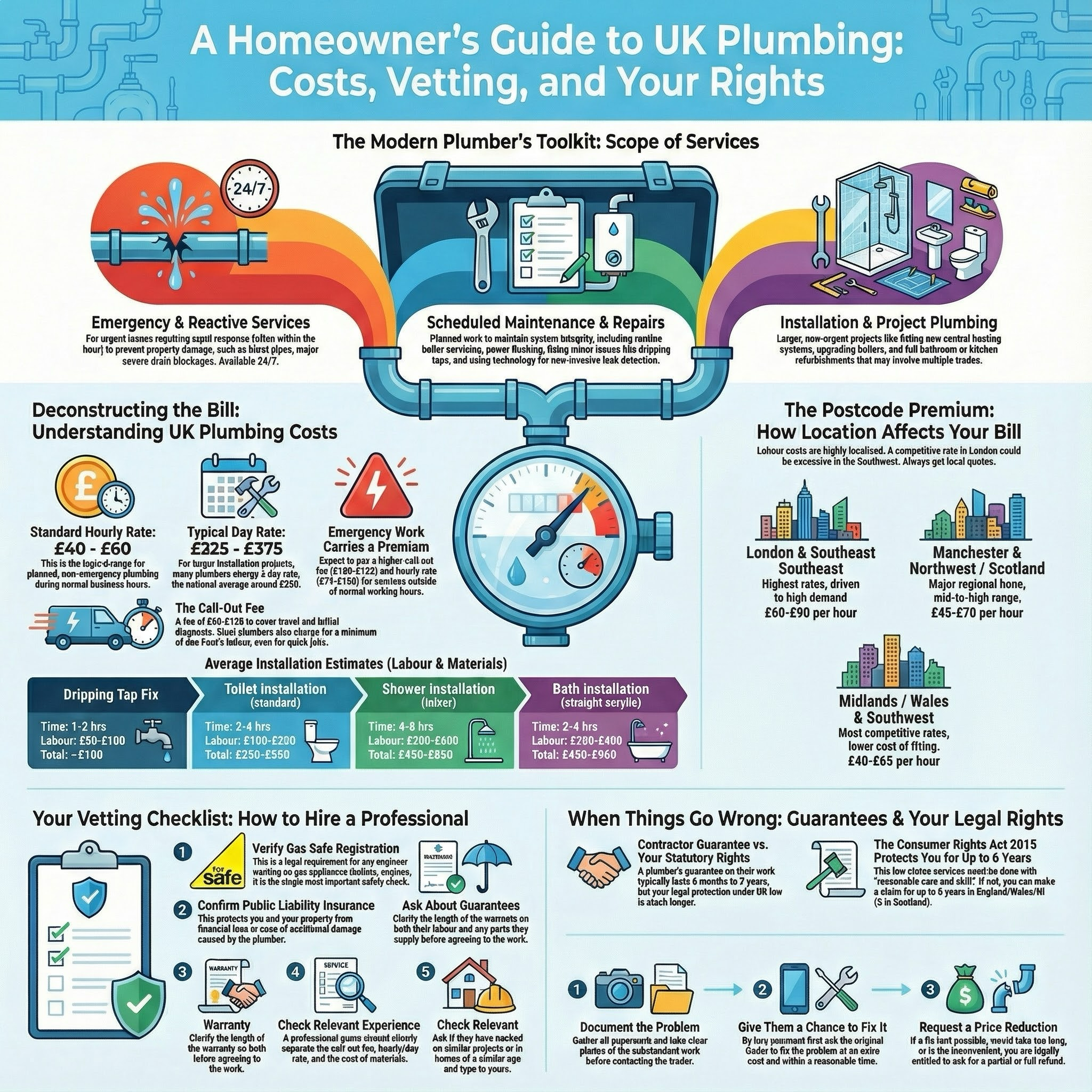
Plumber explained
Everything you need to know before hiring a plumber.
From the smallest dripping tap to a complete bathroom renovation, a professional plumber ensures your home’s water and heating systems remain safe, efficient, and leak-free. In the UK, plumbers are essential for maintaining the complex network of pipes that provide clean water and manage waste, as well as keeping your central heating system operational.
Most homeowners will require a plumber for both emergency repairs and planned upgrades. Whether you are dealing with a burst pipe in the middle of the night or planning a high-end wet room, hiring a skilled professional protects your property from the devastating costs of water damage and ensures compliance with local building regulations.
Plumbing work generally falls into two categories: reactive maintenance (repairs) and planned installations. A typical job begins with an assessment of your current system to identify the root cause of a problem or to determine the feasibility of a new installation.
When you hire a plumber, expect a clear explanation of the work required. For smaller jobs, they may provide an estimate over the phone, while larger projects usually require a site visit followed by a formal written quote.
While DIY is popular for many home tasks, plumbing carries significant risks. Even a minor mistake in a joint or seal can lead to slow leaks that rot floorboards and cause structural damage long before they are noticed. Professional plumbers carry the correct tools and high-quality materials that aren't always available at local DIY stores.
Safety and Regulations: In the UK, plumbing work must adhere to the Water Supply (Water Fittings) Regulations to prevent contamination and waste. If the work involves a gas boiler, the individual must be on the Gas Safe Register by law. Hiring a professional ensures that your home insurance remains valid, as many policies exclude damage caused by uncertified DIY plumbing attempts.
A professional also understands system pressure and flow rates. They can advise on whether your existing boiler can handle an additional en-suite or if your water pressure is sufficient for a rainfall shower head, saving you from expensive mistakes.
Plumbing costs vary based on your location (London and the South East typically being more expensive) and the complexity of the task. Most plumbers charge either a flat fee for specific jobs or an hourly rate for diagnostic and repair work.
| Service | Low £ | High £ | Notes |
|---|---|---|---|
| Emergency Call-out (1st hour) | £100 | £200 | Higher rates for bank holidays/nights. |
| Standard Hourly Rate | £40 | £90 | Excludes parts and VAT. |
| Replace Kitchen/Basin Tap | £120 | £250 | Depends on tap style and access. |
| Install New Radiator | £200 | £450 | Includes pipework and balancing. |
| Unblock Internal Drain | £80 | £150 | Manual or chemical clearance. |
| Full Bathroom Installation | £1,500 | £6,000+ | Labour only; excludes suite/tiles. |
Several factors affect the final price, including the age of your property, the accessibility of the pipework, and whether you require high-end designer fixtures. Always clarify if the quote includes VAT and the disposal of old fixtures.
Finding a reliable plumber involves more than just picking the first name in a search engine. You need someone who is qualified, insured, and has a proven track record of quality work.
Questions to ask before hiring:
A plumber typically focuses on "wet" plumbing like taps, toilets, and pipes. A heating engineer specialises in the heating system itself, including boilers and gas lines. Many professionals are qualified in both areas, but only those on the Gas Safe Register can legally work on gas appliances.
It is helpful to know where your internal stopcock is located, but you usually don't need to turn it off until the plumber is ready to start. If you have a major leak, turn it off immediately to minimise damage while waiting for their arrival.
This could be caused by several factors, including a hidden leak, a faulty pressure-reducing valve, or issues with the local mains supply. A plumber can perform a pressure test to diagnose whether the fault lies within your home or with the water provider.
Ensure all external pipes and those in unheated areas (like lofts or garages) are fitted with high-quality foam lagging. During extreme cold snaps, keeping your heating on a low constant setting can also prevent the water inside the pipes from reaching freezing point.
Describe the job in plain English. The AI asks a few smart questions, then tells you whether a plumber is the right call, what it should cost, and what to ask before they start.
Accessible Tap Repair and Upgrade Scope of Works Diagnose leak, stiffness or temperature‑control fault; isolate water and strip the tap . Replace worn washers, ...
READ GUIDE →GuideA faulty food waste disposer can quickly turn from a kitchen convenience into a messy, unhygienic headache. In the UK, Insinkerator is the leading brand, but li...
READ GUIDE →GuideKitchen Tap Repair Guide Scope of Works Pre‑visit diagnosis – isolate water, inspect cartridge/washer, check isolation valves. Disassemble tap body , remove han...
READ GUIDE →GuideA leaking kitchen sink is more than a minor nuisance; it is a direct threat to your kitchen’s structural integrity. Most UK kitchen carcasses are constructed fr...
READ GUIDE →GuideStopcock Repair Guide Scope of Works Assess seized, leaking or inoperative indoor stopcock and identify main incoming pipe material. Isolate the supply (externa...
READ GUIDE →GuideMaintaining your home’s water management systems is essential for preventing costly damage. While a dripping tap is a common annoyance that wastes litres of wat...
READ GUIDE →GuideReplacing a tap is one of the most common plumbing tasks in UK households. Whether you are dealing with a persistent drip that is wasting water or simply upgrad...
READ GUIDE →A macerator—often referred to by the brand name Saniflo—is a pump that grinds waste and toilet paper into a slurry, allowing it to be pumped through small-bore ...
READ GUIDE →GuidePreventative plumbing maintenance is the most effective way to avoid the stress and significant expense of emergency call-outs. In the UK, where many properties...
READ GUIDE →GuidePlumbing Noise Diagnosis Service Guide Scope of Works Interview & survey occupants to pinpoint when/where banging, whistling or humming occurs. Pressure &am...
READ GUIDE →GuidePlumbing Pump and Engine Servicing Guide Scope of Works Isolate power and water , drain the system and protect the work area. Strip and inspect pump/macerator c...
READ GUIDE →GuideSink Replacement Cost Guide Scope of Works Isolate water supplies and drain down local pipework. Remove the existing sink , taps, trap, silicone and fixings; ca...
READ GUIDE →GuideToilet Leak Repair Costs Scope of Works Confirm leak source (cistern over‑fill, failed seal, cracked pan or supply line). Isolate water & drain cistern , pr...
READ GUIDE →Acrylic, steel or freestanding bath supplied and fitted by a plumber — taps, waste and sealing included.
READ GUIDE →GuideClose-coupled, back-to-wall or wall-hung toilet supplied and fitted by a plumber — typically 2–4 hours.
READ GUIDE →GuideA faulty toilet flush is more than just a minor nuisance; it is a leading cause of water wastage in UK households. A leaking or "running" toilet can waste up to...
READ GUIDE →GuideA wet room is the ultimate upgrade for a modern UK home, offering a sleek, open-plan aesthetic and unparalleled accessibility. Unlike a traditional bathroom wit...
READ GUIDE →