Instant
01 · Ask
Ask the AI a follow-up
Got more questions about furniture and cardboard removal? Describe the bit you're unsure about — the AI explains options, sequencing and what to ask the removals.

Post-move clearance — old furniture and cardboard packing removed off-site with waste-transfer note.
You've read the brief on furniture and cardboard removal. Now lean on us to find the right removals — and stay in control of the job.
Got more questions about furniture and cardboard removal? Describe the bit you're unsure about — the AI explains options, sequencing and what to ask the removals.
Costs, timelines, pitfalls and the right questions to ask before any removals starts on furniture and cardboard removal.
Itemised quotes from up to 3 local removalss on furniture and cardboard removal — so you can compare like-for-like, not lump sums.
Ready when you are
Enter your postcode and get free quotes from local pros.
Four moves that separate a smooth job from a nightmare.
Homeowners often underestimate how much space flattened cardboard or dismantled furniture takes up, leading to multiple van trips and higher costs.
Narrow stairwells or lack of nearby parking can double the time on site. Always warn your tradesperson about "tight squeezes" or flight-of-stairs carries.
Items like mattresses, tyres, and electronics (WEEE) often incur extra "gate fees" at commercial tips which might not be in your initial quote.
Without proper floor protection, heavy furniture can easily gouge hardwood floors or snag carpets.
Indicative UK ranges and what affects price.
By job type
Quote spread is typically ± 18% — always get 3 quotes.
Removals quick-view
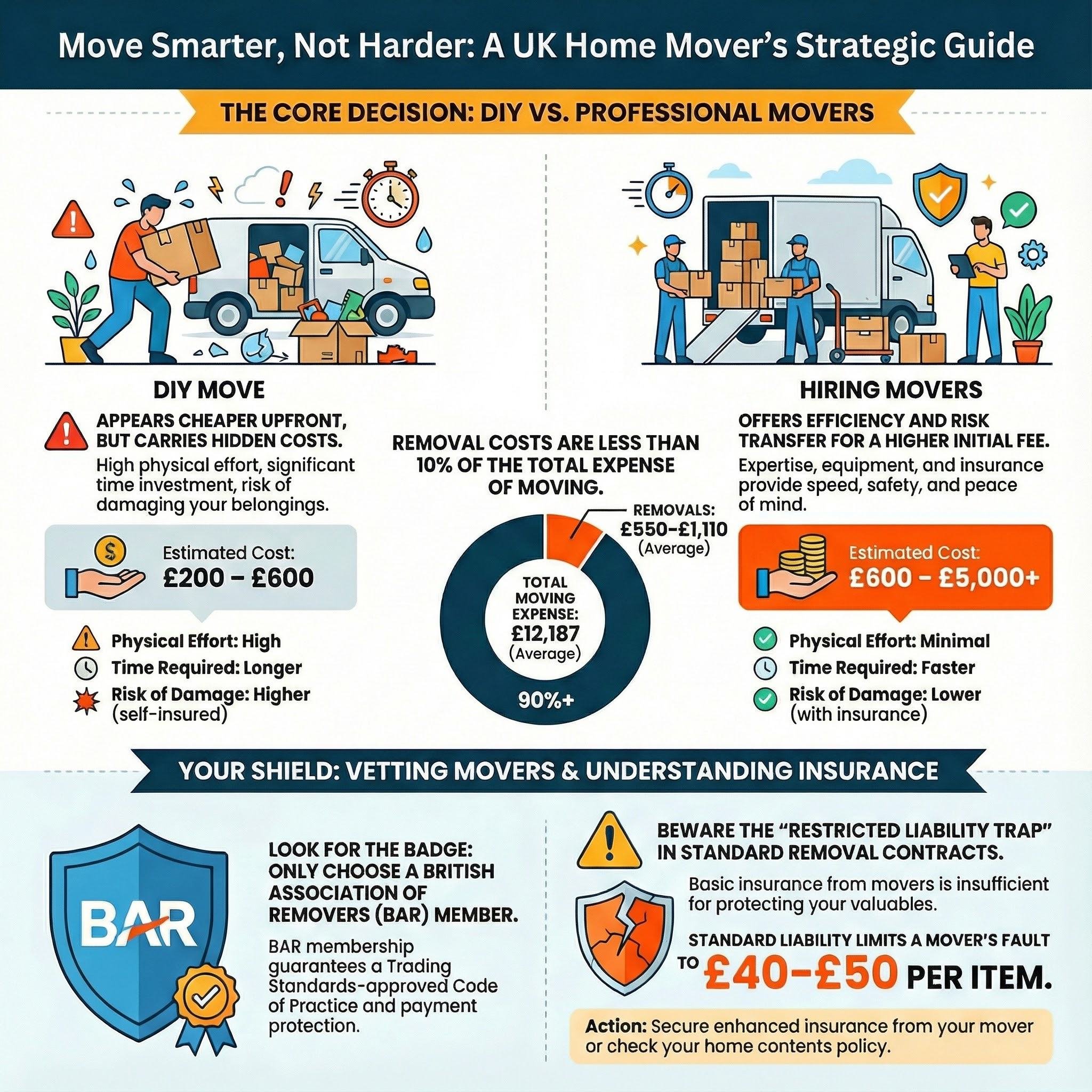
Removals explained
Beyond the physical labour, hiring a professional guarantees that your waste is disposed of legally. In the UK, homeowners have a "Duty of Care" to ensure their waste is handled by licensed carriers, making professional intervention both a practical and a legal safeguard.
| Item | Low £ | High £ | Notes |
|---|---|---|---|
| Minimum Call-out Fee | £70 | £130 | Includes the first 30-60 minutes or a "man and van" base rate. |
| Labour (per person/hour) | £40 | £75 | Most furniture jobs require a minimum of two operatives. |
| Disposal Fees (per load) | £30 | £150 | Commercial tip fees based on weight or volume. |
| Specialist Item Surcharge | £30 | £90 | Additional fees for mattresses, fridges, or upholstered furniture (POPs). |
| Packing Materials | £10 | £40 | Heavy-duty bags, tape, and protective wrap. |
| Total Estimated Project | £160 | £480 | Typical for a small flat clearance or large garage clear-out. |
Pricing is primarily dictated by the volume of waste and the ease of access. If your property has no lift or requires parking permits, expect the labour costs to increase significantly due to the extra time required for each trip to the vehicle.
While taking cardboard to a local household recycling centre (HWRC) is a straightforward DIY task, furniture removal is more complex. Professional teams have the lifting equipment and vehicle capacity to handle heavy items safely, reducing the risk of musculoskeletal injuries or damage to your home’s interior.
Important: If you hire an unlicensed individual who subsequently fly-tips your furniture, you can be held legally liable and face unlimited fines under UK law. Always verify a trader's Waste Carrier License.
Most removal companies will take mattresses, but they almost always incur an extra charge (usually £20–£50). This is because mattresses are difficult to recycle and are often charged at a higher rate by waste transfer stations.
While most companies will do this for you, it is much more cost-effective to do it yourself. You pay for their time, so every minute they spend flattening boxes is a minute you are billed for labour.
Reputable companies will sort the items. High-quality furniture may be sent to charity shops or upcycling centres, while unusable items are taken to a licensed waste transfer station for material recovery or energy-from-waste processing.
Yes, provided they have clear access (e.g., items left in a garage or driveway) and you have provided a detailed list of what is to be taken. However, for internal removals, it is best to be present to supervise and sign the Waste Transfer Note.
A Waste Transfer Note (WTN) is a legal record showing that your waste was handled correctly. If the waste is later found fly-tipped, the WTN is your proof that you fulfilled your legal Duty of Care.
Most removal teams carry basic tools and can dismantle wardrobes or beds. You should mention this when booking, as it adds time to the job and may require a two-person crew for safety.
This guide was written with AI assistance and is intended for general information only. Prices are estimates based on UK averages and may vary by region. Always get at least three quotes and consult a qualified professional before starting any work.
Ask follow-ups in plain English. The AI explains options, sequencing and what to ask the removals — so you walk in informed.
Role Responsibilities • Coordinate international removal projects and scheduling • Liaise with clients, suppliers and transport providers to ensure smooth opera...
READ GUIDE →GuideMoving a sofa or a heavy dresser can be one of the most stressful parts of a home refresh or relocation. Beyond the physical strain, these bulky items often req...
READ GUIDE →GuideMoving house is widely regarded as one of life’s most stressful events, often made more difficult by the daunting task of dismantling and reassembling bulky fur...
READ GUIDE →GuideMoving home in the UK often presents a logistical challenge, particularly when navigating narrow hallways, steep Victorian staircases, or modern apartment lifts...
READ GUIDE →GuideMoving house is widely regarded as one of life’s most stressful events, and the bulk of that pressure stems from packing. A professional packing service does mo...
READ GUIDE →GuideCold chain logistics is the science of transporting temperature-sensitive goods within a strictly controlled thermal environment. For UK homeowners, this specia...
READ GUIDE →