Instant
01 · Ask
Ask the AI a follow-up
Got more questions about install Home Scaffolding? Describe the bit you're unsure about — the AI explains options, sequencing and what to ask the scaffolder.

Whole-house, gable, chimney or front-elevation scaffold — erected, certified and hired by the week.
You've read the brief on install Home Scaffolding. Now lean on us to find the right scaffolder — and stay in control of the job.
Got more questions about install Home Scaffolding? Describe the bit you're unsure about — the AI explains options, sequencing and what to ask the scaffolder.
Costs, timelines, pitfalls and the right questions to ask before any scaffolder starts on install Home Scaffolding.
Itemised quotes from up to 3 local scaffolders on install Home Scaffolding — so you can compare like-for-like, not lump sums.
Ready when you are
Enter your postcode and get free quotes from local pros.
Four moves that separate a smooth job from a nightmare.
Scaffolding poles can crack roof tiles or dent gutters if not carefully positioned; ensure the contractor uses stand-off brackets.
On soft ground or lawns, scaffold can lean if large enough spreader plates (sole boards) aren't used.
If the scaffold needs to hang over a neighbour's boundary, you must obtain their permission first (a "Party Wall" matter in some cases).
Scaffolding provides easy access for intruders; many insurers require you to install a scaffold alarm and notify them the structure is in place.
Indicative UK ranges and what affects price.
By job type
Quote spread is typically ± 18% — always get 3 quotes.
Scaffolder quick-view
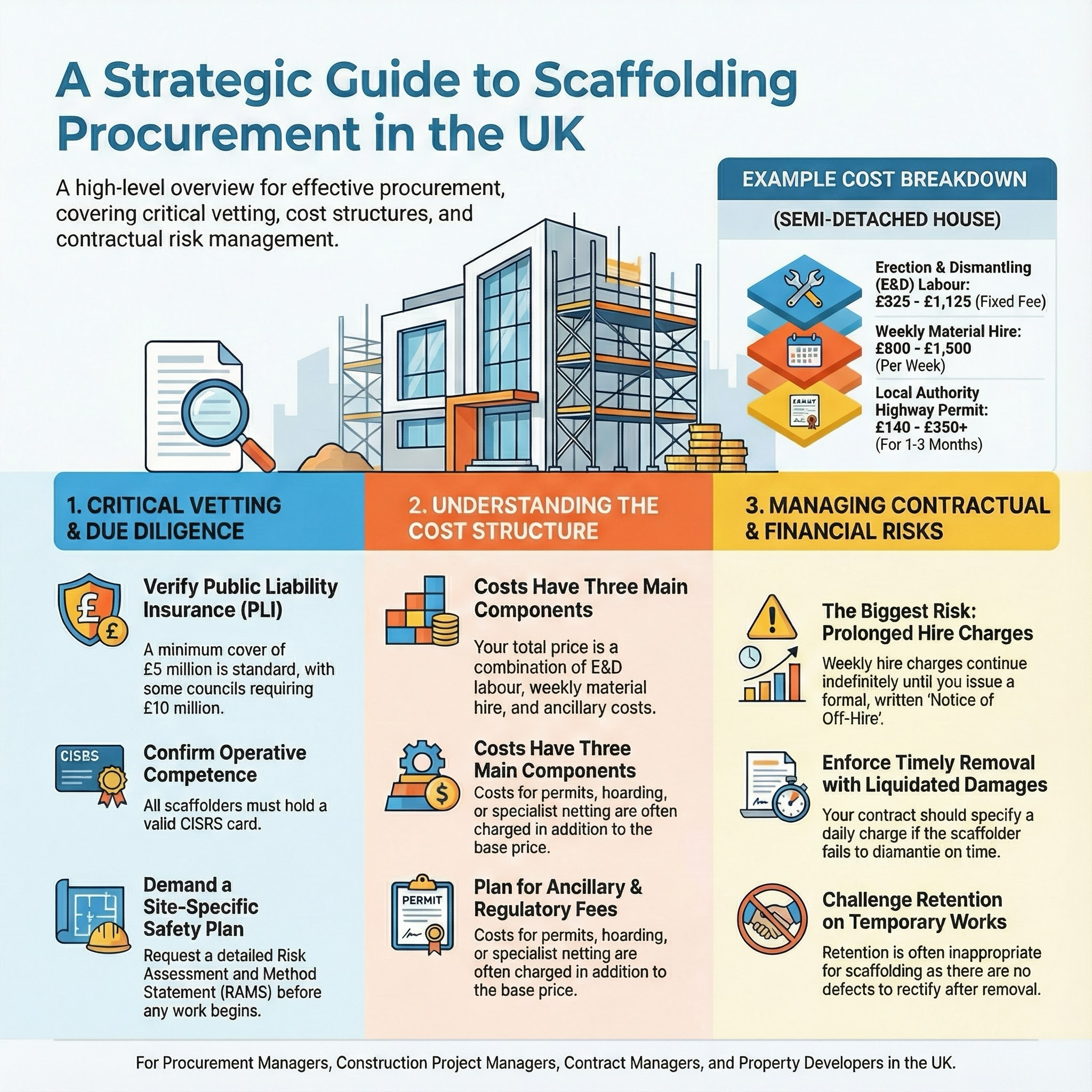
Scaffolder explained
Beyond safety, scaffolding ensures your project stays on schedule by allowing multiple tradespeople to work simultaneously and securely. In the UK, strict health and safety laws dictate how these structures are erected, making it essential to hire qualified professionals who understand local authority requirements.
| Item | Low £ | High £ | Notes |
|---|---|---|---|
| Small Tower (single wall) | £350 | £600 | Typical for chimney repairs or painting. |
| Semi-Detached (3 sides) | £950 | £1,800 | Based on a 4-week hire period. |
| Detached House (4 sides) | £1,500 | £3,500 | Varies by height and number of "lifts". |
| Pavement Licence | £150 | £350 | Council fees vary significantly by borough. |
| Additional Weekly Hire | £80 | £180 | Charged per week after the initial period. |
Costs are primarily driven by the "rent" of the equipment and the labour required for the initial build. Prices in London and the South East typically carry a 20-30% premium due to higher insurance and transport costs.
Scaffolding is not a DIY job. The Work at Height Regulations 2005 require that scaffolding is only erected, dismantled, or altered by "competent persons" under the supervision of a qualified scaffolder.
Attempting to build your own scaffold using hired parts is extremely dangerous and will almost certainly invalidate your home insurance and any public liability cover.
Professional scaffolders carry specific insurance and hold CISRS (Construction Industry Scaffolders Record Scheme) cards, ensuring they are trained in load-bearing calculations and safety tie-ins. If you are working on a public highway, councils will only issue permits to registered, insured contractors.
Questions to ask:
No, you do not need a council permit if the structure is entirely within your private property boundaries. You only need a licence if it encroaches on a public pavement, road, or alleyway.
Scaffolds are designed to withstand significant wind loads, but you should not work on them during a storm. If winds exceed 30-40mph, the structure must be inspected by a professional before work resumes.
The "user" of the scaffold (usually your main builder or roofer) is legally responsible for ensuring inspections happen, though most homeowners pay the scaffolding company to perform these checks.
Yes, but you will be charged a "weekly hire" rate. It is important to agree on this rate upfront to avoid unexpected costs if your project overruns.
This is a document issued by the scaffolder to the client once the build is complete. It confirms the structure is safe, fit for purpose, and complies with UK regulations.
This guide was written with AI assistance and is intended for general information only. Prices are estimates based on UK averages and may vary by region. Always get at least three quotes and consult a qualified professional before starting any work.
Ask follow-ups in plain English. The AI explains options, sequencing and what to ask the scaffolder — so you walk in informed.
Emergency scaffold repairs are critical when a structure becomes unstable due to severe weather, vehicle impact, or structural failure. For UK homeowners, a com...
READ GUIDE →GuideFor UK homeowners undertaking major renovations, extensions, or roof repairs, scaffolding is a vital safety structure. However, it is not a "set and forget" ins...
READ GUIDE →GuideEmergency scaffold dismantling is a critical service required when a structure becomes unstable due to severe UK weather, vehicle impact, or poor initial instal...
READ GUIDE →GuideScaffold reassembly is a critical safety service for UK homeowners undertaking major renovations or extensions. Whether a structure has been partially dismantle...
READ GUIDE →GuideDomestic scaffolding hire. UK costs.
READ GUIDE →GuideChimney scaffolding for repairs. UK costs.
READ GUIDE →