Instant
01 · Ask
Ask the AI a follow-up
Got more questions about pine tree size reduction? Describe the bit you're unsure about — the AI explains options, sequencing and what to ask the tree surgeon.

Pine tree height or crown reduced — by a qualified arborist with proper climb and rigging kit.
You've read the brief on pine tree size reduction. Now lean on us to find the right tree surgeon — and stay in control of the job.
Got more questions about pine tree size reduction? Describe the bit you're unsure about — the AI explains options, sequencing and what to ask the tree surgeon.
Costs, timelines, pitfalls and the right questions to ask before any tree surgeon starts on pine tree size reduction.
Itemised quotes from up to 3 local tree surgeons on pine tree size reduction — so you can compare like-for-like, not lump sums.
Ready when you are
Enter your postcode and get free quotes from local pros.
Four moves that separate a smooth job from a nightmare.
Cutting the main vertical stem (leader) too harshly can cause the tree to rot or produce weak, dangerous regrowth.
Pine resin is highly acidic and can ruin car paintwork or patio stones if the work area isn't protected.
Pine trees can look healthy on the outside while the core is rotting; a pro will spot this before it becomes a hazard.
Large chippers and trucks need significant space; failing to clear the driveway can lead to delays and extra labour costs.
Indicative UK ranges and what affects price.
By job type
Quote spread is typically ± 18% — always get 3 quotes.
Tree Surgeon quick-view
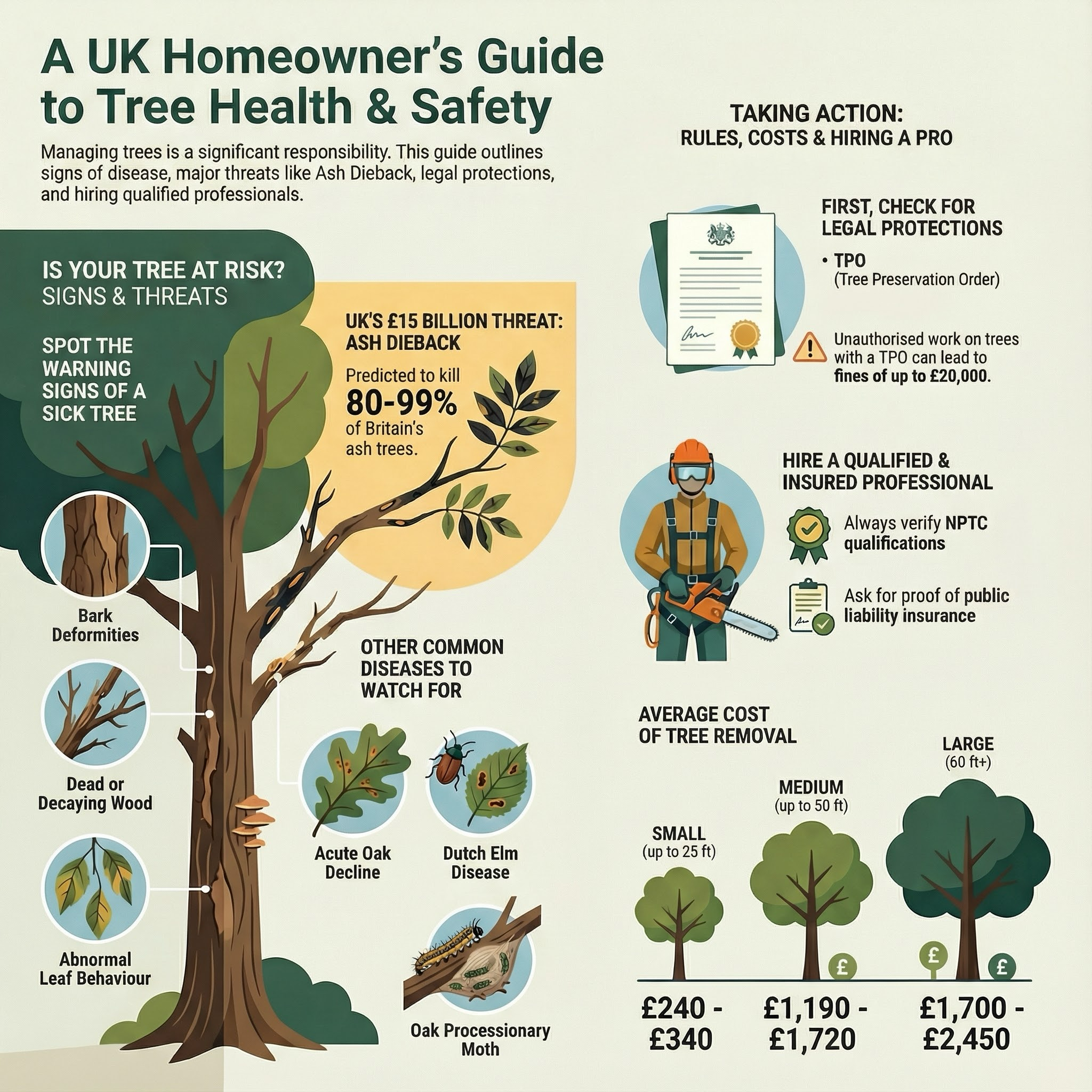
Tree Surgeon explained
Reducing the size of a pine tree—often referred to as crown reduction—is a specialist task. Unlike many deciduous trees, pines do not always respond well to heavy pruning, so a professional approach is vital to maintain the tree's health and aesthetic shape while managing its footprint.
The cost of pine tree reduction depends largely on the size of the tree and the complexity of the environment, such as proximity to power lines or greenhouses.
| Item | Low £ | High £ | Notes |
|---|---|---|---|
| Small Pine (up to 5m) | £250 | £500 | Simple reduction, easy access. |
| Medium Pine (5-12m) | £550 | £950 | Requires climbing and rigging. |
| Large Pine (12m+) | £1,100 | £2,800 | Multi-day job, significant waste. |
| Waste Removal / Chipping | £100 | £350 | Dependent on volume and local tip fees. |
| TPO Application Fee | £0 | £150 | Often included in arborist quotes. |
Pricing is also influenced by your location in the UK, with London and the South East typically seeing rates 20-30% higher than northern regions. If a "cherry picker" (MEWP) is required due to the tree being unsafe to climb, expect to add £300–£600 to the total.
Pine tree reduction should never be a DIY job. Working at height with chainsaws is inherently dangerous, but pine trees present unique challenges: the wood is often brittle, and the bark is notoriously slippery due to resin (sap).
Professional tree surgeons carry specific aerial insurance and are trained in BS 3998 (Recommendations for Tree Work), ensuring the tree isn't "topped" in a way that leads to decay or death.
Late autumn or winter is ideal. The tree is dormant, sap flow is reduced, and there is no risk of disturbing nesting birds.
If "topped" incorrectly, a pine tree may produce "epicormic growth"—fast-growing, weak shoots that attempt to recover lost foliage. Proper crown reduction avoids this.
Yes, but pine is a softwood containing high resin. It must be seasoned for at least 12-18 months and is best used in outdoor fire pits or well-maintained stoves, as it can cause creosote buildup in chimneys.
You can check your local council's website or contact their planning department. Most professional tree surgeons will perform this check for you as part of their quote.
Yes. Reducing the height and thinning the crown reduces the "sail area," meaning the tree catches less wind and puts less stress on the root system.
This guide was written with AI assistance and is intended for general information only. Prices are estimates based on UK averages and may vary by region. Always get at least three quotes and consult a qualified professional before starting any work.
Ask follow-ups in plain English. The AI explains options, sequencing and what to ask the tree surgeon — so you walk in informed.
Products & Services • Supply a wide range of premium timber products including softwood, hardwood, and treated timber • Custom cutting and sizing services t...
READ GUIDE →GuideProfessional tree and bush maintenance is essential for more than just a tidy garden. In the UK, proper arboriculture ensures the safety of your property, the h...
READ GUIDE →GuideTree felling is a high-risk task that requires precision, specialist equipment, and a deep understanding of tree biology. Whether you are removing a dead tree f...
READ GUIDE →GuideMaintaining the trees on your property is about more than just aesthetics; it is a critical part of property safety and health. Whether you have a towering oak ...
READ GUIDE →GuideCrown thinning is a precise arboricultural technique designed to improve a tree's structure without altering its overall size or shape. By selectively removing ...
READ GUIDE →GuideProper tree maintenance is essential for the safety, health, and aesthetic value of your UK property. Whether you are dealing with an overgrown oak, a storm-dam...
READ GUIDE →