Instant
01 · Ask
Ask the AI a follow-up
Got more questions about tree Felling Cost & Work? Describe the bit you're unsure about — the AI explains options, sequencing and what to ask the tree surgeon.

What tree felling costs in 2026 — by tree size, species, access and TPO status.
You've read the brief on tree Felling Cost & Work. Now lean on us to find the right tree surgeon — and stay in control of the job.
Got more questions about tree Felling Cost & Work? Describe the bit you're unsure about — the AI explains options, sequencing and what to ask the tree surgeon.
Costs, timelines, pitfalls and the right questions to ask before any tree surgeon starts on tree Felling Cost & Work.
Itemised quotes from up to 3 local tree surgeons on tree Felling Cost & Work — so you can compare like-for-like, not lump sums.
Ready when you are
Enter your postcode and get free quotes from local pros.
Four moves that separate a smooth job from a nightmare.
Trees that look healthy can be hollow or rotten inside, making their fall unpredictable. A pro will "sound" the tree before starting.
Stump grinders can easily sever gas pipes or fibre optic cables if they haven't been mapped out.
Inexperienced cutters often underestimate the "bounce" or "swing" of a falling limb, leading to damaged fences or gutters.
Many homeowners assume felling includes stump removal. Always clarify this, as leaving a stump can lead to suckering or honey fungus.
Indicative UK ranges and what affects price.
By job type
Quote spread is typically ± 18% — always get 3 quotes.
Tree Surgeon quick-view
Tree Surgeon explained
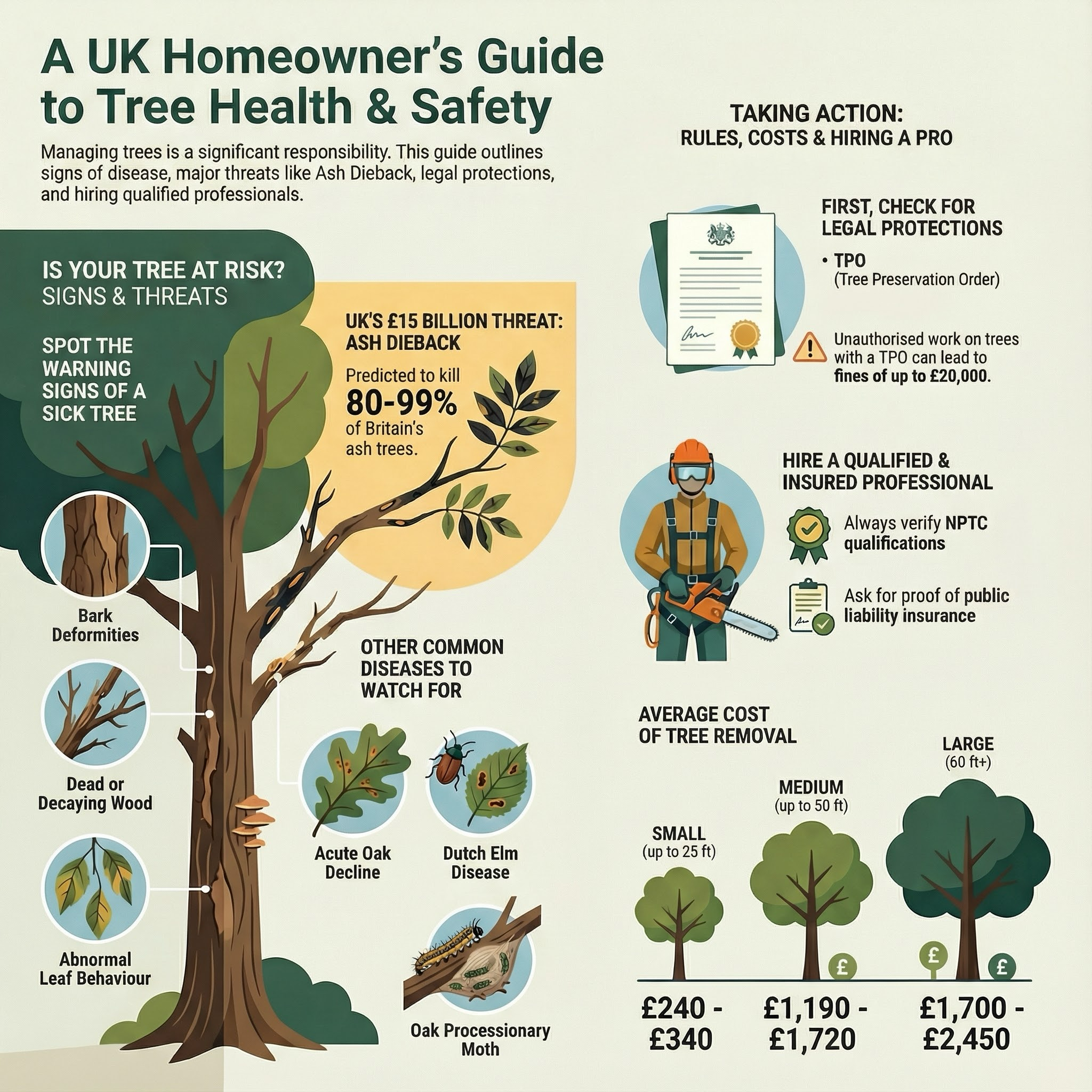
In the UK, tree work is strictly governed by safety standards and environmental protections. This guide breaks down the typical costs, regulatory requirements, and technical processes involved in professional tree removal for 2025/26.
The cost of felling a tree depends primarily on its height, spread, and accessibility. A tree overhanging a glass conservatory or a public highway will cost significantly more due to the complexity and insurance risks involved.
| Item | Low £ | High £ | Notes |
|---|---|---|---|
| Small Tree (up to 5m) | £250 | £500 | Includes waste removal; e.g., Silver Birch. |
| Medium Tree (5m - 10m) | £500 | £900 | Requires rigging and more ground staff. |
| Large Tree (10m - 20m+) | £1,000 | £3,500+ | Often requires 2 days and specialist machinery. |
| Stump Grinding | £150 | £400 | Price depends on diameter and root depth. |
| TPO Application Fee | £0 | £150 | Some arborists charge to handle council paperwork. |
Prices generally include VAT and waste disposal. If you choose to keep the wood for fuel, you may be able to negotiate a small discount on the labour, as it reduces the surgeon's tip fees.
Tree felling is one of the few domestic tasks where DIY is strongly discouraged. Chainsaws are responsible for thousands of serious injuries annually, and "gravity" is a dangerous variable when dealing with several tonnes of timber.
Professional tree surgeons carry Public Liability Insurance (typically £5 million or more) which protects you if a branch hits your house or a neighbour's car. Furthermore, professionals are trained in BS3998:2010 (Recommendations for Tree Work), ensuring the long-term health of your landscape and compliance with UK law.
Don't be tempted by "door-knockers" offering cheap tree work. Look for these credentials to ensure you are hiring a legitimate professional:
Pro Tip: Always ask "Will you be working to BS3998 standards?" and "Does the quote include the removal of all waste and stump grinding?"
You can check your local council's online interactive map or call their arboricultural officer. It is your responsibility as the homeowner to check this before work begins.
Technically yes, but it is discouraged if there are nesting birds. Tree surgeons are legally required to check for active nests; if found, work must stop until the chicks have fledged.
Most quotes include "chipping and removal." If you want to keep the timber for a log burner, let them know in advance so they can cut it into manageable rounds for you.
Certain species like Willow, Poplar, and Hazel will "re-sprout" or sucker from the stump. To prevent this, you either need stump grinding or a chemical stump killer treatment.
You can only fell a tree that is 100% on your land. If the trunk straddles the boundary, it is co-owned, and you must have the neighbour's written permission before removal.
This guide was written with AI assistance and is intended for general information only. Prices are estimates based on UK averages and may vary by region. Always get at least three quotes and consult a qualified professional before starting any work.
Ask follow-ups in plain English. The AI explains options, sequencing and what to ask the tree surgeon — so you walk in informed.
Products & Services • Supply a wide range of premium timber products including softwood, hardwood, and treated timber • Custom cutting and sizing services t...
READ GUIDE →GuideProfessional tree and bush maintenance is essential for more than just a tidy garden. In the UK, proper arboriculture ensures the safety of your property, the h...
READ GUIDE →GuideMaintaining the trees on your property is about more than just aesthetics; it is a critical part of property safety and health. Whether you have a towering oak ...
READ GUIDE →GuideCrown thinning is a precise arboricultural technique designed to improve a tree's structure without altering its overall size or shape. By selectively removing ...
READ GUIDE →GuideProper tree maintenance is essential for the safety, health, and aesthetic value of your UK property. Whether you are dealing with an overgrown oak, a storm-dam...
READ GUIDE →GuideTree pruning is a vital part of garden maintenance that ensures your trees remain healthy, safe, and aesthetically pleasing. In the UK, professional pruning hel...
READ GUIDE →