Instant
01 · Ask
Ask the AI a follow-up
Got more questions about small tree removal? Describe the bit you're unsure about — the AI explains options, sequencing and what to ask the tree surgeon.

Sub-3m tree felled, cut up and waste removed — often in a single morning.
You've read the brief on small tree removal. Now lean on us to find the right tree surgeon — and stay in control of the job.
Got more questions about small tree removal? Describe the bit you're unsure about — the AI explains options, sequencing and what to ask the tree surgeon.
Costs, timelines, pitfalls and the right questions to ask before any tree surgeon starts on small tree removal.
Itemised quotes from up to 3 local tree surgeons on small tree removal — so you can compare like-for-like, not lump sums.
Ready when you are
Enter your postcode and get free quotes from local pros.
Four moves that separate a smooth job from a nightmare.
Roots can wrap around clay pipes or telecoms cables; stump grinding without checking service maps can cause expensive damage.
Old fencing wire or nails embedded in the trunk can shatter chainsaw chains, causing delays and safety risks.
Simply cutting a tree down doesn't kill it; species like Willow or Poplar will send up "suckers" unless the stump is ground out or chemically treated.
Removing a tree on a boundary without consulting your neighbour can lead to bitter legal battles over "shared" property.
Indicative UK ranges and what affects price.
By job type
Quote spread is typically ± 18% — always get 3 quotes.
Tree Surgeon quick-view
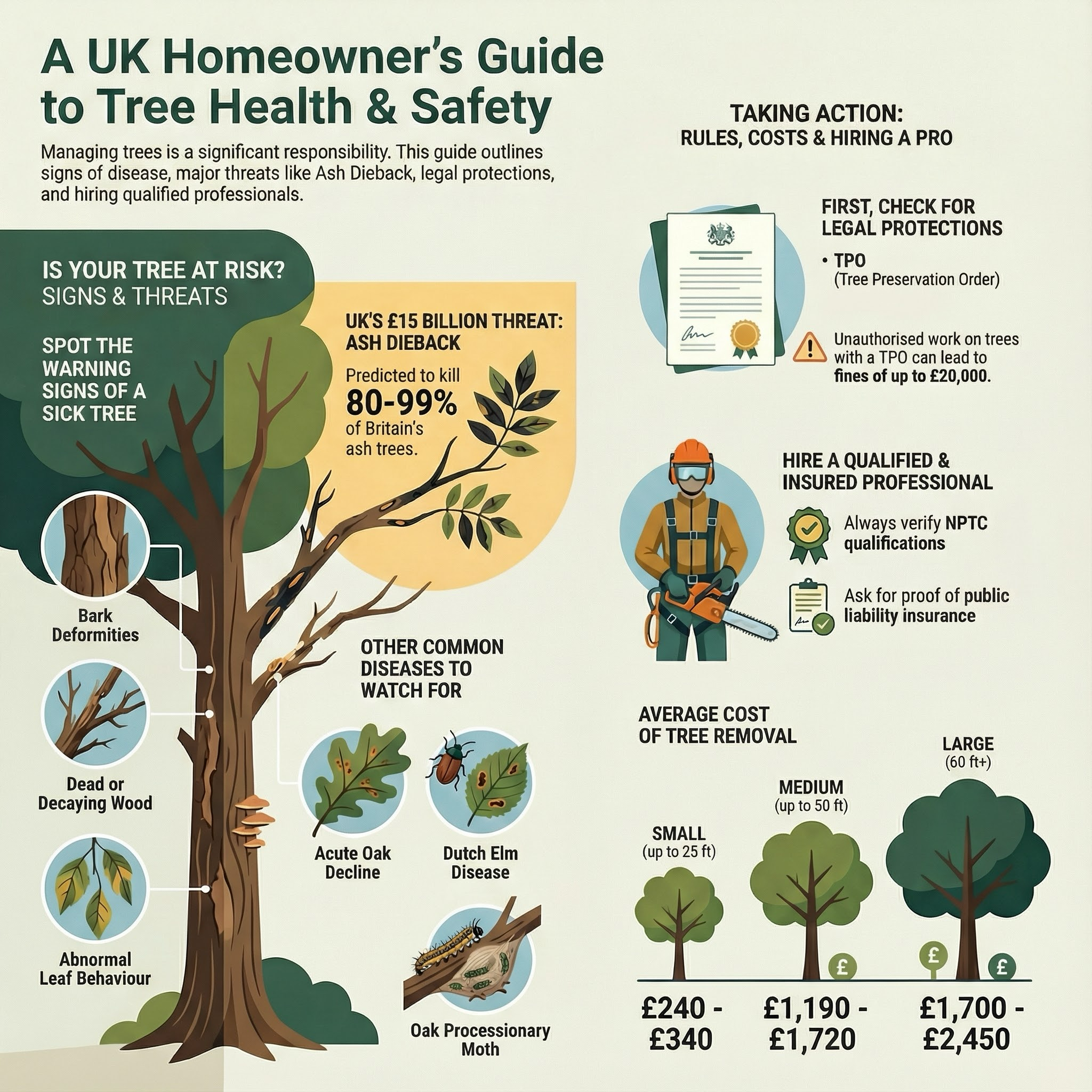
Tree Surgeon explained
For UK homeowners, "small" typically refers to trees up to 5 or 6 metres in height—roughly the level of a first-floor window. While these are more manageable than mature oaks or ash trees, they still require expert handling to manage weight, tension, and the legal disposal of green waste.
| Item | Low £ | High £ | Notes |
|---|---|---|---|
| Basic Removal (Easy Access) | £250 | £450 | Single stem, good access, no major obstacles. |
| Complex Removal (Tight Access) | £500 | £950 | Near buildings, over sheds, or manual haulage required. |
| Stump Grinding | £80 | £250 | Price depends on diameter and depth required. |
| Green Waste Disposal | £50 | £150 | Covers chipping and commercial tipping fees. |
| Emergency Call-Out | £350 | £600 | Rapid response for storm-damaged or dangerous trees. |
Total project costs are primarily driven by access and volume. If a tree surgeon can't get a chipper close to the tree, the extra labour required to drag timber through a house or down a narrow side-path will increase the price significantly.
While cutting down a small sapling is a common DIY task, anything requiring a chainsaw or a ladder should be left to a professional. The risk of personal injury or significant property damage—such as a branch crushing a neighbour’s fence or a shed roof—is high.
Professional tree surgeons (arborists) carry specific Public Liability Insurance that covers arboricultural work, which standard home insurance often excludes for DIY attempts. Furthermore, handling heavy timber and operating high-powered chippers requires specialist training to avoid life-altering accidents.
Generally no, unless the tree is protected by a Tree Preservation Order (TPO), you live in a Conservation Area, or there are restrictive covenants in your property deeds. Always check with your local council's planning department first.
Yes, most tree surgeons will be happy to cut the trunk into "rings" for you to split. This often reduces the price of the job as the contractor doesn't have to pay disposal fees, but remember the wood will need to season for 1-2 years before burning.
Felling is the removal of the tree above ground level, leaving a stump. Stump grinding uses a machine to chew the root plate into small chips below ground level, allowing you to replant or lay turf over the area.
Usually, yes. Most quotes include "arisings removal," where branches are chipped and taken away. However, some homeowners choose to keep the chips for garden mulch to save on costs.
Light rain is rarely an issue, but work will usually stop during high winds or heavy storms for safety reasons. Climbing and using chainsaws in slippery, gusty conditions is extremely hazardous.
Winter is often ideal as deciduous trees have lost their leaves (less waste volume) and are dormant. However, you must avoid the bird nesting season (March to August) if there is any sign of active nests.
This guide was written with AI assistance and is intended for general information only. Prices are estimates based on UK averages and may vary by region. Always get at least three quotes and consult a qualified professional before starting any work.
Ask follow-ups in plain English. The AI explains options, sequencing and what to ask the tree surgeon — so you walk in informed.
Products & Services • Supply a wide range of premium timber products including softwood, hardwood, and treated timber • Custom cutting and sizing services t...
READ GUIDE →GuideProfessional tree and bush maintenance is essential for more than just a tidy garden. In the UK, proper arboriculture ensures the safety of your property, the h...
READ GUIDE →GuideTree felling is a high-risk task that requires precision, specialist equipment, and a deep understanding of tree biology. Whether you are removing a dead tree f...
READ GUIDE →GuideMaintaining the trees on your property is about more than just aesthetics; it is a critical part of property safety and health. Whether you have a towering oak ...
READ GUIDE →GuideCrown thinning is a precise arboricultural technique designed to improve a tree's structure without altering its overall size or shape. By selectively removing ...
READ GUIDE →GuideProper tree maintenance is essential for the safety, health, and aesthetic value of your UK property. Whether you are dealing with an overgrown oak, a storm-dam...
READ GUIDE →