Instant
01 · Ask
Ask the AI a follow-up
Got more questions about stump Grinding Cost &? Describe the bit you're unsure about — the AI explains options, sequencing and what to ask the tree surgeon.

Stump ground out to below ground level — by a stump-grinder operator. Clears for replanting or lawn.
You've read the brief on stump Grinding Cost &. Now lean on us to find the right tree surgeon — and stay in control of the job.
Got more questions about stump Grinding Cost &? Describe the bit you're unsure about — the AI explains options, sequencing and what to ask the tree surgeon.
Costs, timelines, pitfalls and the right questions to ask before any tree surgeon starts on stump Grinding Cost &.
Itemised quotes from up to 3 local tree surgeons on stump Grinding Cost & — so you can compare like-for-like, not lump sums.
Ready when you are
Enter your postcode and get free quotes from local pros.
Four moves that separate a smooth job from a nightmare.
Hitting gas or water pipes that were installed too shallowly.
Old fencing wire, nails, or even horse shoes embedded in the wood can shatter grinder teeth and cause delays.
Homeowners are often shocked by the volume of woodchips produced; a large stump can create a mountain of debris.
If the stump is infected, the mulch cannot be reused in the garden and must be professionally disposed of to prevent spread.
Indicative UK ranges and what affects price.
By job type
Quote spread is typically ± 18% — always get 3 quotes.
Tree Surgeon quick-view
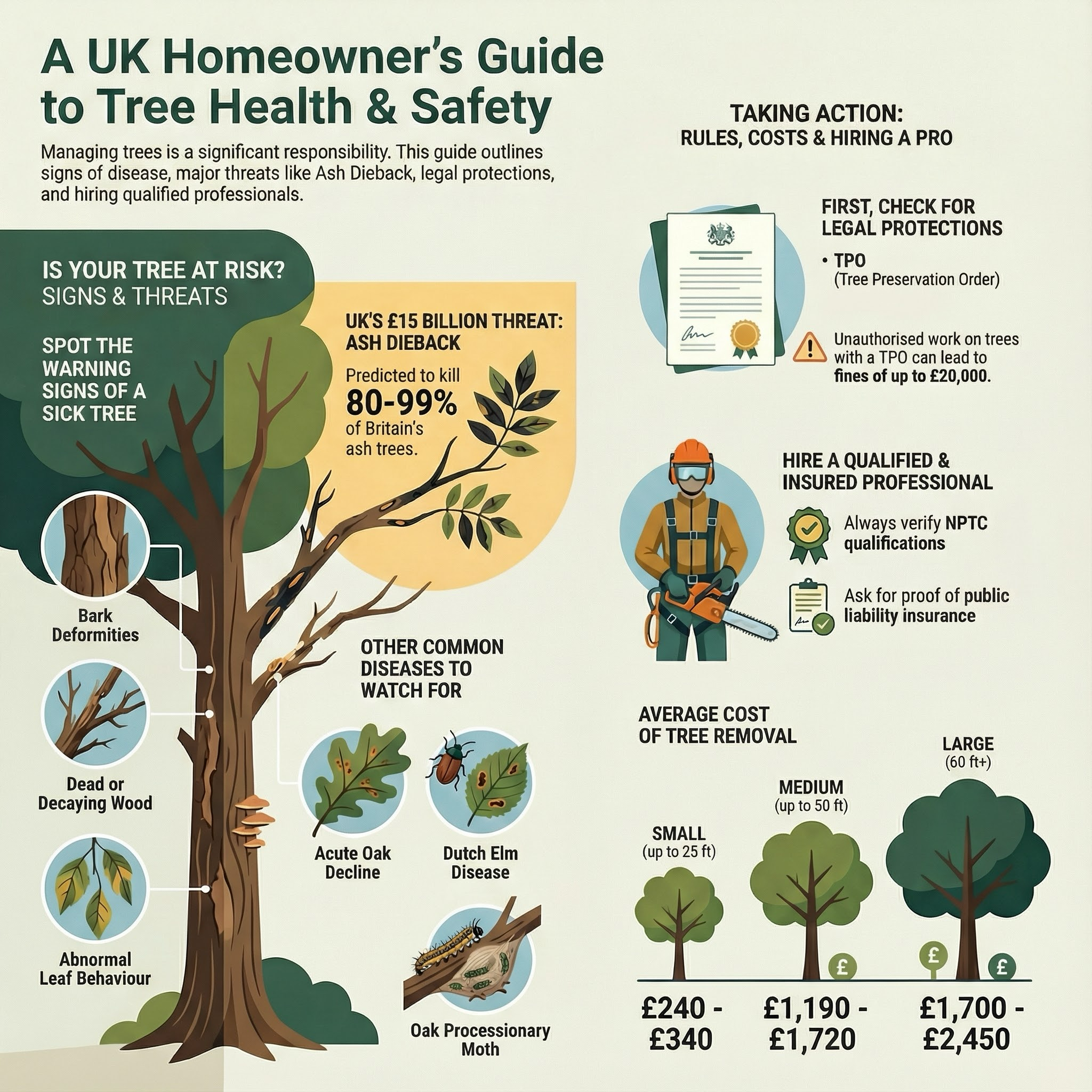
Tree Surgeon explained
For UK homeowners, professional grinding transforms a problematic obstacle into useful mulch, allowing for immediate replanting or turfing. This guide breaks down the costs, timelines, and essential regulations involved in clearing your garden of stubborn stumps.
Most tree surgeons charge based on the diameter of the stump at its widest point (including any visible buttress roots), though some offer a flat rate for multiple small stumps. Prices include VAT and the use of specialist machinery.
| Item | Low £ | High £ | Notes |
|---|---|---|---|
| Minimum Call-out Fee | £100 | £150 | Covers travel and setup for a single small stump. |
| Small Stump (up to 15cm) | £60 | £100 | Often discounted if done alongside tree felling. |
| Large Stump (60cm+) | £250 | £450 | Price increases with diameter and hardwood species. |
| Day Rate (Multiple Stumps) | £450 | £800 | Best value for clearing large garden plots. |
| Waste Removal | £40 | £80 | Optional; many owners keep mulch for flowerbeds. |
Costs are primarily driven by the stump's size and species; hardwoods like Oak or Beech take significantly longer to grind than softwoods like Pine. Accessibility is also a factor—if the surgeon has to use a smaller, hand-steered machine to fit through a standard garden gate, the labour time will increase.
While you can hire a stump grinder from most tool hire shops, it is rarely recommended for the average homeowner. These machines are high-powered, dangerous, and require significant physical strength to operate safely on uneven ground.
Professional Safety: Tree surgeons carry Public Liability insurance and use CAT scanners to avoid hitting underground service pipes—a mistake that can cost thousands in repairs if you DIY.
Professionals also ensure the machinery is correctly shielded to prevent "fly-rock," which can easily shatter patio doors or car windows during the grinding process.
Standard grinding depth is between 150mm and 300mm below the soil line. This is sufficient for laying turf or paving, but if you plan to plant a new large tree in the exact same spot, you may need a deeper "full extraction" which costs more.
It is best to wait a few months or plant slightly to one side. The decomposing sawdust can temporarily deplete nitrogen in the soil, and the remaining deep roots may obstruct the new root ball.
The grinding process creates a mix of wood and soil. Most homeowners use this as a mulch for garden borders, but if left in a pile, it can become acidic as it decomposes. A professional can remove it for an extra fee.
Most species will not grow back once the crown of the stump is ground away. However, some vigorous species like Willow or Poplar may occasionally send up "suckers" from remaining lateral roots, which can be managed with a targeted herbicide.
As long as the tree surgeon has clear access to the garden and any pets are kept indoors, you do not usually need to be present. Ensure any underground services (like garden lighting) are clearly marked beforehand.
Professional grinders use large, low-pressure tyres or tracks to minimise lawn damage. In wet weather, most surgeons will use ground protection mats to prevent ruts and compaction.
This guide was written with AI assistance and is intended for general information only. Prices are estimates based on UK averages and may vary by region. Always get at least three quotes and consult a qualified professional before starting any work.
Ask follow-ups in plain English. The AI explains options, sequencing and what to ask the tree surgeon — so you walk in informed.
Products & Services • Supply a wide range of premium timber products including softwood, hardwood, and treated timber • Custom cutting and sizing services t...
READ GUIDE →GuideProfessional tree and bush maintenance is essential for more than just a tidy garden. In the UK, proper arboriculture ensures the safety of your property, the h...
READ GUIDE →GuideTree felling is a high-risk task that requires precision, specialist equipment, and a deep understanding of tree biology. Whether you are removing a dead tree f...
READ GUIDE →GuideMaintaining the trees on your property is about more than just aesthetics; it is a critical part of property safety and health. Whether you have a towering oak ...
READ GUIDE →GuideCrown thinning is a precise arboricultural technique designed to improve a tree's structure without altering its overall size or shape. By selectively removing ...
READ GUIDE →GuideProper tree maintenance is essential for the safety, health, and aesthetic value of your UK property. Whether you are dealing with an overgrown oak, a storm-dam...
READ GUIDE →