Instant
01 · Ask
Ask the AI a follow-up
Got more questions about tree felling and stump height reduction? Describe the bit you're unsure about — the AI explains options, sequencing and what to ask the tree surgeon.

Tree felled and remaining stump reduced or ground out to ground level.
You've read the brief on tree felling and stump height reduction. Now lean on us to find the right tree surgeon — and stay in control of the job.
Got more questions about tree felling and stump height reduction? Describe the bit you're unsure about — the AI explains options, sequencing and what to ask the tree surgeon.
Costs, timelines, pitfalls and the right questions to ask before any tree surgeon starts on tree felling and stump height reduction.
Itemised quotes from up to 3 local tree surgeons on tree felling and stump height reduction — so you can compare like-for-like, not lump sums.
Ready when you are
Enter your postcode and get free quotes from local pros.
Four moves that separate a smooth job from a nightmare.
Stump grinders can easily sever shallow gas pipes, water mains, or fibre optic cables if they aren't located first.
If the garden gate is too narrow for a wood chipper or stump grinder, labour costs will increase as everything must be moved by hand.
A tree that looks solid may be hollow inside, making it unpredictable during felling and requiring specialist rigging.
Homeowners often mistakenly fell trees that actually belong to a neighbour or are situated on "no-man's land."
Indicative UK ranges and what affects price.
By job type
Quote spread is typically ± 18% — always get 3 quotes.
Tree Surgeon quick-view
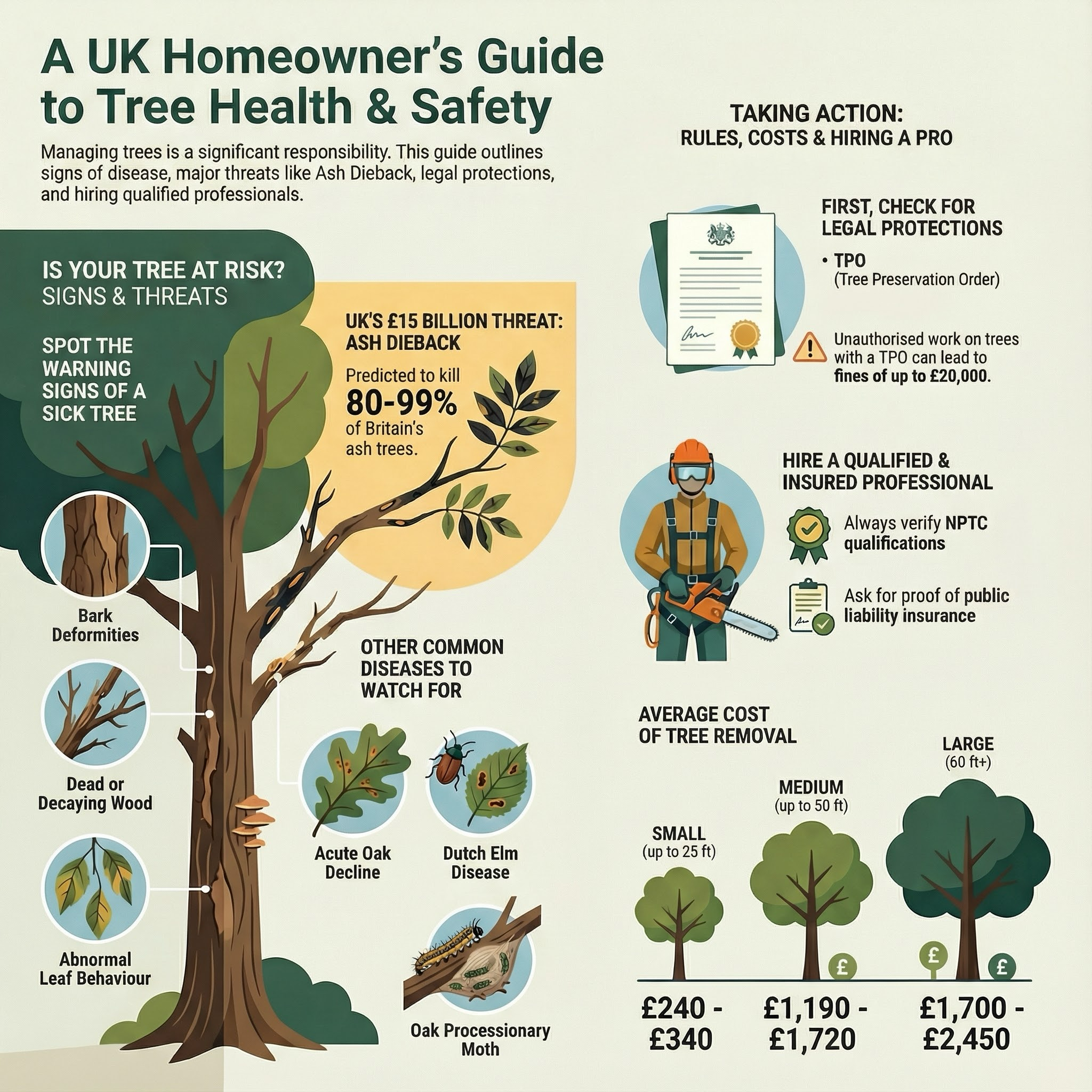
Tree Surgeon explained
Removing a tree is a highly technical process that involves more than just a chainsaw. From navigating Tree Preservation Orders (TPOs) to safely grinding out the stump for future replanting, hiring an expert protects both your garden and your legal liability.
| Item | Low £ | High £ | Notes |
|---|---|---|---|
| Small Tree (e.g. Silver Birch) | £350 | £600 | Up to 5-6 metres; includes waste removal. |
| Medium Tree (e.g. Cherry/Ash) | £600 | £1,200 | Up to 10-12 metres; involves sectional felling. |
| Large Tree (e.g. Mature Oak) | £1,200 | £3,500+ | Significant height/spread; requires large team. |
| Stump Grinding Only | £150 | £450 | Price depends on diameter and root spread. |
| Waste Disposal/Chipping | £100 | £300 | Standard fee if not included in the main quote. |
Costs are primarily driven by the tree's size, its proximity to buildings, and ease of access for heavy machinery. Prices in London and the South East typically carry a 15-25% premium due to higher disposal costs and labour rates.
Tree felling is one of the most dangerous domestic tasks and should never be a DIY job. Professional tree surgeons carry specific insurance and have the aerial rescue training required for high-risk work.
While you can prune small fruit trees yourself, anything requiring a ladder or a chainsaw must be handled by a qualified arborist. Attempting to fell a tree without professional rigging can lead to catastrophic property damage or fatal injury.
Winter (dormant season) is usually best as the lack of leaves makes the structure easier to see and there is no risk of disturbing nesting birds. However, dangerous or dead trees should be removed immediately regardless of the season.
Most species will not grow back once the main root flare has been ground down 150-200mm below the surface. Some species, like Willow or Poplar, may occasionally send up "suckers" from remaining deep roots, but these are easily managed.
Yes, most surgeons are happy to "ring up" the main trunk into logs for you to keep. Be aware that fresh wood needs to be seasoned (dried) for at least 1-2 years before it is safe to burn.
If the trunk is entirely on your land, you do not need their permission to fell it. However, it is a matter of courtesy to inform them, as the work will be noisy and may involve branches overhanging their property.
The terms are often used interchangeably, but an arborist generally focuses on the health and science of the tree, while a tree surgeon performs the physical maintenance and removal. Most reputable UK firms employ staff who are both.
This guide was written with AI assistance and is intended for general information only. Prices are estimates based on UK averages and may vary by region. Always get at least three quotes and consult a qualified professional before starting any work.
Ask follow-ups in plain English. The AI explains options, sequencing and what to ask the tree surgeon — so you walk in informed.
Products & Services • Supply a wide range of premium timber products including softwood, hardwood, and treated timber • Custom cutting and sizing services t...
READ GUIDE →GuideProfessional tree and bush maintenance is essential for more than just a tidy garden. In the UK, proper arboriculture ensures the safety of your property, the h...
READ GUIDE →GuideTree felling is a high-risk task that requires precision, specialist equipment, and a deep understanding of tree biology. Whether you are removing a dead tree f...
READ GUIDE →GuideMaintaining the trees on your property is about more than just aesthetics; it is a critical part of property safety and health. Whether you have a towering oak ...
READ GUIDE →GuideCrown thinning is a precise arboricultural technique designed to improve a tree's structure without altering its overall size or shape. By selectively removing ...
READ GUIDE →GuideProper tree maintenance is essential for the safety, health, and aesthetic value of your UK property. Whether you are dealing with an overgrown oak, a storm-dam...
READ GUIDE →