Instant
01 · Ask
Ask the AI a follow-up
Got more questions about tree pruning? Describe the bit you're unsure about — the AI explains options, sequencing and what to ask the tree surgeon.

Crown thin, raise or reduce — by a tree surgeon, with proper PPE, climb gear and waste removal.
You've read the brief on tree pruning. Now lean on us to find the right tree surgeon — and stay in control of the job.
Got more questions about tree pruning? Describe the bit you're unsure about — the AI explains options, sequencing and what to ask the tree surgeon.
Costs, timelines, pitfalls and the right questions to ask before any tree surgeon starts on tree pruning.
Itemised quotes from up to 3 local tree surgeons on tree pruning — so you can compare like-for-like, not lump sums.
Ready when you are
Enter your postcode and get free quotes from local pros.
Four moves that separate a smooth job from a nightmare.
Removing more than 20-30% of the canopy can shock the tree and lead to decline or death.
Pruning certain species (like Cherry or Plum) at the wrong time can lead to Silver Leaf disease.
You have a legal right to prune overhanging branches back to the boundary line, but you must offer the "arisings" back to the neighbour.
Heavy machinery or falling timber can damage shallow pipes or cables if not properly planned.
Indicative UK ranges and what affects price.
By job type
Quote spread is typically ± 18% — always get 3 quotes.
Tree Surgeon quick-view
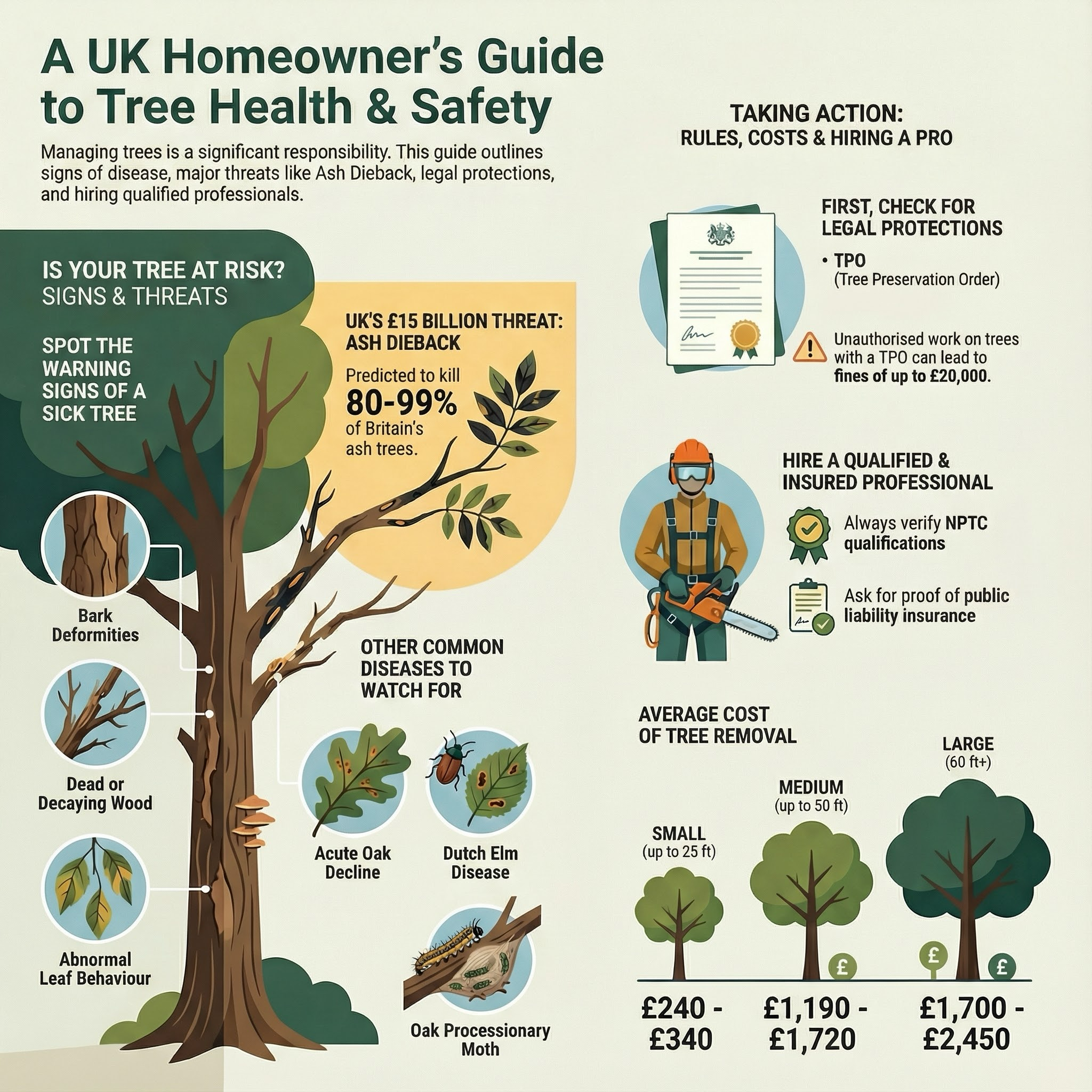
Tree Surgeon explained
Beyond simple aesthetics, correct pruning encourages fruit production and prevents the spread of disease. Engaging a qualified arborist ensures the work complies with British Standards and protects the long-term structural integrity of the tree.
| Item | Low £ | High £ | Notes |
|---|---|---|---|
| Small Tree (e.g. Fruit tree) | £150 | £350 | Basic pruning or shaping. |
| Medium Tree (e.g. Silver Birch) | £350 | £750 | Requires climbing and rigging. |
| Large Tree (e.g. Mature Oak) | £750 | £1,500+ | Full day for a multi-person crew. |
| Daily Rate (2-3 Person Crew) | £600 | £1,100 | Includes chipper and insurance. |
| Waste Disposal | £50 | £250 | Higher if access for a chipper is limited. |
Prices vary based on the tree's size, species, and location. Difficult access—such as needing to carry timber through a terraced house—or proximity to public highways will significantly increase the labour costs.
While homeowners can prune small shrubs, anything requiring a ladder or a chainsaw should be left to a professional. Tree surgery is one of the UK’s most dangerous professions; working at height with power tools requires specialist training and rigging equipment.
Professional arborists work to BS 3998:2010 (Recommendations for Tree Work), ensuring the tree is not left vulnerable to pests or decay.
Questions to ask: Can you provide a written quote including waste removal? Will you check for TPOs on my behalf? Do you work to BS 3998 standards?
For most deciduous trees, late winter or early spring is best as the tree is dormant and the structure is visible. However, some species like Walnut and Birch should be pruned in late summer to avoid "bleeding" sap.
You can check with your local council's planning department. Most have an online map where you can search your postcode for Tree Preservation Orders or Conservation Area status.
Yes, most tree surgeons are happy to leave the timber on-site and may even offer a discount as it reduces their disposal costs. Ask them to "ring up" the timber into manageable logs for you.
Stump grinding is usually a separate service. Pruning focuses on the canopy; if you are removing the tree entirely, ensure the quote explicitly includes stump removal if you don't want it left in the ground.
A reputable professional will have Public Liability insurance to cover such incidents. Always verify their insurance certificate before work begins to ensure you are protected.
This guide was written with AI assistance and is intended for general information only. Prices are estimates based on UK averages and may vary by region. Always get at least three quotes and consult a qualified professional before starting any work.
Ask follow-ups in plain English. The AI explains options, sequencing and what to ask the tree surgeon — so you walk in informed.
Products & Services • Supply a wide range of premium timber products including softwood, hardwood, and treated timber • Custom cutting and sizing services t...
READ GUIDE →GuideProfessional tree and bush maintenance is essential for more than just a tidy garden. In the UK, proper arboriculture ensures the safety of your property, the h...
READ GUIDE →GuideTree felling is a high-risk task that requires precision, specialist equipment, and a deep understanding of tree biology. Whether you are removing a dead tree f...
READ GUIDE →GuideMaintaining the trees on your property is about more than just aesthetics; it is a critical part of property safety and health. Whether you have a towering oak ...
READ GUIDE →GuideCrown thinning is a precise arboricultural technique designed to improve a tree's structure without altering its overall size or shape. By selectively removing ...
READ GUIDE →GuideProper tree maintenance is essential for the safety, health, and aesthetic value of your UK property. Whether you are dealing with an overgrown oak, a storm-dam...
READ GUIDE →