Instant
01 · Ask
Ask the AI a follow-up
Got more questions about tree maintenance and cutting? Describe the bit you're unsure about — the AI explains options, sequencing and what to ask the tree surgeon.

Annual tree maintenance — pruning, crown thin, dead-wood removal — by a qualified arborist.
You've read the brief on tree maintenance and cutting. Now lean on us to find the right tree surgeon — and stay in control of the job.
Got more questions about tree maintenance and cutting? Describe the bit you're unsure about — the AI explains options, sequencing and what to ask the tree surgeon.
Costs, timelines, pitfalls and the right questions to ask before any tree surgeon starts on tree maintenance and cutting.
Itemised quotes from up to 3 local tree surgeons on tree maintenance and cutting — so you can compare like-for-like, not lump sums.
Ready when you are
Enter your postcode and get free quotes from local pros.
Four moves that separate a smooth job from a nightmare.
Cutting the top off a tree to reduce height often leads to rapid, weak regrowth and fungal decay; always opt for crown reduction instead.
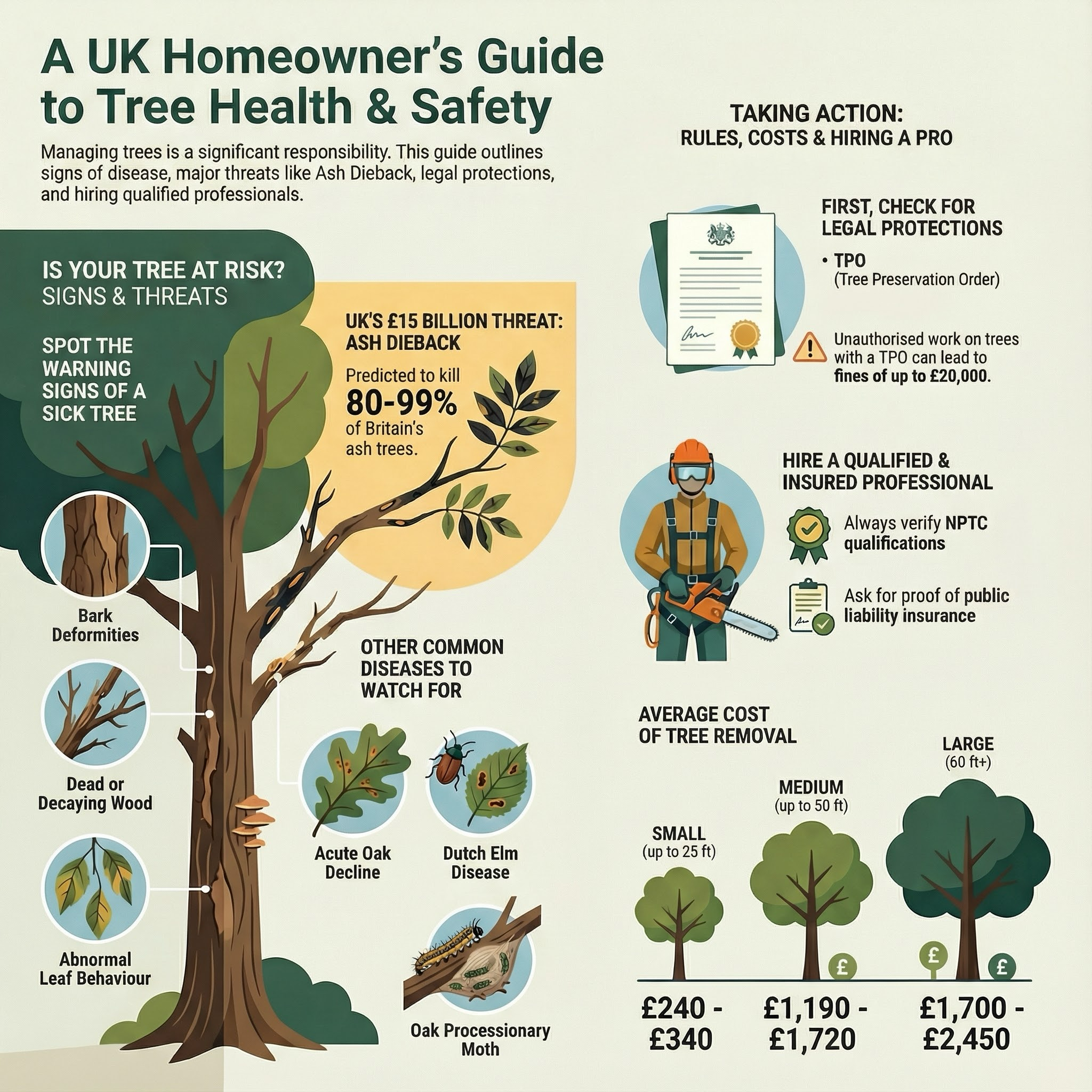
Homeowners are legally responsible for checking TPOs; failing to do so can result in fines of up to £20,000 per tree.
Leaving "arisings" (cuttings) on-site can lead to pests or fire hazards if not properly stacked or chipped.
Stump grinders can easily sever shallow gas or water lines; always mark out services before grinding.
Indicative UK ranges and what affects price.
By job type
Quote spread is typically ± 18% — always get 3 quotes.
Tree Surgeon quick-view
Tree Surgeon explained
Engaging a professional arborist ensures that work is carried out according to British Standards (BS3998), protecting the health of the tree and ensuring you stay on the right side of local planning laws. Whether it’s a simple crown reduction or a complex sectional dismantle, professional intervention is essential for any work involving heights or heavy machinery.
| Service Type | Low £ | High £ | Notes |
|---|---|---|---|
| Small Tree Pruning | £250 | £500 | Fruit trees or small ornamentals. |
| Medium Tree Removal | £600 | £1,200 | Includes felling and waste removal. |
| Large Tree Removal | £1,500 | £4,000+ | Complex rigging or crane assisted. |
| Stump Grinding | £150 | £450 | Price depends on diameter and access. |
| Day Rate (Team of 3) | £850 | £1,400 | Standard for large gardens/multiple trees. |
| TPO Application Fee | £0 | £150 | Often included in the quote by arborists. |
Prices vary significantly based on the tree's location, species, and proximity to buildings or power lines. Disposal costs are a major factor; if you choose to keep the wood chips or logs on-site, you can often negotiate a lower total price.
Tree surgery is one of the most dangerous professions in the UK and should almost never be attempted as a DIY project. Working at height with chainsaws requires specialist training, NPTC qualifications, and heavy-duty PPE that the average homeowner does not possess.
Attempting to fell a tree yourself can lead to catastrophic property damage or fatal injury; furthermore, most home insurance policies will not cover DIY tree work accidents.
Professional arborists carry Public Liability insurance (typically £5m–£10m) and understand the legalities of the Wildlife and Countryside Act. Only very basic pruning of small shrubs or low-level fruit trees using hand tools is suitable for a DIY enthusiast.
Yes, under UK Common Law, you can prune branches back to your boundary line, provided the tree isn't protected by a TPO. You must offer the "arisings" (the cuttings) back to the neighbour, though they are not obliged to accept them.
Most trees are best pruned in late autumn or winter when they are dormant and have no leaves. However, species like Cherry or Plum should be pruned in summer to avoid Silver Leaf disease.
You can check your local council's website, which usually features an interactive map of protected trees. Alternatively, call the local planning department's arboricultural officer.
Usually, no. Stump grinding is typically quoted as an optional extra because it requires a different machine and additional labour. Always clarify this in your initial quote.
Most surgeons will chip the small branches for mulch and take the larger logs away. If you have a log burner, you can ask them to "ring up" the trunk into moveable sections for you to split later.
As long as the team has access to the garden and a power source (if needed), you do not need to be present. However, it is helpful to be there at the start to confirm the scope of work.
This guide was written with AI assistance and is intended for general information only. Prices are estimates based on UK averages and may vary by region. Always get at least three quotes and consult a qualified professional before starting any work.
Ask follow-ups in plain English. The AI explains options, sequencing and what to ask the tree surgeon — so you walk in informed.
Products & Services • Supply a wide range of premium timber products including softwood, hardwood, and treated timber • Custom cutting and sizing services t...
READ GUIDE →GuideProfessional tree and bush maintenance is essential for more than just a tidy garden. In the UK, proper arboriculture ensures the safety of your property, the h...
READ GUIDE →GuideTree felling is a high-risk task that requires precision, specialist equipment, and a deep understanding of tree biology. Whether you are removing a dead tree f...
READ GUIDE →GuideMaintaining the trees on your property is about more than just aesthetics; it is a critical part of property safety and health. Whether you have a towering oak ...
READ GUIDE →GuideCrown thinning is a precise arboricultural technique designed to improve a tree's structure without altering its overall size or shape. By selectively removing ...
READ GUIDE →GuideProper tree maintenance is essential for the safety, health, and aesthetic value of your UK property. Whether you are dealing with an overgrown oak, a storm-dam...
READ GUIDE →