Instant
01 · Ask
Ask the AI a follow-up
Got more questions about electric Gate Installation? Describe the bit you're unsure about — the AI explains options, sequencing and what to ask the alarms & security.

Sliding or swing, single or double — motor, safety edges, intercom and the ground works it sits on.
You've read the brief on electric Gate Installation. Now lean on us to find the right alarms & security — and stay in control of the job.
Got more questions about electric Gate Installation? Describe the bit you're unsure about — the AI explains options, sequencing and what to ask the alarms & security.
Costs, timelines, pitfalls and the right questions to ask before any alarms & security starts on electric Gate Installation.
Itemised quotes from up to 3 local alarms & securitys on electric Gate Installation — so you can compare like-for-like, not lump sums.
Ready when you are
Enter your postcode and get free quotes from local pros.
Four moves that separate a smooth job from a nightmare.
Underground motors sitting in water will fail prematurely; proper soakaways are essential.
Solid "close-boarded" gates act like sails; in high winds, underpowered motors may burn out or fail to close.
Slugs and spiders often enter control boxes, causing short circuits on the PCB.
Hinges and pivot points need regular greasing to prevent the motor from overworking.
Indicative UK ranges and what affects price.
By job type
Quote spread is typically ± 18% — always get 3 quotes.
Alarms & Security quick-view
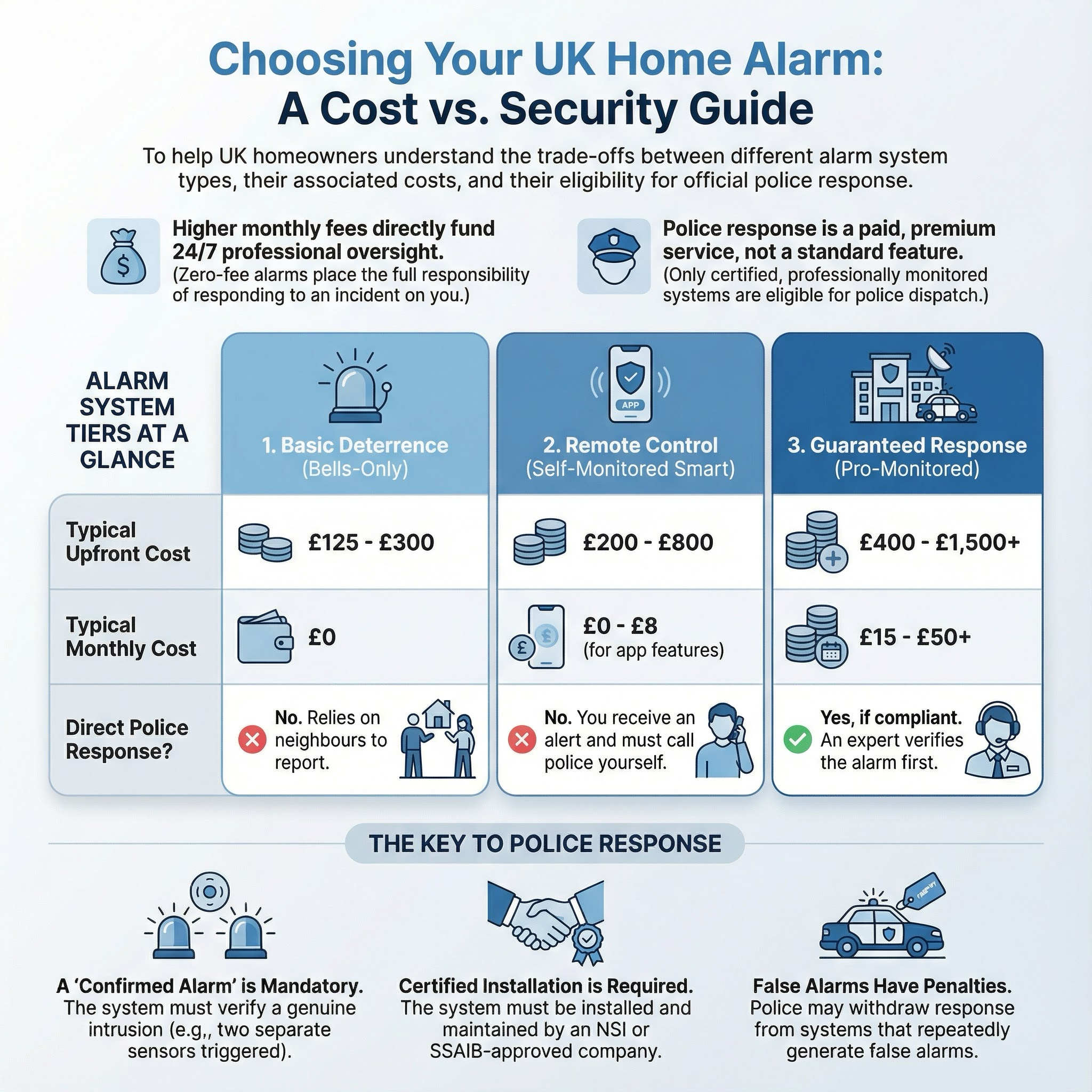
Alarms & Security explained
However, installing automated gates is a complex engineering task that involves groundworks, precision metalwork or carpentry, and specialist electrical engineering. Ensuring your system is safe, reliable, and compliant with UK safety standards is essential to protect both your family and your liability as a property owner.
The cost of electric gate installation varies significantly based on the material of the gates (wood, steel, or aluminium) and whether you choose a swing or sliding mechanism. Sliding gates often require more expensive track installation and groundworks, while underground swing motors are more aesthetic but pricier to install.
| Item | Low £ | High £ | Notes |
|---|---|---|---|
| Basic Automation Kit (Hardware only) | £800 | £2,500 | Depends on motor power and brand. |
| Pair of Aluminium/Steel Gates | £1,500 | £5,000 | Standard vs. bespoke designs. |
| Full Installation Labour | £1,200 | £3,000 | Includes groundworks and electrical. |
| Intercom & Access Control | £300 | £1,200 | Audio-only vs. GSM/Video systems. |
| Total Project Cost | £3,800 | £11,000+ | Fully installed with safety kit. |
Note: Prices include VAT at 20%. Factors such as the distance from your house to the gates and the need for new brick pillars can add £2,000 or more to the final bill.
Electric gate installation is not recommended as a DIY project. Under UK law, an automated gate is classified as a "machine," and the person who installs it is legally responsible for its safety and compliance.
Errors in installation can lead to serious injury or even fatalities if safety sensors fail or motors are too powerful. Furthermore, all new electrical circuits must be installed and certified by a Part P registered electrician to comply with UK Building Regulations.
No. On standby, they use very little power (similar to a microwave clock). The cost per cycle is negligible, usually adding less than £15–£20 to your annual electricity bill.
Usually, yes. However, the gates must be in excellent structural condition and swing freely. If the posts are leaning or the wood is rotting, they will need to be replaced first.
All professional systems come with a manual release key. You insert this into the motor to disengage the drive, allowing you to push the gates open by hand.
Swing gates are generally cheaper and more traditional. Sliding gates are better for short driveways where space is limited or for driveways that slope upwards, which would block a swing gate.
For a standard residential gate, an annual service is recommended. This involves checking safety sensors, lubricating moving parts, and verifying the force settings have not drifted.
This guide was written with AI assistance and is intended for general information only. Prices are estimates based on UK averages and may vary by region. Always get at least three quotes and consult a qualified professional before starting any work.
Ask follow-ups in plain English. The AI explains options, sequencing and what to ask the alarms & security — so you walk in informed.
Removing an old or obsolete alarm system is a common task for UK homeowners, especially when upgrading to smart technology or during home renovations. A redunda...
READ GUIDE →GuideFor UK homeowners who operate home-based workshops, laboratories, or studios involving hazardous chemicals, a functioning emergency eyewash station is a critica...
READ GUIDE →GuideA malfunctioning CCTV system is more than just a technical glitch; it is a significant security gap that can leave your UK home vulnerable and potentially inval...
READ GUIDE →GuideWhen a burglar alarm triggers unexpectedly or shows a persistent fault code, it is more than just a noise nuisance. A malfunctioning security system leaves your...
READ GUIDE →GuideA functional gate is the first line of defence for your UK home, providing essential security, privacy, and kerb appeal. Whether it is a sagging timber side gat...
READ GUIDE →GuideModern home security has evolved beyond the traditional lock and key. For UK homeowners, access control systems offer a sophisticated way to manage who enters y...
READ GUIDE →