Instant
01 · Ask
Ask the AI a follow-up
Got more questions about emergency Alarm Servicing? Describe the bit you're unsure about — the AI explains options, sequencing and what to ask the alarms & security.

Panel reset, sensor test and battery swap — sorted on the visit so it stops crying wolf.
You've read the brief on emergency Alarm Servicing. Now lean on us to find the right alarms & security — and stay in control of the job.
Got more questions about emergency Alarm Servicing? Describe the bit you're unsure about — the AI explains options, sequencing and what to ask the alarms & security.
Costs, timelines, pitfalls and the right questions to ask before any alarms & security starts on emergency Alarm Servicing.
Itemised quotes from up to 3 local alarms & securitys on emergency Alarm Servicing — so you can compare like-for-like, not lump sums.
Ready when you are
Enter your postcode and get free quotes from local pros.
Four moves that separate a smooth job from a nightmare.
Insects nesting inside PIR sensors are the leading cause of false alarms in the UK. Regular cleaning prevents this.
Most alarm batteries last 3-5 years. When they fail, the system may struggle to handle power fluctuations, leading to "ghost" triggers during storms.
In older wired systems, cables can become brittle or be chewed by rodents in loft spaces.
Forgotten master codes or incorrectly set "stay" modes often lead to emergency call-outs that could have been avoided with a simple user manual.
Indicative UK ranges and what affects price.
By job type
Quote spread is typically ± 18% — always get 3 quotes.
Alarms & Security quick-view
Alarms & Security explained
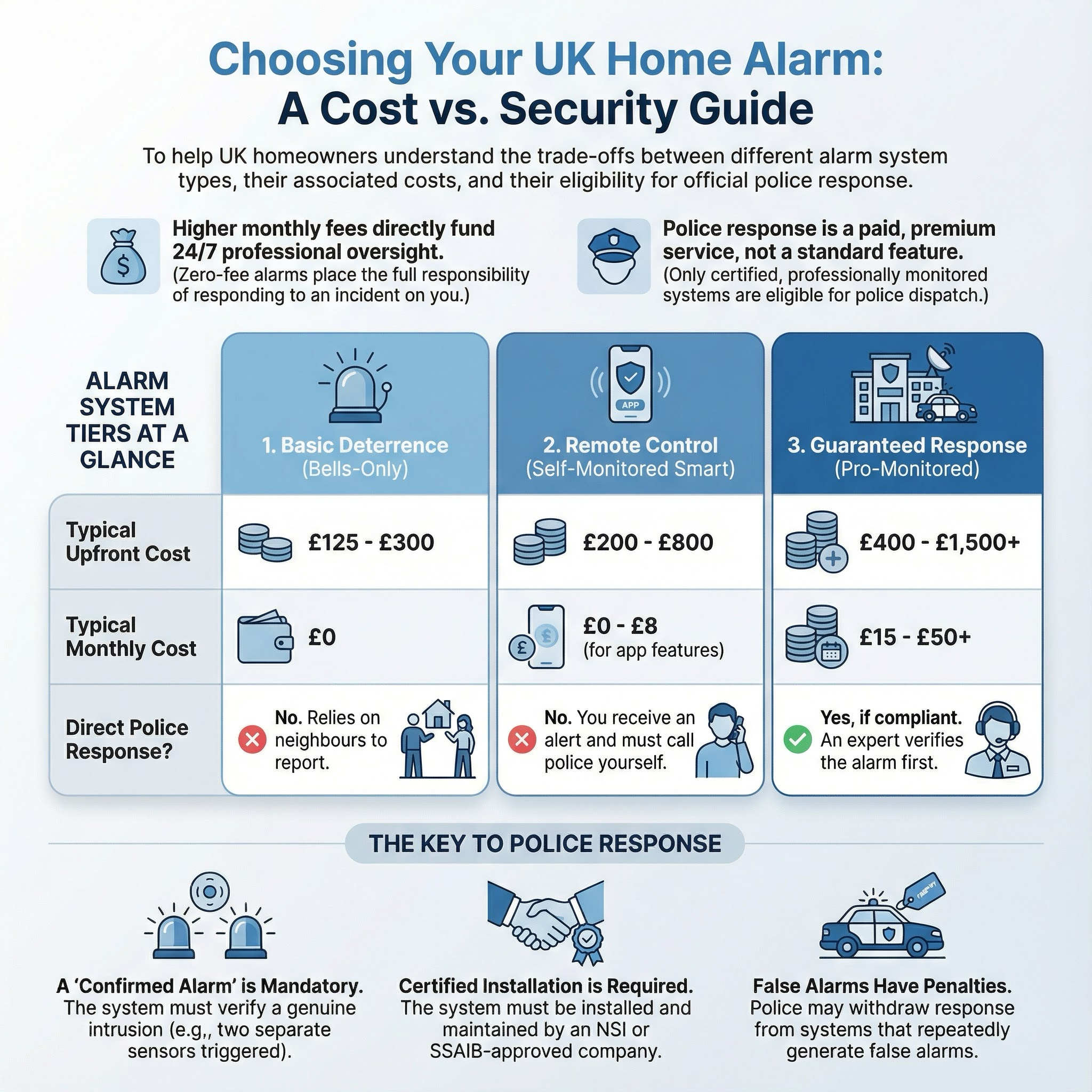
For UK homeowners, keeping a security system in top condition is essential for peace of mind. Whether it is a legacy wired system or a modern smart wireless setup, professional intervention ensures that "ghost" triggers are eliminated and that the system will actually perform when you need it most.
Prices for emergency servicing vary based on the time of day and the complexity of your system. Most reputable UK firms charge a fixed call-out fee that includes the first hour of labour.
| Item | Low £ | High £ | Notes |
|---|---|---|---|
| Standard Emergency Call-out | £95 | £160 | Includes first hour (weekday/daytime). |
| Out-of-Hours/Bank Holiday | £150 | £250 | Premium rate for 24/7 attendance. |
| Replacement Lead-Acid Battery | £25 | £55 | For the main control panel. |
| Wireless Sensor Battery Set | £15 | £40 | Full house set of lithium batteries. |
| Replacement PIR Sensor | £40 | £90 | Depends on pet-immunity features. |
| Total Average Repair | £170 | £300 | Most common faults resolved in this range. |
Factors affecting the final bill include the age of the system (older systems may require harder-to-find parts) and your location, with London and the South East typically seeing higher labour rates.
While you can change the batteries in some wireless sensors yourself, emergency servicing should be left to the professionals. Alarm systems are connected to the mains electricity (240V), and opening the control panel without the correct engineer code will often trigger a "tamper" alarm that cannot be silenced without specialist tools.
Professional servicing provides you with a maintenance certificate, which is often a mandatory requirement for UK home insurance providers to honour a theft claim.
Not all "handymen" are equipped to deal with complex security logic. When booking an emergency engineer, look for the following:
Questions to ask:
This usually indicates that your system's backup battery is dead or depleted. When the mains power fails, the system has no energy to hold the "off" state, causing the external siren to trigger as a fail-safe.
Yes, professional engineers have tools to "factory reset" or "engineer reset" most major panels, though this may involve extra time to re-programme your zones and user codes from scratch.
For standard domestic systems, once a year is recommended. If you have a police-monitored system, twice-yearly checks are usually required by your contract.
Most professional smart alarms use a combination of Wi-Fi and cellular (GSM) backup. Even without internet, the local siren will still function, but you may not receive smartphone notifications.
You don't usually need to notify them immediately, but you must keep the service certificate safe. If you ever need to claim for a burglary, the insurer may ask for proof that the alarm was maintained.
This guide was written with AI assistance and is intended for general information only. Prices are estimates based on UK averages and may vary by region. Always get at least three quotes and consult a qualified professional before starting any work.
Ask follow-ups in plain English. The AI explains options, sequencing and what to ask the alarms & security — so you walk in informed.
Removing an old or obsolete alarm system is a common task for UK homeowners, especially when upgrading to smart technology or during home renovations. A redunda...
READ GUIDE →GuideFor UK homeowners who operate home-based workshops, laboratories, or studios involving hazardous chemicals, a functioning emergency eyewash station is a critica...
READ GUIDE →GuideElectric gates are a premium addition to any UK home, offering enhanced security, privacy, and significant kerb appeal. For many homeowners, the convenience of ...
READ GUIDE →GuideA malfunctioning CCTV system is more than just a technical glitch; it is a significant security gap that can leave your UK home vulnerable and potentially inval...
READ GUIDE →GuideA functional gate is the first line of defence for your UK home, providing essential security, privacy, and kerb appeal. Whether it is a sagging timber side gat...
READ GUIDE →GuideModern home security has evolved beyond the traditional lock and key. For UK homeowners, access control systems offer a sophisticated way to manage who enters y...
READ GUIDE →