Instant
01 · Ask
Ask the AI a follow-up
Got more questions about asbestos Survey Cost &? Describe the bit you're unsure about — the AI explains options, sequencing and what to ask the asbestos services.

Management or refurbishment/demolition — sampling, lab analysis and a written register of where everything is.
You've read the brief on asbestos Survey Cost &. Now lean on us to find the right asbestos services — and stay in control of the job.
Got more questions about asbestos Survey Cost &? Describe the bit you're unsure about — the AI explains options, sequencing and what to ask the asbestos services.
Costs, timelines, pitfalls and the right questions to ask before any asbestos services starts on asbestos Survey Cost &.
Itemised quotes from up to 3 local asbestos servicess on asbestos Survey Cost & — so you can compare like-for-like, not lump sums.
Ready when you are
Enter your postcode and get free quotes from local pros.
Four moves that separate a smooth job from a nightmare.
Surveyors may "presume" asbestos is present in areas they cannot reach (e.g., locked rooms or high ceilings), which can complicate future sales.
In R&D surveys, asbestos is often found inside wall cavities or under multiple layers of flooring that a standard survey would miss.
Cheap, non-compliant reports may be rejected by building contractors or mortgage lenders, forcing you to pay for a second survey.
If a surveyor does not follow strict "shadow vacuuming" and cleaning protocols, they can inadvertently spread fibres during the sampling process.
Indicative UK ranges and what affects price.
By job type
Quote spread is typically ± 18% — always get 3 quotes.
Asbestos Services quick-view
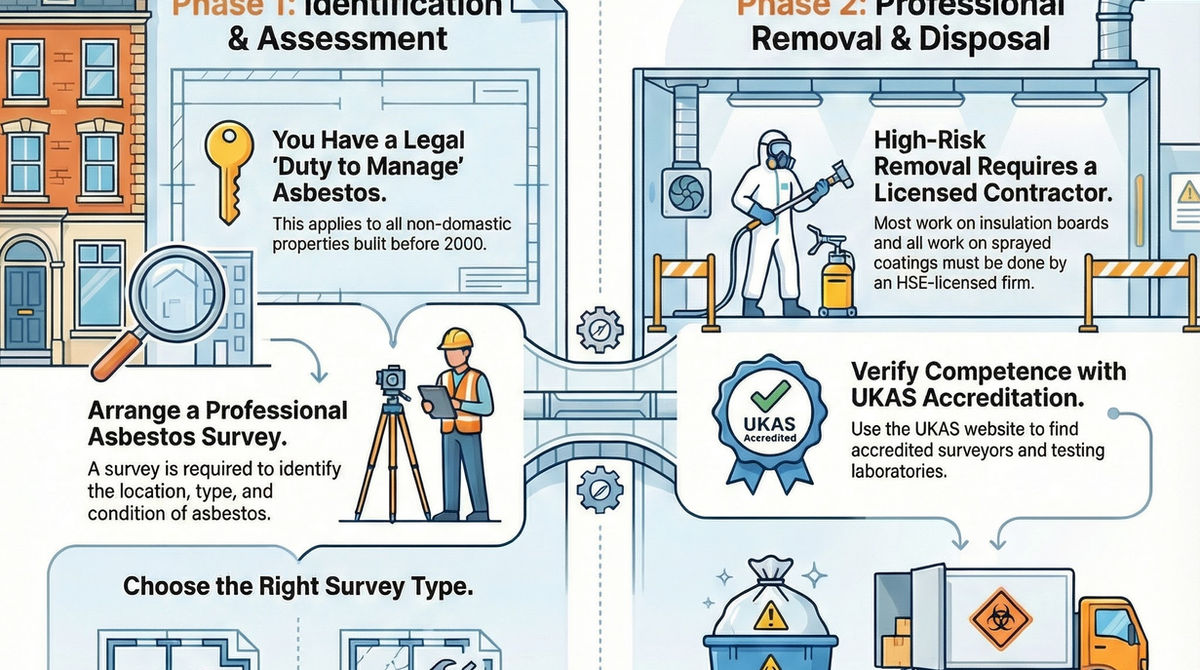
Asbestos Services explained
An asbestos survey is a vital safety step for any homeowner planning structural changes or simply seeking peace of mind. It provides a definitive map of where asbestos is located, its current condition, and how to manage it safely in accordance with UK health and safety legislation.
The cost of an asbestos survey depends primarily on the size of the property and the type of survey required. Management surveys are generally cheaper than more intrusive Refurbishment and Demolition (R&D) surveys.
| Item | Low £ | High £ | Notes |
|---|---|---|---|
| Management Survey (Small Flat) | £200 | £300 | Includes basic sampling and report. |
| Management Survey (3-Bed House) | £300 | £450 | The standard for home buyers/sellers. |
| Refurbishment/Demolition (R&D) Survey | £500 | £900 | Intrusive; required before major works. |
| Single Sample Testing | £80 | £150 | For specific items like a garage roof. |
| Additional Samples (per sample) | £25 | £50 | Usually added if more than 5-10 samples are needed. |
Prices typically include VAT and laboratory fees, though you should always confirm this when requesting a quote. Factors such as restricted access or properties in remote locations may increase the final price.
Asbestos surveying is never a DIY job. Identifying asbestos by eye is impossible, and attempting to take samples without the correct training and equipment can release dangerous fibres into your home's air supply.
Professional surveyors use specialised wetting agents and vacuum equipment to ensure that sampling does not contaminate your living space.
Furthermore, a DIY "test kit" may not be legally recognised by mortgage lenders or local authorities. Only a professional report provides the legal protection and accuracy required for property transactions and safe renovations.
Asbestos management in the UK is strictly governed to protect both homeowners and tradespeople. Following these standards ensures your property remains safe and legally compliant.
While not a legal requirement for residential sellers, most buyers' solicitors and mortgage lenders will insist on one if the property was built before 2000. Having a report ready can prevent delays in the selling process.
A Management Survey is non-intrusive and identifies asbestos that might be disturbed during normal occupancy. A Refurbishment and Demolition (R&D) survey is intrusive and involves breaking into walls and floors to find hidden asbestos before construction work begins.
Yes, this is known as "encapsulation." If the asbestos is in good condition, coating it with a specialist sealant or high-quality paint can prevent fibres from escaping, provided it is then monitored regularly.
Many textured coatings applied before 1999 contain a small amount of white asbestos. It is generally safe if left alone, but it must be tested before being scraped off, sanded, or drilled.
Don't panic. Finding asbestos doesn't always mean it needs to be removed. The report will categorise the risk; if it is in good condition and unlikely to be disturbed, the recommendation is often simply to "manage in situ."
This guide was written with AI assistance and is intended for general information only. Prices are estimates based on UK averages and may vary by region. Always get at least three quotes and consult a qualified professional before starting any work.
Ask follow-ups in plain English. The AI explains options, sequencing and what to ask the asbestos services — so you walk in informed.
Finding asbestos in your home can be a daunting discovery for any UK homeowner. Common in properties built or renovated before the year 2000, this hazardous mat...
READ GUIDE →GuideIf your UK home was built or renovated before the year 2000, there is a high probability it contains asbestos. While harmless if left undisturbed, these microsc...
READ GUIDE →GuideAsbestos remains a significant concern for UK homeowners, particularly those living in properties built or renovated before the year 2000. While it was once a "...
READ GUIDE →GuideIf your UK home was built or renovated before the year 2000, there is a high probability that asbestos was used in your pipework insulation. While undisturbed a...
READ GUIDE →GuideAsbestos survey services. UK costs.
READ GUIDE →GuideAsbestos removal services. UK costs.
READ GUIDE →