Instant
01 · Ask
Ask the AI a follow-up
Got more questions about accessible Shower Installations? Describe the bit you're unsure about — the AI explains options, sequencing and what to ask the bathrooms.

Level-access tray, grab rails, fold-down seat and thermostatic mixer — fitted to DFG or AccessAble guidance.
You've read the brief on accessible Shower Installations. Now lean on us to find the right bathrooms — and stay in control of the job.
Got more questions about accessible Shower Installations? Describe the bit you're unsure about — the AI explains options, sequencing and what to ask the bathrooms.
Costs, timelines, pitfalls and the right questions to ask before any bathrooms starts on accessible Shower Installations.
Itemised quotes from up to 3 local bathroomss on accessible Shower Installations — so you can compare like-for-like, not lump sums.
Ready when you are
Enter your postcode and get free quotes from local pros.
Four moves that separate a smooth job from a nightmare.
If the floor "fall" isn't calculated correctly, water will pool in corners rather than flowing into the drain, leading to mould and slips.
Grab rails fixed into plasterboard without proper "noggin" reinforcements behind the wall can pull out under weight, causing injury.
In wet rooms, failing to properly seal the door threshold can lead to water escaping into the rest of the house.
Using a non-thermostatic valve can be dangerous for those with reduced sensitivity or slower reaction times.
Indicative UK ranges and a typical week-by-week schedule.
By job type
Quote spread is typically ± 18% — always get 3 quotes.
Mid-range bathroom refurb · week by week
Schedule slips on dependencies — pad each phase by 10–20% for real-world delays.
Bathrooms quick-view
Bathrooms explained
Whether you are adapting a bathroom for a specific mobility need or simply want a more user-friendly space, understanding the technical requirements and costs is essential. This guide covers everything from VAT exemptions for disability adaptations to the structural necessities of a leak-free installation.
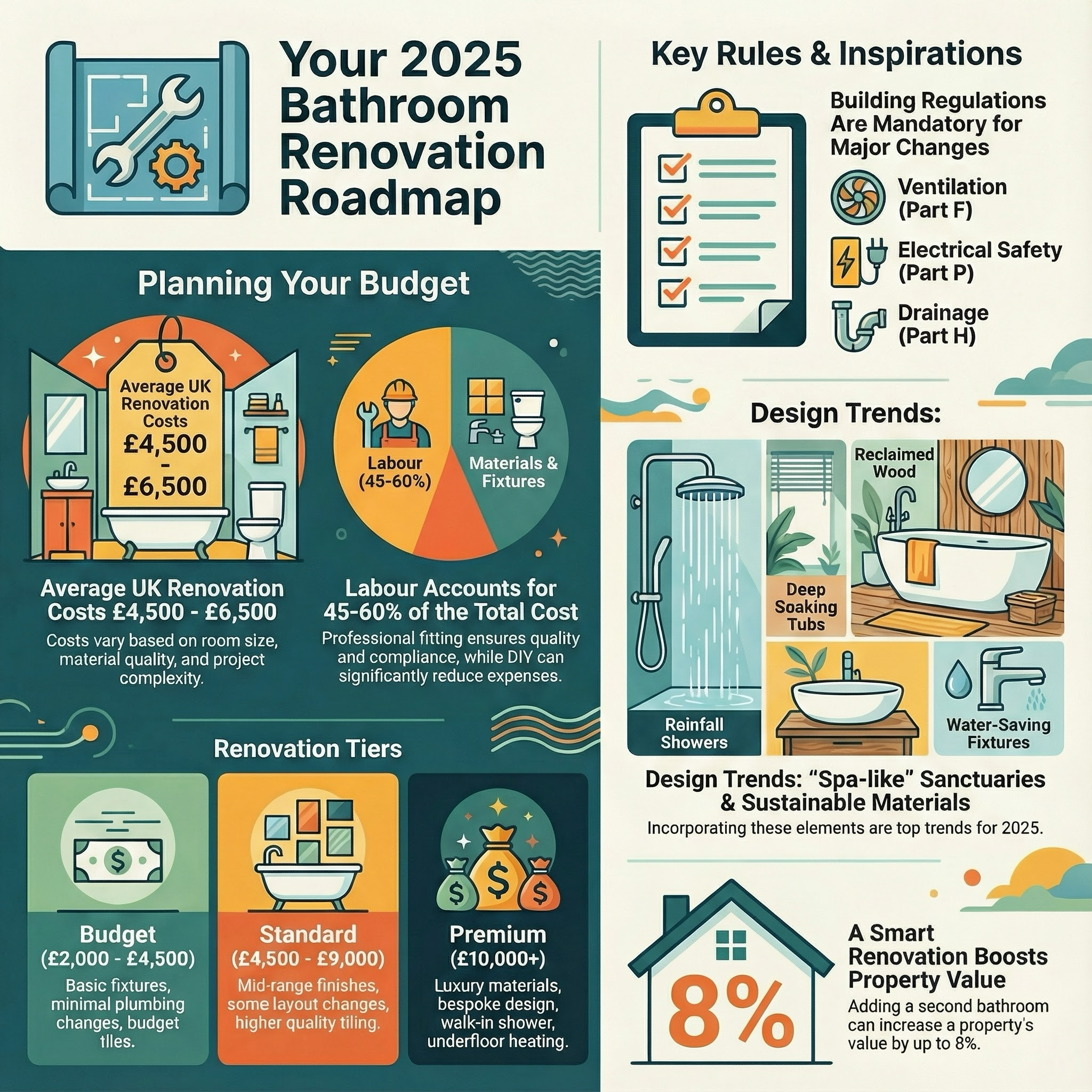
Prices for accessible showers vary significantly based on whether you are retrofitting a simple tray or converting the entire space into a wet room. The figures below reflect 2025/26 UK averages including VAT and professional labour.
| Item | Low £ | High £ | Notes |
|---|---|---|---|
| Basic Walk-in Tray Retrofit | £2,500 | £4,500 | Replacing a bath with a low-profile tray and screens. |
| Full Wet Room Conversion | £5,500 | £10,000+ | Complete floor tanking and level-access drainage. |
| Grab Rails & Seating (Retrofit) | £350 | £850 | Fitting safety hardware to existing solid walls. |
| Specialist Care Shower Unit | £600 | £1,200 | Unit price for thermostatic, easy-push button controls. |
Factors affecting the final price include the choice of wall finishes (tiles vs. PVC panels), the need for a pumped waste system if gravity drainage isn't possible, and any required structural reinforcement for grab rails.
Pro Tip: Many homeowners in the UK are eligible for 0% VAT on accessible bathroom installations if the work is specifically for a person with a chronic illness or disability. Always check eligibility before paying your deposit.
Accessible shower installation is strictly a job for professionals. While a DIYer might manage to screw in a grab rail, a full installation involves complex plumbing, precise floor grading for drainage, and critical waterproofing (tanking).
Incorrectly installed accessible showers are prone to leaks that can rot floor joists over time. Furthermore, any electrical work (such as installing a power shower or lighting) must be certified under Part P Building Regulations by a qualified electrician.
Yes, you may be eligible for a Disabled Facilities Grant (DFG) from your local council if the adaptation is deemed necessary for you to remain in your home. These are means-tested in England, Wales, and Northern Ireland.
A walk-in shower usually has a very low-profile tray (approx. 25mm-40mm) and a glass screen. A wet room is completely level with the rest of the bathroom floor, with the entire room waterproofed and the floor sloped toward a drain.
If the work is for someone "chronically sick or disabled" and the installation is for their personal use in a private home, the labour and materials can be zero-rated for VAT. You will need to sign a self-declaration form provided by the contractor.
Wall panels are often preferred as they are grout-free, making them much easier to clean and maintain. However, high-quality anti-slip tiles are often better for the floor to provide maximum grip.
Yes, but it requires a "wet room former"—a pre-sloped base that sits on the joists—and a robust tanking system to ensure the movement of the timber doesn't break the waterproof seal.
This guide was written with AI assistance and is intended for general information only. Prices are estimates based on UK averages and may vary by region. Always get at least three quotes and consult a qualified professional before starting any work.
Ask follow-ups in plain English. The AI explains options, sequencing and what to ask the bathrooms — so you walk in informed.
A bathroom project consultation is the critical first step in transforming an outdated space into a functional sanctuary. For UK homeowners, this stage bridges ...
READ GUIDE →GuideWet Room Tile Repair Costs Scope of Works Survey & moisture check – tap tiles, use a damp‑meter to see if water has penetrated substrate. Isolate area &...
READ GUIDE →GuideBathroom sealant is your home’s first line of defence against water damage and structural rot. Over time, even the best silicone can peel, discolour, or succumb...
READ GUIDE →GuideProduct Range • Premium bathroom sinks with various finishes • Elegant toilets featuring water-saving technology • Contemporary bath tubs and showers • A wide s...
READ GUIDE →GuideBathroom walls endure a harsher environment than any other room in a UK home. Between the steam from daily showers and the risk of direct water ingress, even a ...
READ GUIDE →GuideReplacing a shower door is one of the most effective ways to refresh a tired bathroom without the expense of a full renovation. Beyond aesthetics, a well-fitted...
READ GUIDE →