Instant
01 · Ask
Ask the AI a follow-up
Got more questions about bathroom Project Consultation? Describe the bit you're unsure about — the AI explains options, sequencing and what to ask the bathrooms.

Brief, budget, products and a contractor shortlist — the order to do them in to avoid rework.
You've read the brief on bathroom Project Consultation. Now lean on us to find the right bathrooms — and stay in control of the job.
Got more questions about bathroom Project Consultation? Describe the bit you're unsure about — the AI explains options, sequencing and what to ask the bathrooms.
Costs, timelines, pitfalls and the right questions to ask before any bathrooms starts on bathroom Project Consultation.
Itemised quotes from up to 3 local bathroomss on bathroom Project Consultation — so you can compare like-for-like, not lump sums.
Ready when you are
Enter your postcode and get free quotes from local pros.
Four moves that separate a smooth job from a nightmare.
Buying a luxury "rainfall" shower that only produces a trickle because the home has a gravity-fed system.
Moving a toilet too far from the soil stack, resulting in frequent blockages or unsightly boxed-in pipework.
Not accounting for a powerful enough extractor fan, leading to mould growth and peeling paint within months.
Planning a heavy cast-iron or stone bath without checking if the floor joists need reinforcement.
Indicative UK ranges and a typical week-by-week schedule.
By job type
Quote spread is typically ± 18% — always get 3 quotes.
Mid-range bathroom refurb · week by week
Schedule slips on dependencies — pad each phase by 10–20% for real-world delays.
Bathrooms quick-view
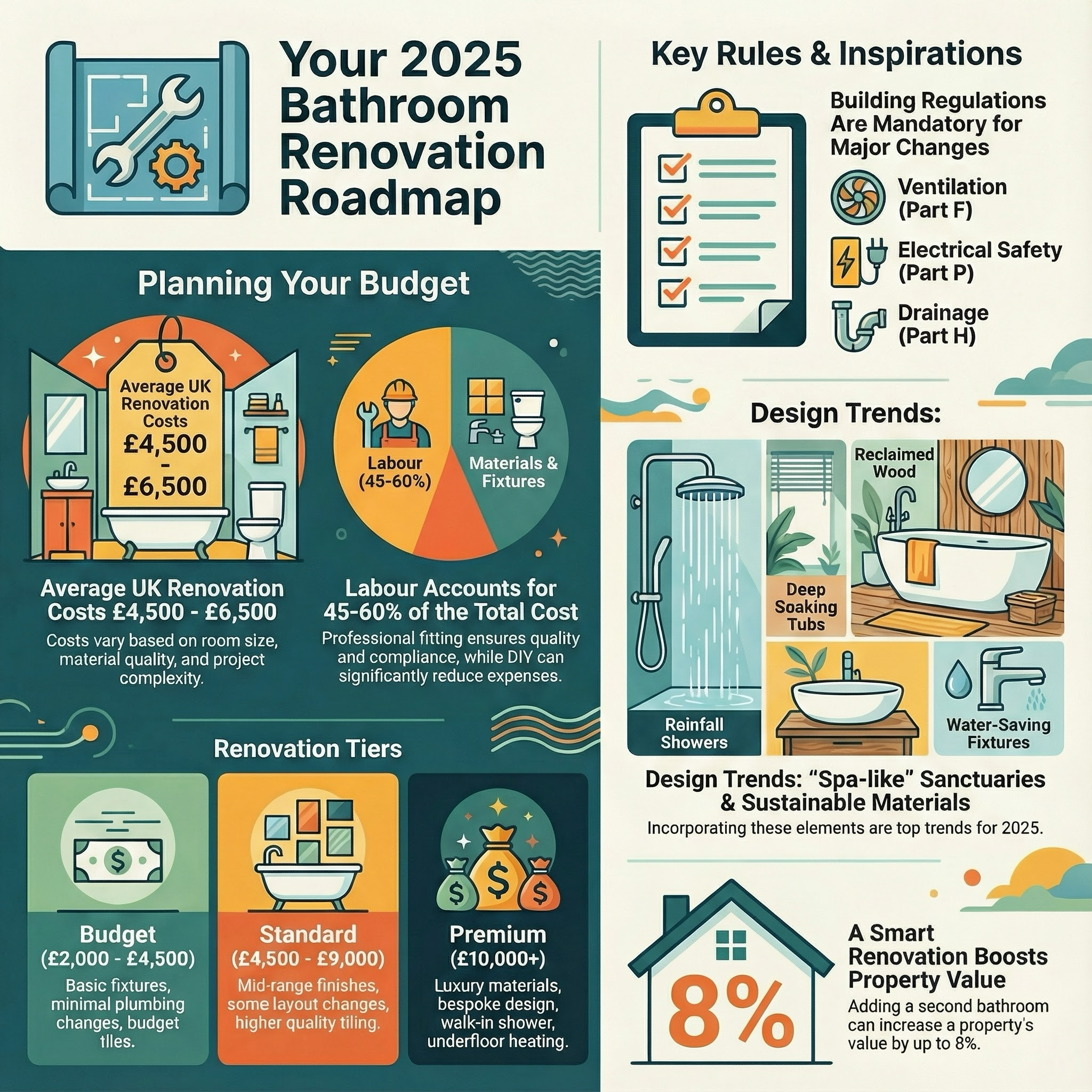
Bathrooms explained
Investing in a professional consultation ensures your design is technically feasible, preventing expensive mid-project corrections. It provides a roadmap for the build, covering everything from spatial flow to the placement of essential services.
| Service Type | Low £ | High £ | Notes |
|---|---|---|---|
| Initial Site Consultation | £100 | £250 | Basic visit and verbal advice. |
| Full Design & 3D Renders | £350 | £850 | Detailed visual plans and product lists. |
| Technical Survey Only | £150 | £300 | Focuses on plumbing and structural viability. |
| Project Specification Pack | £200 | £500 | Detailed "shopping list" for installers. |
Prices vary based on your location in the UK and the complexity of the project. Many high-end bathroom showrooms offer "free" design services, but these are usually contingent on purchasing their products and may not include the technical depth of an independent consultant.
Pro Tip: Always ask if the consultation fee is refundable against the final installation cost, as many independent designers offer this incentive.
While you can certainly choose your own tiles and colours, a professional consultation is highly recommended for the technical layout. UK plumbing is notoriously complex; mistakes in waste pipe gradients or choosing a high-pressure shower for a low-pressure system can lead to catastrophic failure.
Professional consultants understand Part P Electrical Safety and Water Regulations, ensuring your new bathroom isn't just beautiful, but legal and safe. DIY planning often overlooks the "behind-the-wall" costs that professional surveyors identify early.
Questions to ask:
Even for a like-for-like swap, a brief consultation is wise. Modern fixtures may have different plumbing centres or mounting requirements than older models, which can impact your tiling and flooring.
Yes. Consultants often have access to trade accounts or know which "budget" brands offer high-quality internal components, potentially saving you hundreds on the total project cost.
A designer focuses on aesthetics and layout, while a surveyor focuses on the technical feasibility and structural requirements. Many bathroom consultants perform both roles.
Usually, yes. You should receive a detailed breakdown of the design fee and an estimated "ballpark" figure for the installation and materials based on the proposed plan.
If you have a cold water tank in the loft and a hot water cylinder in an airing cupboard, you likely have a low-pressure (gravity-fed) system. A consultant will use a pressure gauge to confirm the exact bars of pressure.
This guide was written with AI assistance and is intended for general information only. Prices are estimates based on UK averages and may vary by region. Always get at least three quotes and consult a qualified professional before starting any work.
Ask follow-ups in plain English. The AI explains options, sequencing and what to ask the bathrooms — so you walk in informed.
Wet Room Tile Repair Costs Scope of Works Survey & moisture check – tap tiles, use a damp‑meter to see if water has penetrated substrate. Isolate area &...
READ GUIDE →GuideBathroom sealant is your home’s first line of defence against water damage and structural rot. Over time, even the best silicone can peel, discolour, or succumb...
READ GUIDE →GuideProduct Range • Premium bathroom sinks with various finishes • Elegant toilets featuring water-saving technology • Contemporary bath tubs and showers • A wide s...
READ GUIDE →GuideBathroom walls endure a harsher environment than any other room in a UK home. Between the steam from daily showers and the risk of direct water ingress, even a ...
READ GUIDE →GuideReplacing a shower door is one of the most effective ways to refresh a tired bathroom without the expense of a full renovation. Beyond aesthetics, a well-fitted...
READ GUIDE →GuideUpgrading your bathroom fittings is one of the most effective ways to modernise your home without the upheaval of a full renovation. Whether you are replacing a...
READ GUIDE →