Instant
01 · Ask
Ask the AI a follow-up
Got more questions about bathroom Design Consultation? Describe the bit you're unsure about — the AI explains options, sequencing and what to ask the bathrooms.

On-site survey, layout sketch and product spec — costed before the contractor arrives.
You've read the brief on bathroom Design Consultation. Now lean on us to find the right bathrooms — and stay in control of the job.
Got more questions about bathroom Design Consultation? Describe the bit you're unsure about — the AI explains options, sequencing and what to ask the bathrooms.
Costs, timelines, pitfalls and the right questions to ask before any bathrooms starts on bathroom Design Consultation.
Itemised quotes from up to 3 local bathroomss on bathroom Design Consultation — so you can compare like-for-like, not lump sums.
Ready when you are
Enter your postcode and get free quotes from local pros.
Four moves that separate a smooth job from a nightmare.
Specifying a high-end rain shower for a low-pressure gravity-fed system without a pump.
Designing a layout that requires the toilet to be too far from the main waste outlet, leading to frequent blockages.
Relying solely on central downlights which create shadows on the face when looking in the mirror.
Focusing on "minimalism" and forgetting where to put towels, toiletries, and cleaning supplies.
Indicative UK ranges and a typical week-by-week schedule.
By job type
Quote spread is typically ± 18% — always get 3 quotes.
Mid-range bathroom refurb · week by week
Schedule slips on dependencies — pad each phase by 10–20% for real-world delays.
Bathrooms quick-view
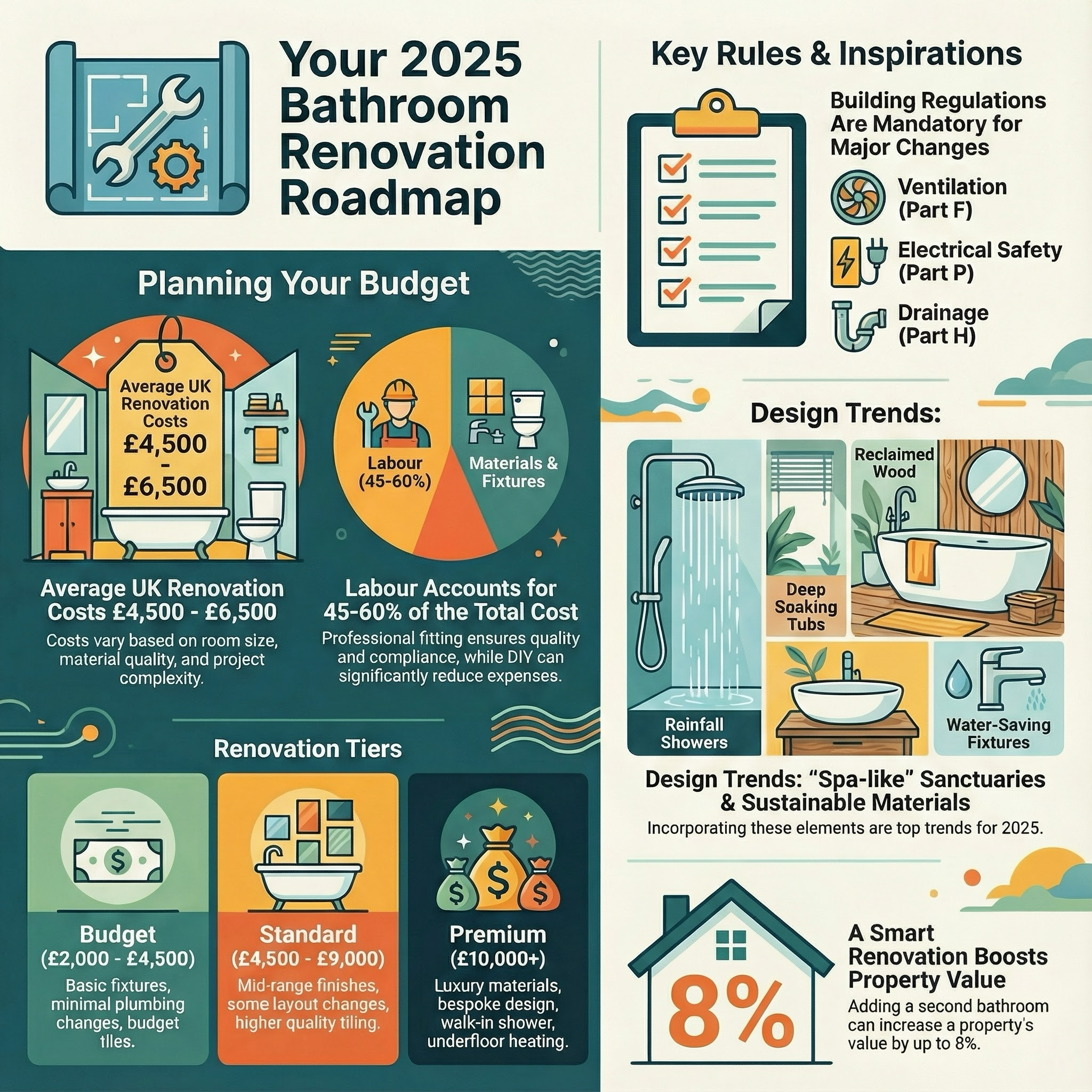
Bathrooms explained
Whether you are planning a simple refresh or a complete structural reconfiguration, an expert designer will bridge the gap between your aesthetic vision and the practical realities of your home's pipework and electrical zones.
| Service Type | Low £ | High £ | Notes |
|---|---|---|---|
| Showroom Design Fee | £50 | £250 | Often refundable against a full suite purchase. |
| Independent Designer | £300 | £750 | Fixed fee for plans; no obligation to buy specific brands. |
| Full Technical Spec & 3D Renders | £500 | £1,200 | Detailed blueprints including electrical and plumbing schematics. |
| Site Visit & Consultation Only | £100 | £200 | Initial 1-2 hour verbal advice and measuring session. |
Prices for bathroom design vary based on the complexity of the project and your location in the UK, with London and the South East typically seeing a 15-20% premium. Many high-street showrooms offer "free" design services, but these are usually factored into the product margins and may be less objective than an independent consultant.
Pro Tip: Always ask if the design fee includes a site visit. Remote designs based on your own measurements can lead to errors if you miss a hidden pipe box or a slight wall taper.
While DIY planning tools are available online, they rarely account for the technical nuances of UK building stock, such as joist directions or soil stack limitations. A professional designer understands Part P Electrical Safety and Part G Water Efficiency regulations, ensuring your bathroom is not only beautiful but legal.
Mistakes in bathroom layout are incredibly expensive to fix once tiling has commenced. Investing in a professional consultation usually pays for itself by avoiding "dead space," poor drainage, or fixtures that are too large for the room.
Questions to ask:
If you use a showroom designer, they usually expect you to buy their products. Independent designers charge a higher upfront fee but allow you to shop around for the best prices on individual items.
It depends on the direction of your floor joists and the location of the external soil stack. A designer will check if the necessary 1:40 fall (slope) can be achieved for the waste pipe.
A true wet room is completely tanked (waterproofed) and the floor is flush with the rest of the room. A walk-in shower usually uses a low-profile tray and a glass screen but is easier and cheaper to install.
Wall-hung toilets make a small bathroom feel larger and are easier to clean under, but they require a concealed frame inside a stud wall or a purpose-built boxing-in.
While not strictly necessary for the plumber, a 3D render is invaluable for the homeowner to understand the sense of scale and how different finishes (like dark tiles) will affect the light in the room.
If you have a cold water tank in the loft and a hot water cylinder in an airing cupboard, you likely have a low-pressure gravity system. If you have a combi-boiler or an unvented cylinder (like a Megaflo), you have high pressure.
This guide was written with AI assistance and is intended for general information only. Prices are estimates based on UK averages and may vary by region. Always get at least three quotes and consult a qualified professional before starting any work.
Ask follow-ups in plain English. The AI explains options, sequencing and what to ask the bathrooms — so you walk in informed.
A bathroom project consultation is the critical first step in transforming an outdated space into a functional sanctuary. For UK homeowners, this stage bridges ...
READ GUIDE →GuideWet Room Tile Repair Costs Scope of Works Survey & moisture check – tap tiles, use a damp‑meter to see if water has penetrated substrate. Isolate area &...
READ GUIDE →GuideBathroom sealant is your home’s first line of defence against water damage and structural rot. Over time, even the best silicone can peel, discolour, or succumb...
READ GUIDE →GuideProduct Range • Premium bathroom sinks with various finishes • Elegant toilets featuring water-saving technology • Contemporary bath tubs and showers • A wide s...
READ GUIDE →GuideBathroom walls endure a harsher environment than any other room in a UK home. Between the steam from daily showers and the risk of direct water ingress, even a ...
READ GUIDE →GuideReplacing a shower door is one of the most effective ways to refresh a tired bathroom without the expense of a full renovation. Beyond aesthetics, a well-fitted...
READ GUIDE →