Instant
01 · Ask
Ask the AI a follow-up
Got more questions about bathroom Installation? Describe the bit you're unsure about — the AI explains options, sequencing and what to ask the bathrooms.

Strip out, first-fix, tile, second-fix and decoration — itemised and timelined per phase.
You've read the brief on bathroom Installation. Now lean on us to find the right bathrooms — and stay in control of the job.
Got more questions about bathroom Installation? Describe the bit you're unsure about — the AI explains options, sequencing and what to ask the bathrooms.
Costs, timelines, pitfalls and the right questions to ask before any bathrooms starts on bathroom Installation.
Itemised quotes from up to 3 local bathroomss on bathroom Installation — so you can compare like-for-like, not lump sums.
Ready when you are
Enter your postcode and get free quotes from local pros.
Four moves that separate a smooth job from a nightmare.
Incorrect falls on waste pipes can lead to slow-draining showers and recurring blockages.
Using a cheap, underpowered extractor fan often results in persistent condensation and black mould.
Usually caused by failing to "tank" the walls before tiling or using poor-quality silicone.
Uneven tiles can be a trip hazard and look unsightly; this is often caused by rushing the floor levelling stage.
Indicative UK ranges and a typical week-by-week schedule.
By job type
Quote spread is typically ± 18% — always get 3 quotes.
Mid-range bathroom refurb · week by week
Schedule slips on dependencies — pad each phase by 10–20% for real-world delays.
Bathrooms quick-view
Bathrooms explained
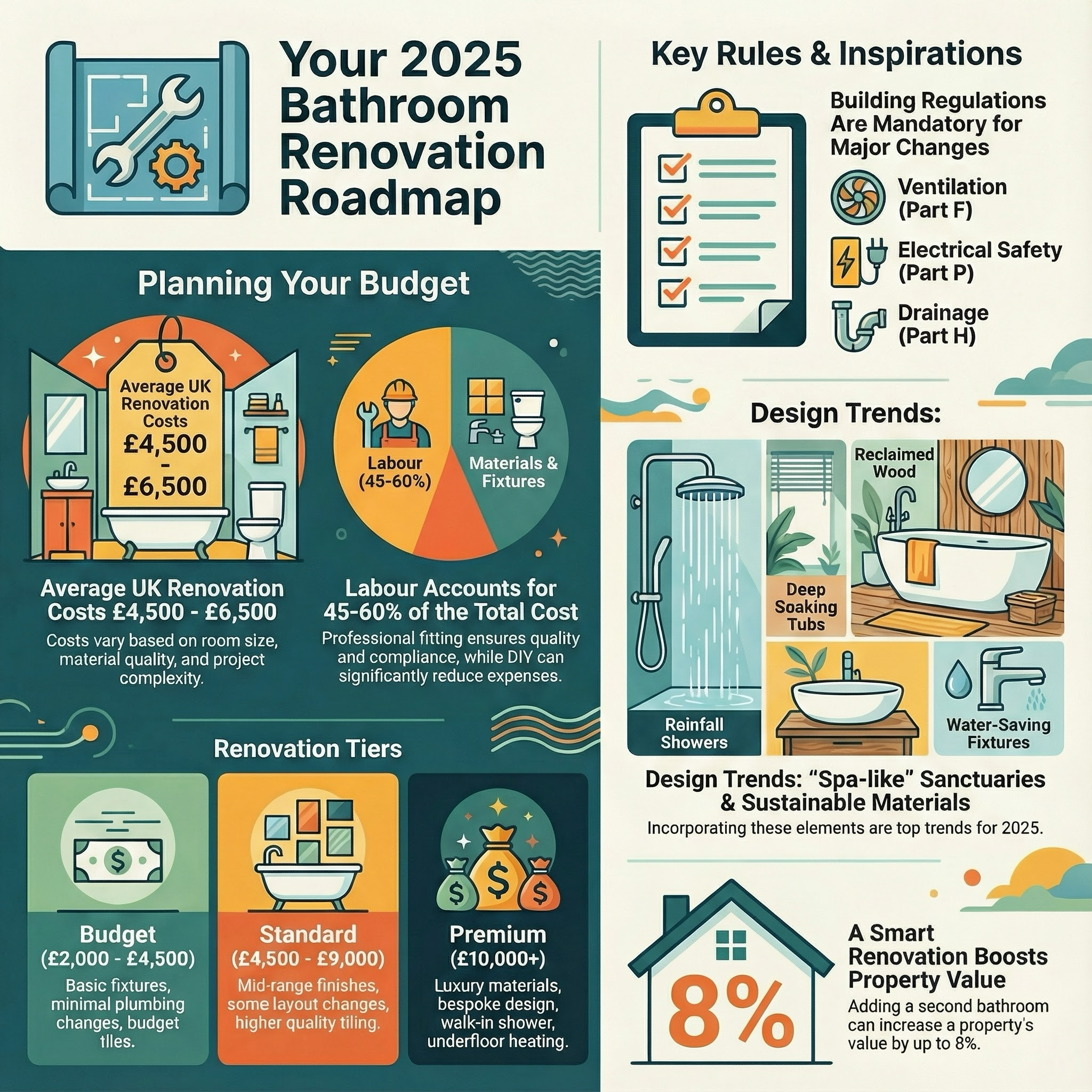
However, bathrooms are technically complex projects that require the coordination of multiple trades, including plumbing, electrics, tiling, and carpentry. This guide outlines everything you need to know to ensure your project runs smoothly, stays on budget, and meets all UK building standards.
| Item / Service | Low £ | High £ | Notes |
|---|---|---|---|
| Standard 3-Piece Suite | £600 | £1,500 | Basic bath, toilet, and basin sets. |
| Mid-Range Installation (Labour) | £3,500 | £6,500 | Complete rip-out and refit labour. |
| Tiling (Materials & Labour) | £800 | £2,500 | Depends heavily on tile type (ceramic vs stone). |
| Electrical Work | £400 | £1,200 | Includes lighting, fans, and Part P certs. |
| Waste Removal (Skip Hire) | £250 | £450 | Standard 6-yard or 8-yard skip. |
| Full Project Total (Inc. VAT) | £6,500 | £14,000+ | Average UK mid-range bathroom in 2025. |
Several factors will influence your final quote, most notably your choice of finish and whether you are moving the location of the toilet or shower. Relocating a soil pipe or knocking down internal walls can add thousands to the baseline labour cost.
While a confident DIYer can handle painting or basic tiling, a full bathroom installation is best left to the professionals. Water damage from a poorly fitted shower or incorrectly sealed waste pipe can cost thousands to rectify and may void your home insurance.
Strict UK regulations govern electrical work in "special locations" like bathrooms; all new circuits or lighting must be installed or signed off by a Part P registered electrician.
Furthermore, if your project involves moving a gas boiler or a gas-fed radiator, you are legally required to use a Gas Safe registered engineer. Professional fitters also provide the benefit of trade discounts on materials and a workmanship guarantee.
Yes, but it is the most expensive change to make. It requires maintaining a specific "fall" for the soil pipe to ensure waste flows correctly, which may involve raising the floor or running pipes through joists.
Absolutely. Grout and adhesive are not inherently waterproof. Tanking involves applying a waterproof membrane behind the tiles to ensure that if water gets through the grout, it cannot rot your walls or leak into the room below.
For resale value, keeping at least one bathtub in the house is usually recommended for families. However, for en-suites or smaller spaces, a high-quality walk-in shower is often preferred by modern buyers.
A power shower uses an internal pump to boost flow from a gravity-fed system. A digital shower allows you to control temperature and flow via a remote panel or smartphone, often offering more precise control.
The "rip-out" phase is dusty and noisy. Professional fitters will use floor protection and dust sheets, but it is advisable to clear the hallway and stairs leading to the bathroom before work begins.
This guide was written with AI assistance and is intended for general information only. Prices are estimates based on UK averages and may vary by region. Always get at least three quotes and consult a qualified professional before starting any work.
Ask follow-ups in plain English. The AI explains options, sequencing and what to ask the bathrooms — so you walk in informed.
A bathroom project consultation is the critical first step in transforming an outdated space into a functional sanctuary. For UK homeowners, this stage bridges ...
READ GUIDE →GuideWet Room Tile Repair Costs Scope of Works Survey & moisture check – tap tiles, use a damp‑meter to see if water has penetrated substrate. Isolate area &...
READ GUIDE →GuideBathroom sealant is your home’s first line of defence against water damage and structural rot. Over time, even the best silicone can peel, discolour, or succumb...
READ GUIDE →GuideProduct Range • Premium bathroom sinks with various finishes • Elegant toilets featuring water-saving technology • Contemporary bath tubs and showers • A wide s...
READ GUIDE →GuideBathroom walls endure a harsher environment than any other room in a UK home. Between the steam from daily showers and the risk of direct water ingress, even a ...
READ GUIDE →GuideReplacing a shower door is one of the most effective ways to refresh a tired bathroom without the expense of a full renovation. Beyond aesthetics, a well-fitted...
READ GUIDE →