Instant
01 · Ask
Ask the AI a follow-up
Got more questions about flat roof extension construction? Describe the bit you're unsure about — the AI explains options, sequencing and what to ask the builder.

Rear, side or above-garage flat-roof extension — EPDM or warm-roof build-up, fitted to current Part L.
You've read the brief on flat roof extension construction. Now lean on us to find the right builder — and stay in control of the job.
Got more questions about flat roof extension construction? Describe the bit you're unsure about — the AI explains options, sequencing and what to ask the builder.
Costs, timelines, pitfalls and the right questions to ask before any builder starts on flat roof extension construction.
Itemised quotes from up to 3 local builders on flat roof extension construction — so you can compare like-for-like, not lump sums.
Ready when you are
Enter your postcode and get free quotes from local pros.
Four moves that separate a smooth job from a nightmare.
Caused by an incorrect roof "fall." This adds weight and can lead to premature membrane failure.
Poorly installed insulation can create cold spots, leading to internal condensation and mould growth.
Inadequate guttering or blocked internal outlets can cause water to back up under the roof trims.
Building on "made ground" or near trees without deep enough footings can lead to structural cracking.
Indicative UK ranges and a typical week-by-week schedule.
By job type
Quote spread is typically ± 18% — always get 3 quotes.
25 m² single-storey extension · week by week
Schedule slips on dependencies — pad each phase by 10–20% for real-world delays.
Builder quick-view
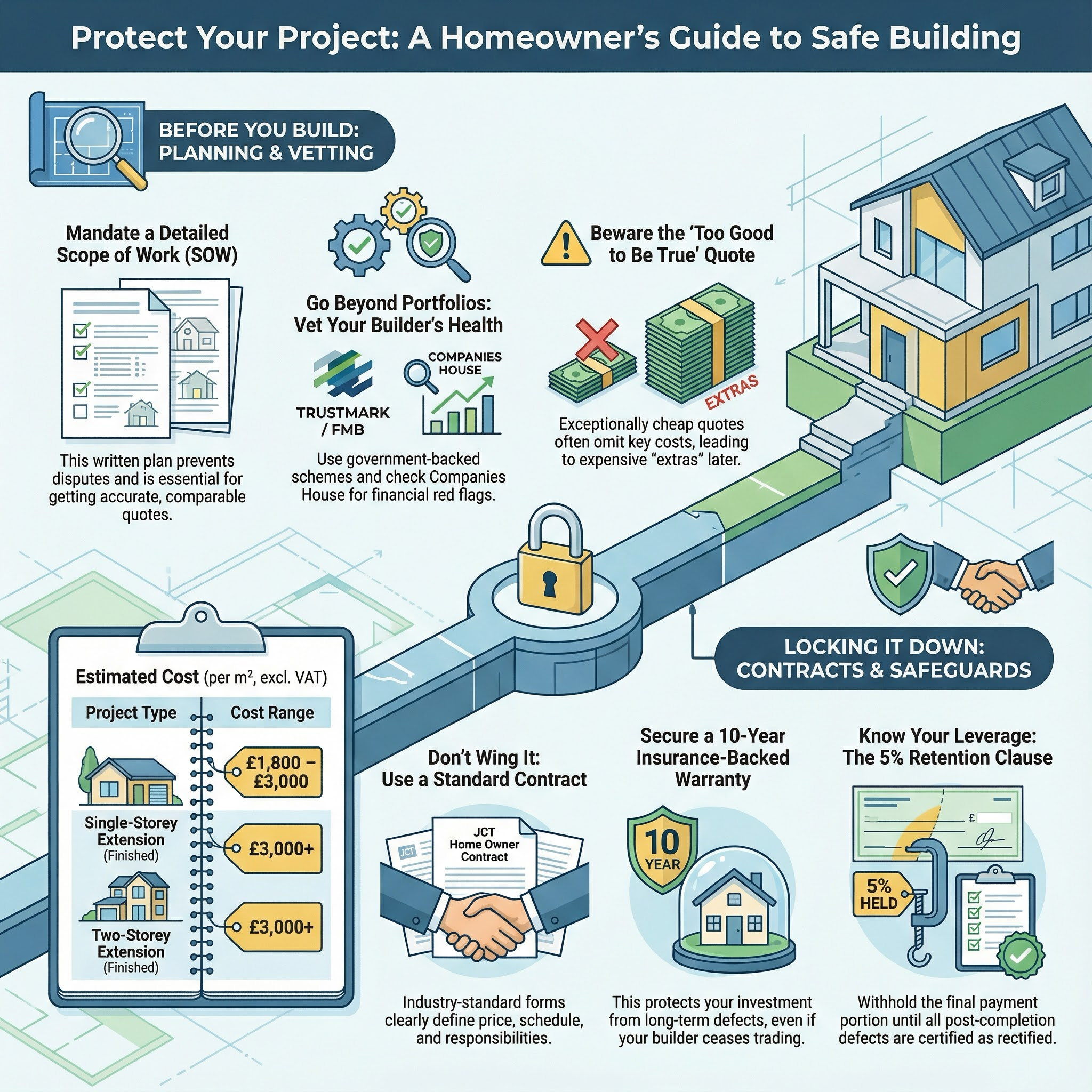
Builder explained
Unlike the problematic felt roofs of the past, today’s constructions use high-performance membranes and "warm roof" insulation techniques. This ensures your new space remains thermally efficient, watertight, and durable for decades to come.
The cost of a flat roof extension is largely dictated by the size, the complexity of the groundworks, and the choice of internal finishes. Prices in 2025 reflect the increased cost of structural timber and high-grade insulation.
| Item | Low £ | High £ | Notes |
|---|---|---|---|
| Small Extension (approx. 15m²) | £28,000 | £40,000 | Basic shell and core, standard finishes. |
| Medium Extension (approx. 30m²) | £50,000 | £75,000 | Includes structural openings and bifold doors. |
| Roof Lantern / Skylight | £1,200 | £3,500 | Supply and professional installation. |
| EPDM or GRP Waterproofing | £80 | £120 | Per m², including decking and trims. |
| Architect & Structural Engineer | £1,500 | £4,000 | Plans, calculations, and building regs. |
Factors such as poor soil conditions requiring deeper foundations, the need for significant structural steel to open up the existing house, and high-end glazing options like crittall-style doors will push costs toward the higher end of the scale.
Constructing an extension is a major structural undertaking that must comply with UK Building Regulations. While a competent DIYer might tackle internal decorating, the structural shell, roofing, and electrical work require professional expertise.
Work involving structural changes, new drainage, or electrical circuits must be signed off by Building Control. Failure to do so will cause significant legal issues when you come to sell your home.
Gas work must be performed by a Gas Safe registered engineer, and electrical work should be completed by a NAPIT or NICEIC registered professional to ensure Part P compliance.
Questions to ask:
Not always. Many single-storey extensions are covered by Permitted Development, provided they don't exceed 4m in height or extend more than 3m-4m from the original rear wall. However, if you live in a Conservation Area or a Listed Building, full planning permission is almost always required.
EPDM (rubber) and GRP (fibreglass) are the industry favourites. EPDM is highly durable and flexible, while GRP provides a seamless, hard-wearing finish that is easy to repair. Both typically offer a lifespan of 25–50 years if installed correctly.
A warm roof places the insulation on top of the structural roof deck, keeping the entire structure at a similar temperature to the room below. This eliminates the risk of condensation within the roof void and is the standard requirement for modern UK building regulations.
On average, a well-built extension can add between 10% and 20% to the value of a UK property, depending on the location and the quality of the finish. It is often more cost-effective than the fees associated with moving house.
No, provided it is built to current Part L Building Regulations. Modern PIR insulation is incredibly efficient, ensuring the extension stays warm in winter and reflects heat during the summer months.
This guide was written with AI assistance and is intended for general information only. Prices are estimates based on UK averages and may vary by region. Always get at least three quotes and consult a qualified professional before starting any work.
Ask follow-ups in plain English. The AI explains options, sequencing and what to ask the builder — so you walk in informed.
Install Air Vent Overview Create a through‑wall opening and fit a vent sleeve and grilles to improve room ventilation. Skill level: 3 / 5 (competent DIYer). Typ...
READ GUIDE →GuideMaintaining a business premises is a critical responsibility for UK property owners and commercial tenants alike. Beyond first impressions, regular maintenance ...
READ GUIDE →GuideHouse Extension and Electrical Work Scope of Works Site survey, drawings & planning (architect measurements, concept plans, planning/Building Reg applicatio...
READ GUIDE →GuideDemolition is often the first and most critical phase of a UK home renovation project. Whether you are removing an internal wall to create an open-plan kitchen ...
READ GUIDE →GuideModifying internal walls is one of the most effective ways for UK homeowners to modernise a property, whether you are creating a trendy open-plan kitchen-diner ...
READ GUIDE →GuideHiring a general labourer is often the most cost-effective way to keep a UK home improvement project on track. While skilled trades like electricians or plumber...
READ GUIDE →