Instant
01 · Ask
Ask the AI a follow-up
Got more questions about full repairs? Describe the bit you're unsure about — the AI explains options, sequencing and what to ask the builder.

Multi-trade repair lists — builder, plumber, electrician and decorator scheduled into one visit.
You've read the brief on full repairs. Now lean on us to find the right builder — and stay in control of the job.
Got more questions about full repairs? Describe the bit you're unsure about — the AI explains options, sequencing and what to ask the builder.
Costs, timelines, pitfalls and the right questions to ask before any builder starts on full repairs.
Itemised quotes from up to 3 local builders on full repairs — so you can compare like-for-like, not lump sums.
Ready when you are
Enter your postcode and get free quotes from local pros.
Four moves that separate a smooth job from a nightmare.
It is difficult to match 100-year-old lime plaster with modern gypsum; ensure your builder understands heritage materials if applicable.
Initial "small" repairs often reveal larger issues like rising damp or woodworm once the plaster is removed.
Rushing to paint over damp plaster leads to "flaking" and salt crystals (efflorescence) ruining the finish.
Large items like 2.4m plasterboards or skips require clear access; narrow hallways or lack of parking can add labour hours.
Indicative UK ranges and a typical week-by-week schedule.
By job type
Quote spread is typically ± 18% — always get 3 quotes.
25 m² single-storey extension · week by week
Schedule slips on dependencies — pad each phase by 10–20% for real-world delays.
Builder quick-view
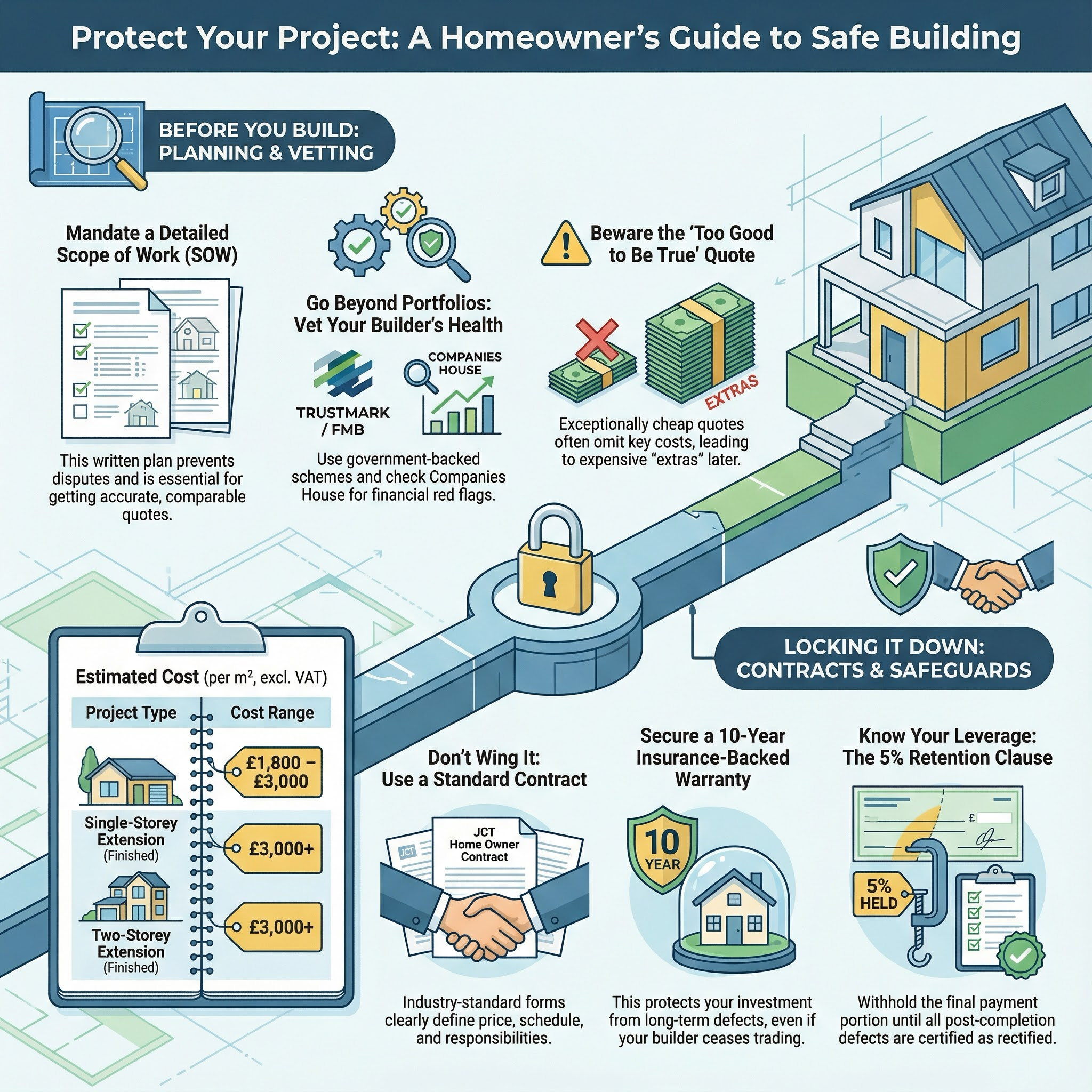
Builder explained
Whether you are dealing with a sagging floor, a compromised partition wall, or extensive plaster failure, a professional builder will coordinate multiple trades to bring the space back to a "good as new" condition. This guide outlines what to expect regarding costs, timelines, and essential regulations.
| Item | Low £ | High £ | Notes |
|---|---|---|---|
| Call-out / Initial Assessment | £120 | £250 | Often deducted from the final bill if work proceeds. |
| Day Rate (Per Tradesperson) | £250 | £450 | Varies by region; London and SE are at the higher end. |
| Materials (Small to Medium Job) | £200 | £800 | Includes timber, plasterboard, bonding, and fixings. |
| Skip Hire (6-yard / 8-yard) | £220 | £400 | Depends on local council permit requirements. |
| Specialist Certs (Gas/Electric) | £100 | £300 | Required if services are moved or altered. |
| Total Project Estimate | £650 | £3,500+ | Small room repairs vs. major structural restoration. |
Prices are primarily driven by the "hidden" elements of the job. While a surface may look simple to fix, the discovery of dry rot, asbestos, or outdated wiring behind a wall can significantly increase the final invoice.
While minor filling and painting are suitable for DIY, "full repairs" usually involve structural or integrated service work that requires a professional. Structural alterations must comply with Building Regulations, and any work involving gas or mains electrics is legally restricted to Gas Safe and Part P registered engineers.
Attempting to repair structural timber or load-bearing walls without professional oversight can invalidate your home insurance and lead to dangerous collapses.
No, you do not need a council permit if the skip is placed entirely on private land. However, if it needs to sit on the road or a public verge, your builder must apply for a permit from the local authority, which usually costs between £30 and £100.
Usually, yes, but it will be noisy and dusty. If the repairs involve the only bathroom in the house or require the water/electricity to be off for more than 8 hours, you may need to make alternative arrangements for a day or two.
This depends on the cause. "Trace and Access" cover often pays for the cost of finding a leak and repairing the damage it caused, but it rarely covers the cost of fixing the faulty pipe or roof itself. Check your policy for "accidental damage" clauses.
An estimate is an educated guess and can change. A quote is a fixed price for a specific scope of work. Always insist on a written quote to avoid "hidden extras" later in the project.
A professional builder or structural engineer will check the direction of floor joists and whether the wall continues on the floor above. Never assume a stud wall is non-load-bearing, as it may still be providing vital "bracing" for the structure.
This guide was written with AI assistance and is intended for general information only. Prices are estimates based on UK averages and may vary by region. Always get at least three quotes and consult a qualified professional before starting any work.
Ask follow-ups in plain English. The AI explains options, sequencing and what to ask the builder — so you walk in informed.
Install Air Vent Overview Create a through‑wall opening and fit a vent sleeve and grilles to improve room ventilation. Skill level: 3 / 5 (competent DIYer). Typ...
READ GUIDE →GuideMaintaining a business premises is a critical responsibility for UK property owners and commercial tenants alike. Beyond first impressions, regular maintenance ...
READ GUIDE →GuideHouse Extension and Electrical Work Scope of Works Site survey, drawings & planning (architect measurements, concept plans, planning/Building Reg applicatio...
READ GUIDE →GuideDemolition is often the first and most critical phase of a UK home renovation project. Whether you are removing an internal wall to create an open-plan kitchen ...
READ GUIDE →GuideModifying internal walls is one of the most effective ways for UK homeowners to modernise a property, whether you are creating a trendy open-plan kitchen-diner ...
READ GUIDE →GuideHiring a general labourer is often the most cost-effective way to keep a UK home improvement project on track. While skilled trades like electricians or plumber...
READ GUIDE →