Instant
01 · Ask
Ask the AI a follow-up
Got more questions about loft Conversion? Describe the bit you're unsure about — the AI explains options, sequencing and what to ask the builder.

Velux, dormer, hip-to-gable, mansard — what each costs, what adds the most value and what planning you need.
You've read the brief on loft Conversion. Now lean on us to find the right builder — and stay in control of the job.
Got more questions about loft Conversion? Describe the bit you're unsure about — the AI explains options, sequencing and what to ask the builder.
Costs, timelines, pitfalls and the right questions to ask before any builder starts on loft Conversion.
Itemised quotes from up to 3 local builders on loft Conversion — so you can compare like-for-like, not lump sums.
Ready when you are
Enter your postcode and get free quotes from local pros.
Four moves that separate a smooth job from a nightmare.
The minimum "walkable" height is 2.2m. If you have less, you may need to lower the ceilings of the rooms below, which is costly and disruptive.
Adding a bathroom on the top floor often requires upgrading to an unvented hot water cylinder or a more powerful boiler.
Inefficient design can "eat" too much space from the floor below; always prioritise the layout of the landing.
Lofts can become "ovens" in summer and "freezers" in winter if high-spec PIR insulation boards aren't fitted correctly.
Indicative UK ranges and a typical week-by-week schedule.
By job type
Quote spread is typically ± 18% — always get 3 quotes.
25 m² single-storey extension · week by week
Schedule slips on dependencies — pad each phase by 10–20% for real-world delays.
Builder quick-view
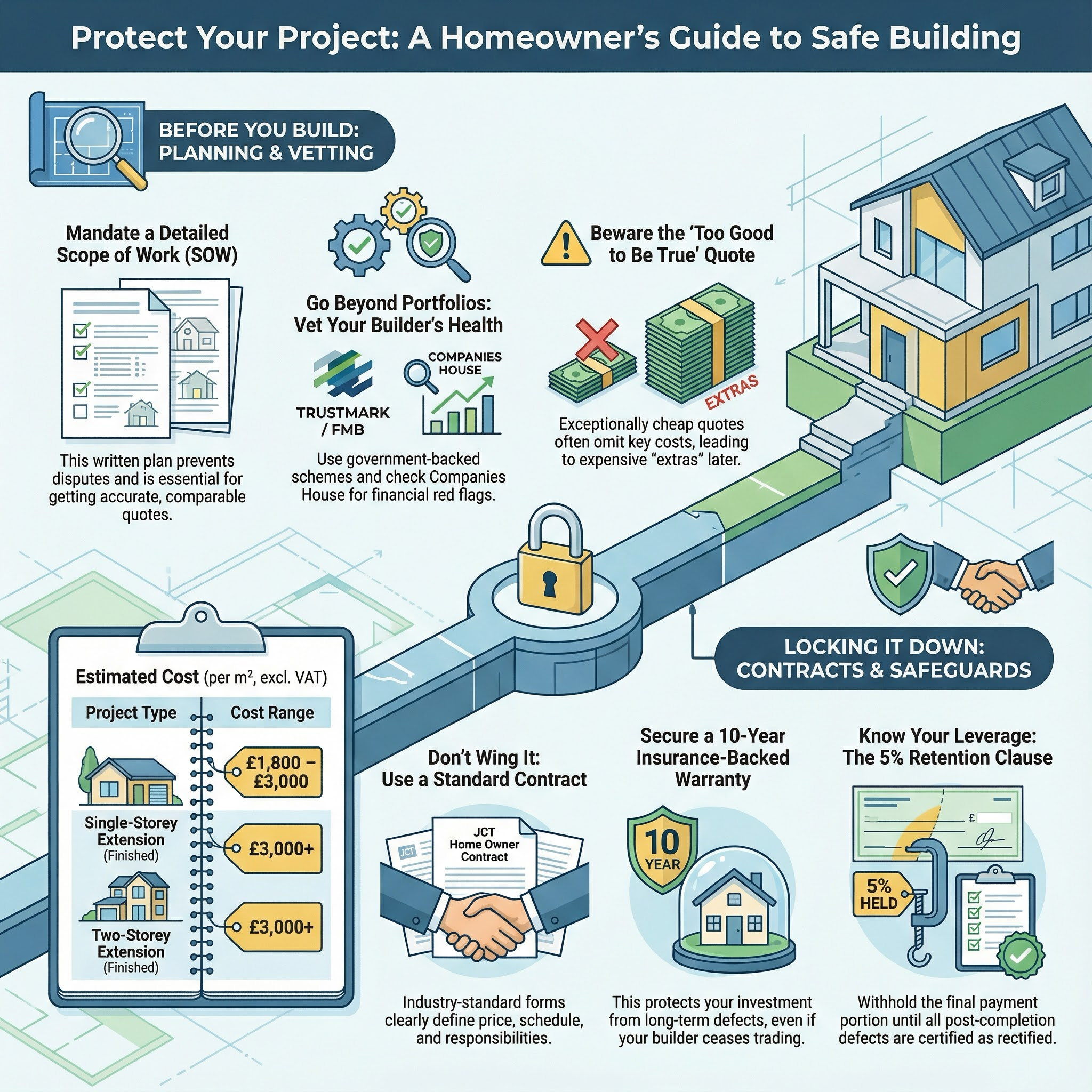
Builder explained
However, this is a major structural undertaking that requires careful planning, adherence to strict building regulations, and a skilled team of builders. From reinforcing floor joists to ensuring fire safety compliance, understanding the process is vital for a successful project.
| Conversion Type | Low £ | High £ | Notes |
|---|---|---|---|
| Velux (Room-in-Roof) | £25,000 | £45,000 | No external structural changes; uses roof lights. |
| Dormer Conversion | £40,000 | £65,000 | Adds significant floor space and headroom. |
| Hip-to-Gable | £50,000 | £75,000 | Common on semi-detached/end-terrace homes. |
| Mansard Conversion | £60,000 | £95,000+ | Major structural change; usually requires planning. |
| Architect & Structural Engineer | £2,500 | £5,500 | Essential for plans and calculations. |
Prices vary based on your location (London and the South East are typically 20-30% higher), the complexity of the roof structure, and the quality of internal finishes. Adding an ensuite bathroom will typically add £5,000–£8,000 to the total cost due to plumbing and tiling requirements.
A loft conversion is not a DIY project for anyone other than a qualified structural builder. The risks involve compromising the structural integrity of the entire house, fire safety failures, and legal issues when trying to sell the property.
Warning: All habitable loft conversions must be signed off by Building Control. Uncertified "cowboy" conversions are often dangerous and can make a home unmortgageable.
You must use a professional builder who can manage structural steel installation. Furthermore, all electrical work must be Part P certified, and any plumbing involving gas (boilers/radiators) must be handled by a Gas Safe registered engineer.
Questions to ask:
Yes. To comply with UK Building Regulations (Part B), any new room on a third storey must be served by a fire-protected staircase. This usually means replacing existing doors on the escape route with 30-minute fire-rated doors (FD30).
You generally need a minimum of 2.2 metres from the top of the existing ceiling joists to the bottom of the ridge timber. Once new floor joists and plasterboard are added, this leaves a finished head height of roughly 1.9m to 2m.
If your home is semi-detached or terraced and your builder is placing steel beams into the shared wall, you must serve a Party Wall Notice to your neighbours at least two months before work starts.
Yes, but it is more complex. Modern trussed roofs (common in post-1960s homes) use "W" shaped timbers that fill the space. These require more extensive steel support structures than older "cut" roofs, increasing the cost.
Generally, your Council Tax band will not change immediately. However, the property will be re-evaluated and potentially moved to a higher band if and when you sell the house.
This guide was written with AI assistance and is intended for general information only. Prices are estimates based on UK averages and may vary by region. Always get at least three quotes and consult a qualified professional before starting any work.
Ask follow-ups in plain English. The AI explains options, sequencing and what to ask the builder — so you walk in informed.
Install Air Vent Overview Create a through‑wall opening and fit a vent sleeve and grilles to improve room ventilation. Skill level: 3 / 5 (competent DIYer). Typ...
READ GUIDE →GuideMaintaining a business premises is a critical responsibility for UK property owners and commercial tenants alike. Beyond first impressions, regular maintenance ...
READ GUIDE →GuideHouse Extension and Electrical Work Scope of Works Site survey, drawings & planning (architect measurements, concept plans, planning/Building Reg applicatio...
READ GUIDE →GuideDemolition is often the first and most critical phase of a UK home renovation project. Whether you are removing an internal wall to create an open-plan kitchen ...
READ GUIDE →GuideModifying internal walls is one of the most effective ways for UK homeowners to modernise a property, whether you are creating a trendy open-plan kitchen-diner ...
READ GUIDE →GuideHiring a general labourer is often the most cost-effective way to keep a UK home improvement project on track. While skilled trades like electricians or plumber...
READ GUIDE →