Instant
01 · Ask
Ask the AI a follow-up
Got more questions about cleaner? Describe the bit you're unsure about — the AI explains options, sequencing and what to ask the cleaning services.

Regular weekly slot or one-off — own products, references and DBS where you want them.
You've read the brief on cleaner. Now lean on us to find the right cleaning services — and stay in control of the job.
Got more questions about cleaner? Describe the bit you're unsure about — the AI explains options, sequencing and what to ask the cleaning services.
Costs, timelines, pitfalls and the right questions to ask before any cleaning services starts on cleaner.
Itemised quotes from up to 3 local cleaning servicess on cleaner — so you can compare like-for-like, not lump sums.
Ready when you are
Enter your postcode and get free quotes from local pros.
Four moves that separate a smooth job from a nightmare.
Misunderstandings often arise regarding "extras" like inside the fridge, oven, or high-level dusting. Always agree on a checklist first.
Failing to provide a working key or correct alarm code can lead to "no-show" charges or lost time.
Not highlighting delicate heirlooms or unstable furniture can lead to accidental breakage.
Using harsh chemicals on natural materials (like vinegar on marble or bleach on certain metals) can cause permanent etching.
Indicative UK ranges and what affects price.
By job type
Quote spread is typically ± 18% — always get 3 quotes.
Cleaning Services quick-view
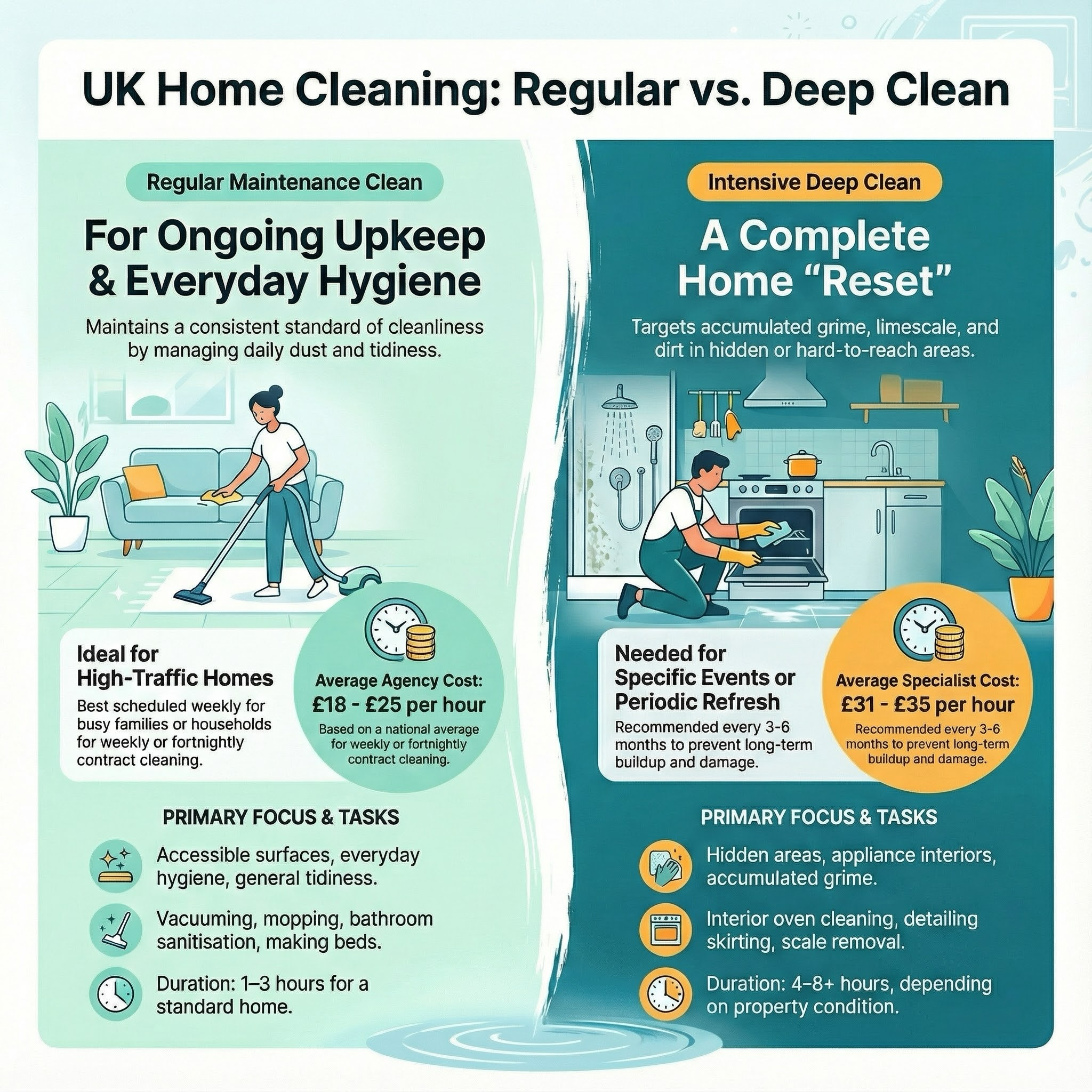
Cleaning Services explained
From regular weekly maintenance to intensive end-of-tenancy scrubs, a professional service ensures your property is cared for using the correct methods for different surfaces. This guide outlines what to expect regarding service levels, current UK market rates, and how to ensure your home is in safe hands.
Cleaning costs in the UK vary based on your location (London and the South East typically command a 20-30% premium) and whether you hire an independent cleaner or a managed agency. Prices below include VAT where applicable for 2025/26.
| Service Type | Low £ | High £ | Notes |
|---|---|---|---|
| Regular Domestic (Hourly) | £18 | £30 | Per cleaner, per hour. Minimum 2-hour bookings common. |
| Deep Clean (One-off) | £150 | £450 | Fixed price based on property size and condition. |
| End of Tenancy Clean | £200 | £650 | Includes internal cupboards and heavy descaling. |
| Professional Oven Clean | £50 | £120 | Specialist dip-tank cleaning for single/double ovens. |
| Carpet Cleaning (Per Room) | £30 | £60 | Professional hot water extraction method. |
Factors affecting the final quote include the presence of pets (which increases vacuuming time), the level of "clutter" which dictates how much surface area is accessible, and whether the cleaner provides their own eco-friendly or industrial-strength supplies.
While most homeowners handle day-to-day tidying, professional cleaners bring efficiency and technical knowledge. Professionals understand which chemicals react poorly with natural stone or delicate finishes, preventing costly damage. For end-of-tenancy situations, hiring a professional is often a contractual requirement to ensure the full return of a deposit, as they provide an itemised receipt as proof of work.
Pro Tip: Always ask if the cleaner brings their own vacuum and products. Some independent cleaners prefer to use your equipment to prevent cross-contamination between houses.
No, most regular clients provide a spare key or use a key safe. It is recommended to be present for the first session to discuss your priorities and show the cleaner where supplies are kept.
You don't need to clean, but "tidying" (picking up clothes, toys, and papers) allows the cleaner to spend their time scrubbing and sanitising surfaces rather than moving objects.
A professional cleaner should notify you immediately. If they are insured, they will have a process for claims. Always document high-value items before a new cleaner starts.
Agencies usually include all products and equipment. Independent cleaners often ask you to provide the vacuum, mop, and specific sprays to keep their hourly rate lower.
Most UK households find a weekly or fortnightly visit sufficient for maintenance. Homes with pets or young children usually benefit from a weekly service.
This guide was written with AI assistance and is intended for general information only. Prices are estimates based on UK averages and may vary by region. Always get at least three quotes and consult a qualified professional before starting any work.
Ask follow-ups in plain English. The AI explains options, sequencing and what to ask the cleaning services — so you walk in informed.
Leather furniture is a significant investment for any UK home, offering durability and timeless style. However, scuffs, scratches, and fading are inevitable ove...
READ GUIDE →GuideThe kitchen and lounge are the hardest-working rooms in any UK home. While the lounge is your primary space for relaxation, the kitchen is a high-traffic zone t...
READ GUIDE →GuideMaintaining a clean commercial environment is about more than just appearances; it is a fundamental requirement for health, safety, and operational efficiency. ...
READ GUIDE →GuideMaintaining a professional workspace is about more than just aesthetics; it is essential for employee health, productivity, and making the right impression on c...
READ GUIDE →GuideMoving house is one of life’s most stressful events, and the final hurdle is often the most daunting: the end-of-tenancy deep clean. This isn't a standard weekl...
READ GUIDE →GuideA flat deep clean is more than just a quick vacuum and a wipe-down of surfaces. It is a comprehensive, "top-to-bottom" sanitisation of your home, designed to ta...
READ GUIDE →