Instant
01 · Ask
Ask the AI a follow-up
Got more questions about full Time Housekeeping Staffing? Describe the bit you're unsure about — the AI explains options, sequencing and what to ask the cleaning services.

Live-in or live-out housekeeper — interviewed, vetted and placed by a UK domestic agency.
You've read the brief on full Time Housekeeping Staffing. Now lean on us to find the right cleaning services — and stay in control of the job.
Got more questions about full Time Housekeeping Staffing? Describe the bit you're unsure about — the AI explains options, sequencing and what to ask the cleaning services.
Costs, timelines, pitfalls and the right questions to ask before any cleaning services starts on full Time Housekeeping Staffing.
Itemised quotes from up to 3 local cleaning servicess on full Time Housekeeping Staffing — so you can compare like-for-like, not lump sums.
Ready when you are
Enter your postcode and get free quotes from local pros.
Four moves that separate a smooth job from a nightmare.
Tasks gradually increasing (e.g., adding childcare or heavy gardening) without a salary review, leading to resentment and turnover.
Especially in live-in roles, a lack of clear "off-duty" time can lead to burnout.
Failing to provide a clear daily or weekly schedule, leaving the housekeeper guessing about priorities.
Skipping a paid 2-day trial, only to find the candidate’s cleaning style or personality doesn't mesh with your home.
Indicative UK ranges and what affects price.
By job type
Quote spread is typically ± 18% — always get 3 quotes.
Cleaning Services quick-view
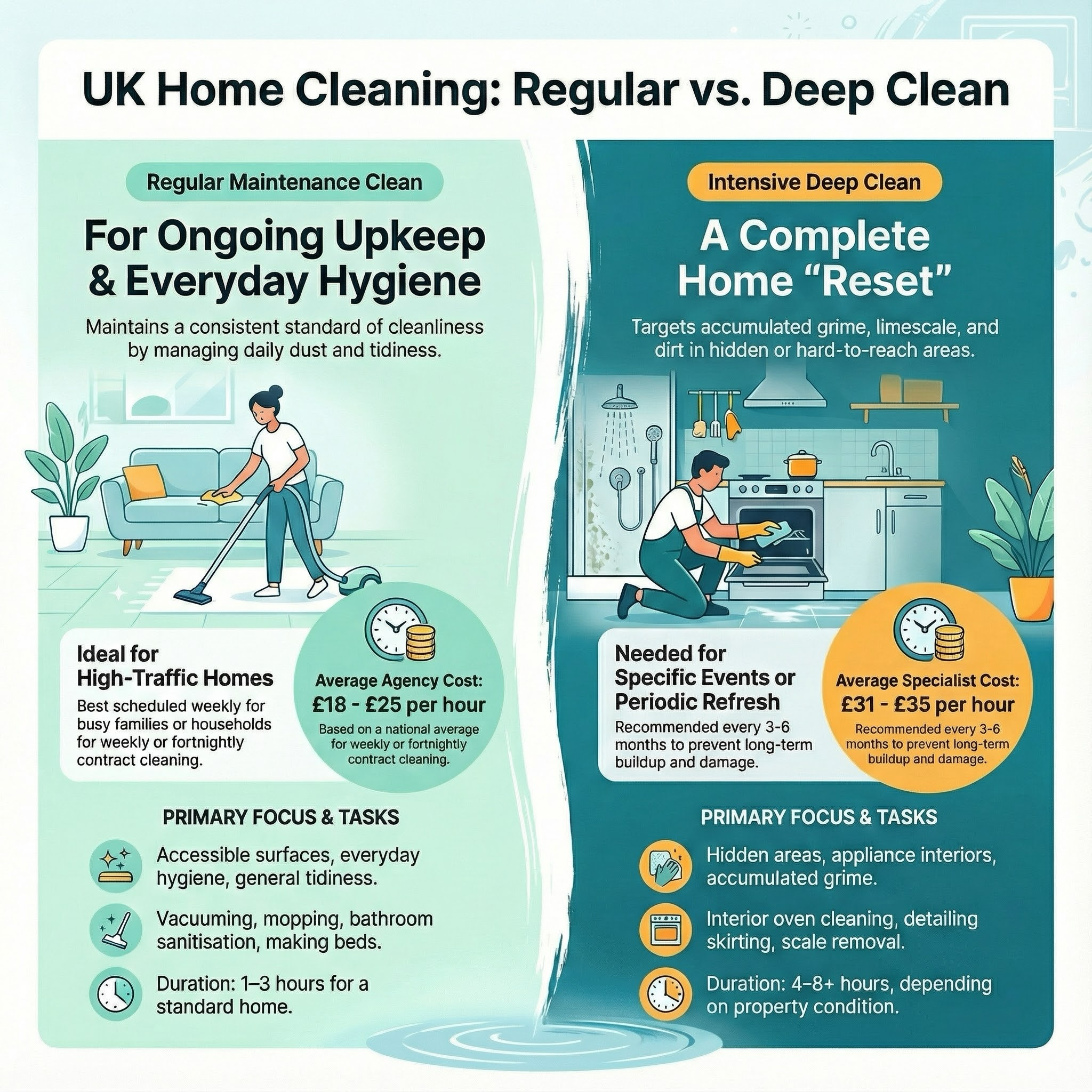
Cleaning Services explained
In the UK, this role has evolved from simple domestic help into a professional home management position. Whether you require a live-in professional to oversee a large country estate or a live-out housekeeper for a busy London residence, understanding the legalities, costs, and recruitment process is essential for a successful long-term placement.
| Item | Low £ | High £ | Notes |
|---|---|---|---|
| Annual Gross Salary (Live-out) | £32,000 | £48,000 | Higher rates for London and the South East. |
| Annual Gross Salary (Live-in) | £28,000 | £40,000 | Lower salary reflects provided accommodation/utilities. |
| Agency Placement Fee | £4,500 | £12,000 | Usually 15%–25% of the first year's gross salary. |
| Employer On-costs (NI & Pension) | £3,500 | £6,500 | Includes Employer National Insurance and 3% pension. |
| Payroll & Admin Fees | £300 | £800 | Annual cost for professional PAYE management. |
The primary driver of cost is location and experience. A housekeeper with "silver service" experience or the ability to manage a large team in a formal household will command a premium. Remember that as an employer, you are responsible for National Insurance contributions and pension auto-enrolment, which adds roughly 10-15% on top of the base salary.
While you can find staff via local adverts or social media, hiring a full-time employee brings significant legal responsibilities. You become an employer in the eyes of HMRC, requiring you to manage PAYE (Pay As You Earn) and comply with the Employment Rights Act.
Using a specialist domestic recruitment agency is highly recommended. They provide pre-vetted candidates, handle initial background checks, and offer "replacement guarantees" if the hire doesn't work out within the first few months. Warning: Never hire domestic staff "cash in hand," as this leaves you liable for unpaid taxes and vulnerable to legal claims.
Key Questions to Ask:
- How do you handle delicate surfaces like natural stone or antique wood?
- Are you comfortable working around pets or children?
- What is your preferred method for tracking household stock and shopping lists?
- How do you manage your schedule to ensure deep-cleaning tasks are completed alongside daily chores?
Generally, yes. The gross salary for live-in staff is typically lower because the value of the "Offset" (accommodation and utilities) is factored into the package. However, you must provide a private bedroom and bathroom as a minimum.
Yes. Full-time UK employees are legally entitled to 5.6 weeks of paid annual leave (28 days for a 5-day week), which can include bank holidays.
A housekeeper focuses on the physical cleaning and laundry. A house manager has a more administrative role, managing budgets, booking travel, overseeing other staff, and handling complex vendor relationships.
If the role requires grocery shopping or school runs in a rural area, providing a "duty car" is standard. You must ensure they are added to your motor insurance policy for business use.
Absolutely. In fact, it is standard practice in the UK domestic sector. Most employers insist on an Enhanced DBS check to ensure the safety of their home and family.
You are legally required to pay Statutory Sick Pay (SSP) if they meet the eligibility criteria. Many private employers also choose to offer a set amount of "full pay" sick leave as part of a competitive benefits package.
This guide was written with AI assistance and is intended for general information only. Prices are estimates based on UK averages and may vary by region. Always get at least three quotes and consult a qualified professional before starting any work.
Ask follow-ups in plain English. The AI explains options, sequencing and what to ask the cleaning services — so you walk in informed.
Leather furniture is a significant investment for any UK home, offering durability and timeless style. However, scuffs, scratches, and fading are inevitable ove...
READ GUIDE →GuideThe kitchen and lounge are the hardest-working rooms in any UK home. While the lounge is your primary space for relaxation, the kitchen is a high-traffic zone t...
READ GUIDE →GuideMaintaining a clean commercial environment is about more than just appearances; it is a fundamental requirement for health, safety, and operational efficiency. ...
READ GUIDE →GuideMaintaining a professional workspace is about more than just aesthetics; it is essential for employee health, productivity, and making the right impression on c...
READ GUIDE →GuideMoving house is one of life’s most stressful events, and the final hurdle is often the most daunting: the end-of-tenancy deep clean. This isn't a standard weekl...
READ GUIDE →GuideA flat deep clean is more than just a quick vacuum and a wipe-down of surfaces. It is a comprehensive, "top-to-bottom" sanitisation of your home, designed to ta...
READ GUIDE →