Instant
01 · Ask
Ask the AI a follow-up
Got more questions about curtain and Blind Installation? Describe the bit you're unsure about — the AI explains options, sequencing and what to ask the curtains & blinds.

Made-to-measure curtains plus matching blinds — fitted in one visit for a coordinated room.
You've read the brief on curtain and Blind Installation. Now lean on us to find the right curtains & blinds — and stay in control of the job.
Got more questions about curtain and Blind Installation? Describe the bit you're unsure about — the AI explains options, sequencing and what to ask the curtains & blinds.
Costs, timelines, pitfalls and the right questions to ask before any curtains & blinds starts on curtain and Blind Installation.
Itemised quotes from up to 3 local curtains & blindss on curtain and Blind Installation — so you can compare like-for-like, not lump sums.
Ready when you are
Enter your postcode and get free quotes from local pros.
Four moves that separate a smooth job from a nightmare.
Hitting a steel or concrete lintel and being unable to drill deep enough for a secure fix.
Fitting a pole perfectly level only to find it looks "wonky" because the ceiling or window frame is slanted.
Using standard rawlplugs in plasterboard, which eventually pull out due to the constant "tug" of opening and closing curtains.
Blinds supplied with cords that are too long, creating a hazard and failing to meet safety regulations.
Indicative UK ranges and what affects price.
By job type
Quote spread is typically ± 18% — always get 3 quotes.
Curtains & Blinds quick-view
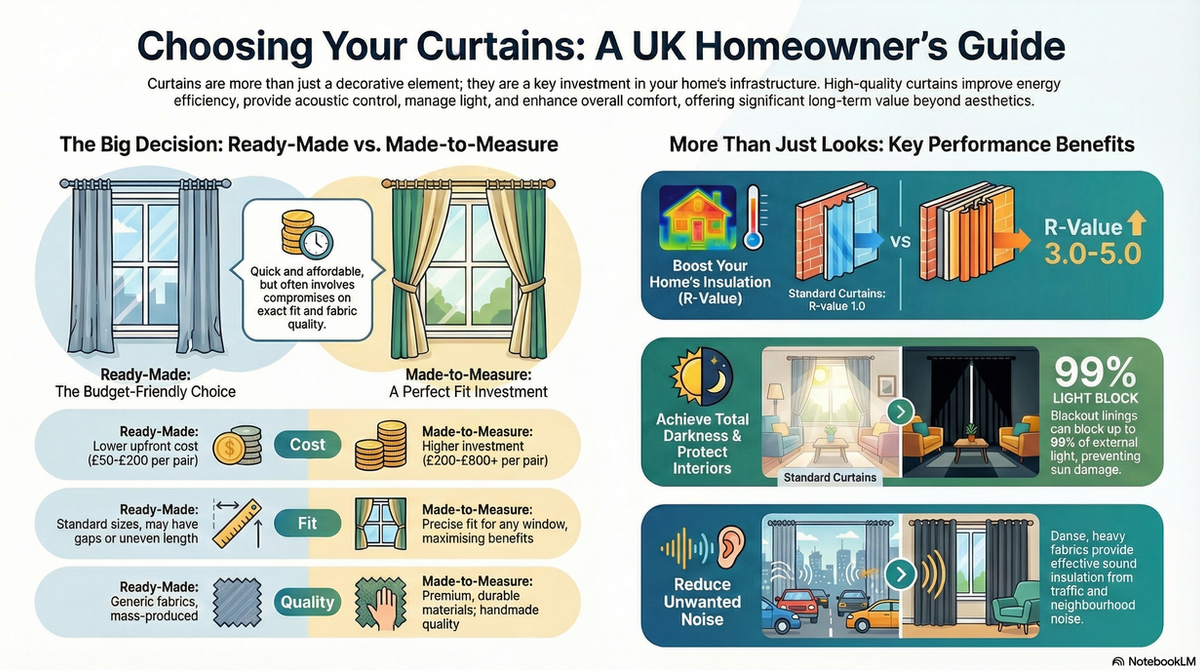
Curtains & Blinds explained
Whether you are installing heavy velvet curtains, delicate Roman blinds, or modern motorised rollers, a specialist installer ensures the hardware is correctly rated for the weight and that all safety regulations are strictly met.
Prices vary based on the number of windows, the complexity of the fixings (e.g., bay windows), and your location in the UK. Most installers charge a minimum call-out fee to cover travel and the first hour of labour.
| Item / Service | Low £ | High £ | Notes |
|---|---|---|---|
| Minimum Call-out Fee | £70 | £110 | Covers travel and small single jobs. |
| Standard Blind Installation (per blind) | £45 | £75 | Reduced rate for multiple windows. |
| Curtain Pole/Track Fitting | £60 | £100 | Excludes the cost of the pole/track. |
| Bay Window Track Fitting | £120 | £250 | Includes bespoke bending or corner joints. | £80 | £150 | Includes programming and limit setting. |
Costs will increase if the installer needs to supply specialist heavy-duty fixings or if they are required to remove and dispose of old, bulky window treatments.
Installing a simple blind into a wooden frame is a manageable DIY task for most. However, many UK homes feature steel or concrete lintels above windows that will defeat a standard cordless drill. Professionals carry high-powered SDS drills and a variety of specialist fixings (like toggle bolts for hollow walls) to ensure the installation doesn't pull out of the wall under the weight of heavy curtains.
Warning: Improperly installed blinds or curtains are a significant safety risk to children and pets. If you are unsure about tensioning cords or secure mounting, always hire a professional.
Yes, though many homeowners prefer "No-Drill" systems like Perfect Fit or INTU blinds that clip into the bead of the window. If drilling into uPVC, it must be done carefully to avoid hitting the glass or internal metal reinforcements.
Standard plastic plugs will fail. Professionals use metal "umbrella" fixings or Gripit anchors that spread the load behind the plasterboard to prevent the pole from pulling away.
Most curtains arrive with "transit creases" from the packaging. A professional fitter will often use a handheld steamer to remove these and "train" the pleats so they hang neatly when open and closed.
Most independent fitters are happy to provide a "fit-only" service for products you've purchased yourself, provided they are the correct size. Always check their minimum call-out fee first.
Generally, a pole should be positioned 10cm to 20cm (4-8 inches) above the window frame to block light effectively and give the room a sense of height.
This guide was written with AI assistance and is intended for general information only. Prices are estimates based on UK averages and may vary by region. Always get at least three quotes and consult a qualified professional before starting any work.
Ask follow-ups in plain English. The AI explains options, sequencing and what to ask the curtains & blinds — so you walk in informed.
Installing conservatory blinds is one of the most effective ways for UK homeowners to reclaim their living space. While conservatories offer beautiful light, th...
READ GUIDE →GuideVenetian blinds are a staple in UK homes, offering a classic look with excellent light control. However, because they rely on a complex system of cords, pulleys...
READ GUIDE →GuideProfessional curtain installation is about more than just aesthetics; it ensures your window treatments are level, secure, and operate smoothly. For UK homeowne...
READ GUIDE →GuideA snapped or frayed curtain cord can render even the most expensive window dressings useless. In the UK, many homes still rely on corded tracks or Roman blind s...
READ GUIDE →GuideVertical blinds are a practical and popular choice for UK homes, particularly for large patio doors and bay windows. While they are durable, the moving parts wi...
READ GUIDE →GuideWooden shutters, often referred to as plantation shutters, are a premium window treatment that offers a timeless aesthetic for UK homes. Beyond their visual app...
READ GUIDE →