Instant
01 · Ask
Ask the AI a follow-up
Got more questions about conservatory Blinds Installation? Describe the bit you're unsure about — the AI explains options, sequencing and what to ask the curtains & blinds.

Roof, side or full set — pleated or pinoleum, hand-cut to each panel for a flush fit.
You've read the brief on conservatory Blinds Installation. Now lean on us to find the right curtains & blinds — and stay in control of the job.
Got more questions about conservatory Blinds Installation? Describe the bit you're unsure about — the AI explains options, sequencing and what to ask the curtains & blinds.
Costs, timelines, pitfalls and the right questions to ask before any curtains & blinds starts on conservatory Blinds Installation.
Itemised quotes from up to 3 local curtains & blindss on conservatory Blinds Installation — so you can compare like-for-like, not lump sums.
Ready when you are
Enter your postcode and get free quotes from local pros.
Four moves that separate a smooth job from a nightmare.
This happens when roof blinds aren't properly tensioned or when non-specialist fabrics are used.
Even a 2mm error can result in light gaps or blinds that catch on the frame.
If blinds are fitted too close to the glass without a gap, it can cause thermal stress and, in rare cases, cracked glass.
Cheaper fabrics without UV stabilizers will bleach and become brittle within one or two UK summers.
Indicative UK ranges and what affects price.
By job type
Quote spread is typically ± 18% — always get 3 quotes.
Curtains & Blinds quick-view
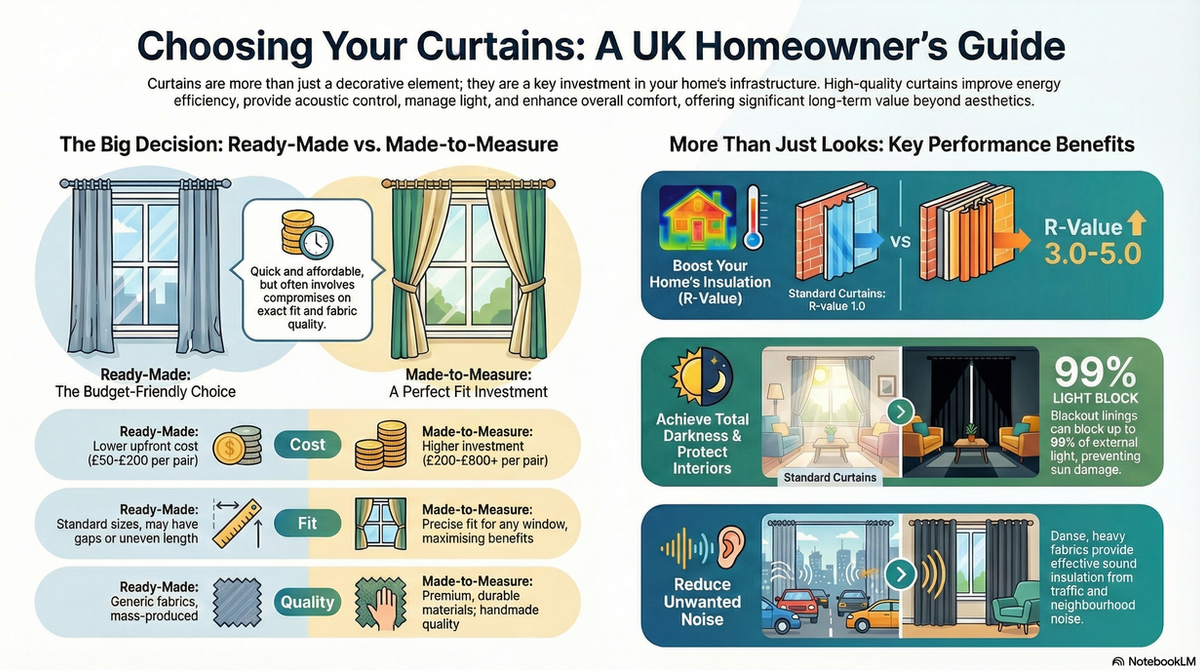
Curtains & Blinds explained
High-quality conservatory blinds do more than just provide shade; they enhance privacy and significantly reduce glare on TV and computer screens. Whether you opt for classic pleated styles, sleek roller blinds, or modern "Perfect Fit" systems, professional installation ensures the fabric handles the unique humidity and temperature fluctuations of a glass-walled room.
| Item | Low £ | High £ | Notes |
|---|---|---|---|
| Survey & Consultation | £0 | £100 | Often waived if you proceed with the order. |
| Side Window Blinds (Per Panel) | £70 | £160 | Includes "Perfect Fit" or pleated styles. |
| Roof Blinds (Per Panel) | £180 | £350 | Higher cost due to tensioning and access. |
| Motorisation Upgrade | £100 | £250 | Per blind, excluding the central hub/remote. |
| Full 3x3m Conservatory (Labour & Materials) | £1,500 | £3,500 | Comprehensive fit-out with mid-range fabric. |
Pricing varies based on the fabric's thermal properties (such as SPC or solar-reflective coatings) and the complexity of the roof shape. Motorised systems and bespoke shapes for Victorian-style conservatories will sit at the higher end of the price spectrum.
Professional conservatory blinds use specialist solar-reflective backings that can reflect up to 85% of solar heat, a feature rarely found in standard off-the-shelf blinds.
While DIY installation is possible for simple side-window roller blinds, conservatory roofs are notoriously difficult. The angles are rarely uniform, and standard blinds will sag if not properly tensioned with specialist wires.
Hiring a professional is highly recommended for conservatory work. They have the specialist ladders and tools to reach roof apexes safely and can offer "no-drill" solutions that protect your uPVC warranty. Furthermore, professionals ensure compliance with BS EN 13120 child safety standards.
Yes. "Perfect Fit" and "Intu" systems use clips that slide between the glass and the rubber gasket of your uPVC windows. These are ideal for conservatories as they leave your frames intact and move with the windows/doors when you open them.
Pleated blinds with a Solar Protective Coating (SPC) or Honeycomb (cellular) blinds are the most effective. The honeycomb structure creates an insulating air pocket, while SPC backings reflect the sun's rays away from the glass.
For roof blinds, motorisation is often essential rather than a luxury. It eliminates the need for long, unsightly poles and allows you to close all blinds simultaneously when the sun moves, which is much more convenient for large glass areas.
Most modern conservatory blinds are made from dust-repellent fabrics. For routine cleaning, use a vacuum with a soft brush attachment. For deeper cleans, a damp cloth can be used on most pleated fabrics, but always check the manufacturer's specific instructions.
Blinds themselves don't stop condensation (which is caused by moisture in the air hitting cold surfaces), but thermal blinds can help keep the glass surface slightly warmer. However, it is vital to leave a small gap for airflow to prevent moisture from becoming trapped behind the fabric.
This guide was written with AI assistance and is intended for general information only. Prices are estimates based on UK averages and may vary by region. Always get at least three quotes and consult a qualified professional before starting any work.
Ask follow-ups in plain English. The AI explains options, sequencing and what to ask the curtains & blinds — so you walk in informed.
Venetian blinds are a staple in UK homes, offering a classic look with excellent light control. However, because they rely on a complex system of cords, pulleys...
READ GUIDE →GuideProfessional curtain installation is about more than just aesthetics; it ensures your window treatments are level, secure, and operate smoothly. For UK homeowne...
READ GUIDE →GuideA snapped or frayed curtain cord can render even the most expensive window dressings useless. In the UK, many homes still rely on corded tracks or Roman blind s...
READ GUIDE →GuideVertical blinds are a practical and popular choice for UK homes, particularly for large patio doors and bay windows. While they are durable, the moving parts wi...
READ GUIDE →GuideWooden shutters, often referred to as plantation shutters, are a premium window treatment that offers a timeless aesthetic for UK homes. Beyond their visual app...
READ GUIDE →GuideConservatories are a fantastic way to add light and space to your home, but without the right blinds, they often become unusable—acting like a greenhouse in sum...
READ GUIDE →