Instant
01 · Ask
Ask the AI a follow-up
Got more questions about curtain Track Installation? Describe the bit you're unsure about — the AI explains options, sequencing and what to ask the curtains & blinds.

Standard or bay-window track — supplied, levelled and fitted with gliders and end-stops.
You've read the brief on curtain Track Installation. Now lean on us to find the right curtains & blinds — and stay in control of the job.
Got more questions about curtain Track Installation? Describe the bit you're unsure about — the AI explains options, sequencing and what to ask the curtains & blinds.
Costs, timelines, pitfalls and the right questions to ask before any curtains & blinds starts on curtain Track Installation.
Itemised quotes from up to 3 local curtains & blindss on curtain Track Installation — so you can compare like-for-like, not lump sums.
Ready when you are
Enter your postcode and get free quotes from local pros.
Four moves that separate a smooth job from a nightmare.
Caused by using standard wall plugs in hollow plasterboard. Use specialist heavy-duty anchors to avoid this.
Often due to dust build-up during installation or a track that has been slightly bent during transport. Silicone spray can often resolve minor friction.
Drilling directly above a window often hits a steel or concrete lintel. Moving the brackets slightly higher or using a metal-specific drill bit is necessary.
In older UK houses, ceilings are rarely flat. Level the track to the window frame rather than the ceiling to avoid a "sloping" appearance.
Indicative UK ranges and what affects price.
By job type
Quote spread is typically ± 18% — always get 3 quotes.
Curtains & Blinds quick-view
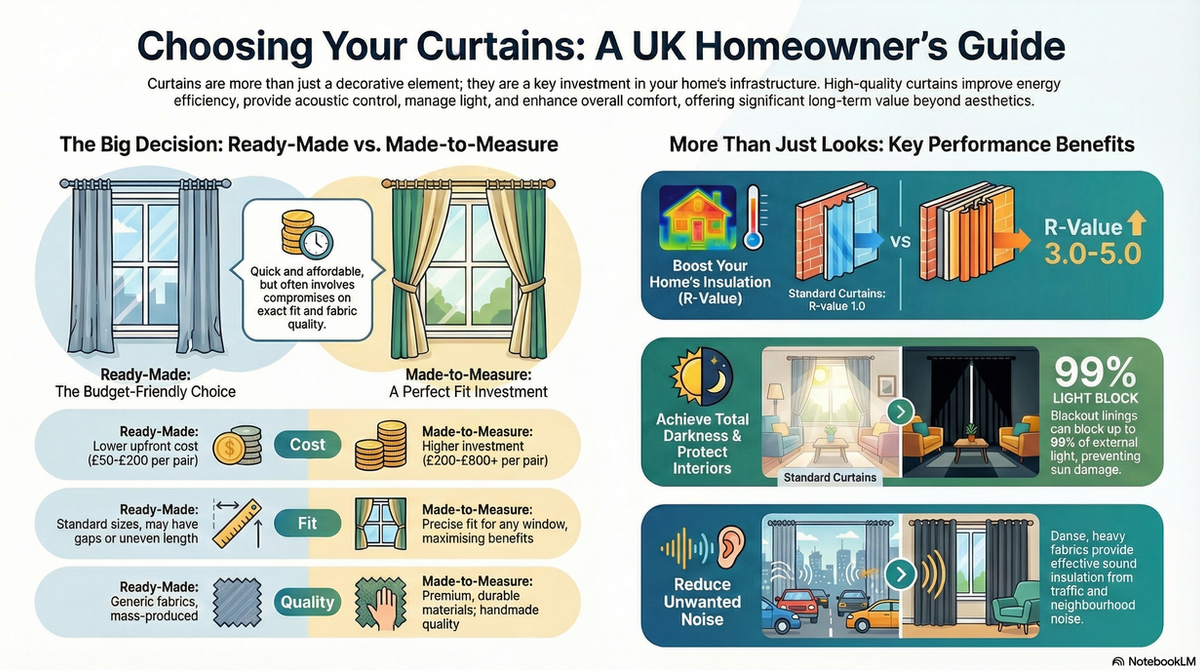
Curtains & Blinds explained
Whether you are fitting a simple PVC track or a heavy-duty corded system for floor-to-ceiling drapes, a professional installation ensures your tracks are perfectly level and securely anchored. This guide covers the essential costs, timeframes, and considerations for getting the job done right in 2025.
Prices for curtain track installation vary based on the complexity of the window and the quality of the hardware. Bay windows are significantly more expensive due to the labour required for bending and precise fitting.
| Item / Service | Low £ | High £ | Notes |
|---|---|---|---|
| Labour (per hour) | £45 | £75 | Minimum 1-hour charge usually applies. |
| Standard Straight Track (3m) | £20 | £60 | Basic PVC or lightweight aluminium. |
| Heavy Duty / Corded Track (3m) | £70 | £180 | Aluminium tracks for heavy velvet drapes. |
| Bay Window Installation (Labour) | £120 | £250 | Includes specialist bending and extra brackets. |
| Electric / Smart Track System | £250 | £600+ | Excludes wiring costs if not battery-powered. |
Total project costs are influenced by your location (London and the South East typically see a 20% premium) and whether the installer needs to provide specialist heavy-duty fixings for modern dry-lined walls.
A confident DIYer can usually handle a straight track on a solid wall. However, professional installation is highly recommended for bay windows, as bending tracks without kinking them requires specialist tools and experience. Furthermore, if you are drilling into modern UK homes with "dot and dab" plasterboard, standard wall plugs will fail under the weight of heavy curtains; a professional will use specialist anchors like Gripit or Snaptoggle fixings to ensure the track stays on the wall.
Always check for hidden steel lintels above windows. Standard masonry bits will not penetrate them, and you may need a cobalt drill bit and specific metal-tapping screws.
Yes, many tracks are designed for "top-fixing" to the ceiling. This is an excellent solution if there is very little space between the window frame and the ceiling, or if the wall is too weak to support brackets.
Generally, you should place a bracket every 50cm to 60cm. However, if your curtains are particularly heavy (such as interlined velvet), you should reduce this spacing to every 30cm-40cm for extra support.
No. Only specific "hand-bendable" aluminium tracks or specialist bay window kits can be shaped. Attempting to bend a standard PVC or rigid metal track will cause it to snap or prevent the gliders from moving.
A pole is decorative and uses rings, whereas a track is more functional and uses gliders. Tracks are generally better for bay windows and can be "top-fixed" to ceilings, which poles often cannot.
Most modern tracks are designed to be low-friction. However, a light spray of dry silicone lubricant (not WD-40, which attracts dust) once a year can keep the gliders moving smoothly.
This guide was written with AI assistance and is intended for general information only. Prices are estimates based on UK averages and may vary by region. Always get at least three quotes and consult a qualified professional before starting any work.
Ask follow-ups in plain English. The AI explains options, sequencing and what to ask the curtains & blinds — so you walk in informed.
Installing conservatory blinds is one of the most effective ways for UK homeowners to reclaim their living space. While conservatories offer beautiful light, th...
READ GUIDE →GuideVenetian blinds are a staple in UK homes, offering a classic look with excellent light control. However, because they rely on a complex system of cords, pulleys...
READ GUIDE →GuideProfessional curtain installation is about more than just aesthetics; it ensures your window treatments are level, secure, and operate smoothly. For UK homeowne...
READ GUIDE →GuideA snapped or frayed curtain cord can render even the most expensive window dressings useless. In the UK, many homes still rely on corded tracks or Roman blind s...
READ GUIDE →GuideVertical blinds are a practical and popular choice for UK homes, particularly for large patio doors and bay windows. While they are durable, the moving parts wi...
READ GUIDE →GuideWooden shutters, often referred to as plantation shutters, are a premium window treatment that offers a timeless aesthetic for UK homes. Beyond their visual app...
READ GUIDE →