Instant
01 · Ask
Ask the AI a follow-up
Got more questions about plantation Shutters Installation? Describe the bit you're unsure about — the AI explains options, sequencing and what to ask the curtains & blinds.

Bay, square or arched windows — measured, manufactured and fitted with clean reveal lines.
You've read the brief on plantation Shutters Installation. Now lean on us to find the right curtains & blinds — and stay in control of the job.
Got more questions about plantation Shutters Installation? Describe the bit you're unsure about — the AI explains options, sequencing and what to ask the curtains & blinds.
Costs, timelines, pitfalls and the right questions to ask before any curtains & blinds starts on plantation Shutters Installation.
Itemised quotes from up to 3 local curtains & blindss on plantation Shutters Installation — so you can compare like-for-like, not lump sums.
Ready when you are
Enter your postcode and get free quotes from local pros.
Four moves that separate a smooth job from a nightmare.
Often caused by using heavy MDF on very wide windows. A pro will recommend lighter hardwood or additional hinges to prevent this.
No shutter is 100% blackout. Small amounts of light will always peak through the louvres and the frame edges.
If the frame depth isn't calculated correctly, you may find it impossible to reach your window handles or open the window fully.
Cheaper, non-UV-rated finishes can yellow over time when exposed to direct British sunlight through the glass.
Indicative UK ranges and what affects price.
By job type
Quote spread is typically ± 18% — always get 3 quotes.
Curtains & Blinds quick-view
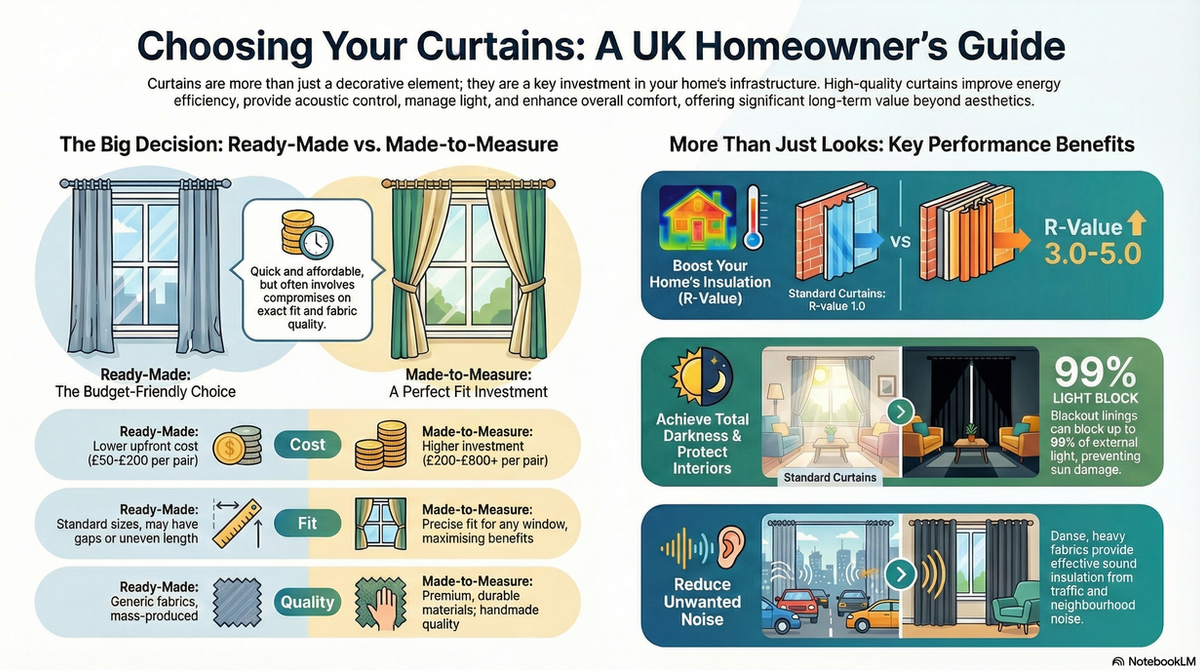
Curtains & Blinds explained
Beyond aesthetics, shutters act as an effective layer of secondary insulation. In the winter, they help retain heat within the room, while in the summer, they reflect solar glare to keep your living spaces cool and comfortable.
Prices for plantation shutters are typically calculated per square metre (m²). The total cost depends heavily on the material chosen—MDF is the most cost-effective, while solid hardwoods and waterproof ABS command a premium.
| Item / Material | Low £ (per m²) | High £ (per m²) | Notes |
|---|---|---|---|
| Craftwood (MDF) | £220 | £350 | Durable, heavy, and budget-friendly. |
| Hardwood (Basswood) | £350 | £500 | Lighter and better for wide windows. |
| Waterproof (ABS/PVC) | £300 | £450 | Essential for bathrooms and kitchens. |
| Installation Labour | £150 | £300 | Flat rate per day or per window basis. |
| Special Shapes | +£100 | +£250 | Additional cost for arches or circles. |
Note: Prices include VAT and are based on 2025/26 UK averages. Expect to pay more for "Tier-on-Tier" styles due to the extra hardware and complexity involved.
While DIY shutter kits are available, they are high-risk. Most UK windows are not perfectly square; a professional installer knows how to "cheat" the frame using packers and caulk to make the shutters look level even in an uneven opening.
A single millimetre error in your measurements can render an expensive custom-made shutter useless. Hiring a professional usually includes a "fit-guarantee," ensuring that if the shutters don't fit, the cost of the replacement falls on the company, not you.
Yes, shutters are one of the best treatments for bay windows. They are installed using special angled frames (90-degree or 135-degree posts) that follow the shape of the bay perfectly, often reclaiming space that bulky curtains would otherwise take up.
Very. Unlike curtains that trap dust and require dry cleaning, shutters only need a quick wipe with a microfibre cloth or a damp sponge. This makes them an excellent choice for UK households with allergy sufferers.
MDF (Craftwood) is denser, heavier, and cheaper; it is ideal for standard small-to-medium windows. Hardwood is lighter and stronger, making it the better choice for large windows or Tier-on-Tier designs where you want to avoid hinge strain.
No. While they significantly darken a room, light will still filtered through the louvre gaps. For total blackout, many homeowners opt for "integrated blackout shutters" which feature a honeycomb blind built into the shutter frame behind the panels.
Yes. The shutter panels sit on hinges and can be swung open 180 degrees to allow full access to the window for cleaning or maximum airflow. Most people, however, leave the panels closed and simply tilt the louvres for daily use.
This guide was written with AI assistance and is intended for general information only. Prices are estimates based on UK averages and may vary by region. Always get at least three quotes and consult a qualified professional before starting any work.
Ask follow-ups in plain English. The AI explains options, sequencing and what to ask the curtains & blinds — so you walk in informed.
Installing conservatory blinds is one of the most effective ways for UK homeowners to reclaim their living space. While conservatories offer beautiful light, th...
READ GUIDE →GuideVenetian blinds are a staple in UK homes, offering a classic look with excellent light control. However, because they rely on a complex system of cords, pulleys...
READ GUIDE →GuideProfessional curtain installation is about more than just aesthetics; it ensures your window treatments are level, secure, and operate smoothly. For UK homeowne...
READ GUIDE →GuideA snapped or frayed curtain cord can render even the most expensive window dressings useless. In the UK, many homes still rely on corded tracks or Roman blind s...
READ GUIDE →GuideVertical blinds are a practical and popular choice for UK homes, particularly for large patio doors and bay windows. While they are durable, the moving parts wi...
READ GUIDE →GuideWooden shutters, often referred to as plantation shutters, are a premium window treatment that offers a timeless aesthetic for UK homes. Beyond their visual app...
READ GUIDE →