Instant
01 · Ask
Ask the AI a follow-up
Got more questions about vertical blackout blind replacement? Describe the bit you're unsure about — the AI explains options, sequencing and what to ask the curtains & blinds.

Replacement louvres for blackout vertical blinds — measured, ordered and fitted to existing head rail.
You've read the brief on vertical blackout blind replacement. Now lean on us to find the right curtains & blinds — and stay in control of the job.
Got more questions about vertical blackout blind replacement? Describe the bit you're unsure about — the AI explains options, sequencing and what to ask the curtains & blinds.
Costs, timelines, pitfalls and the right questions to ask before any curtains & blinds starts on vertical blackout blind replacement.
Itemised quotes from up to 3 local curtains & blindss on vertical blackout blind replacement — so you can compare like-for-like, not lump sums.
Ready when you are
Enter your postcode and get free quotes from local pros.
Four moves that separate a smooth job from a nightmare.
This occurs if the blind is fitted too far forward in the recess or if the vanes don't overlap sufficiently. A professional will calculate the "stack" to minimise this.
If the headrail isn't level, the vanes will look staggered at the bottom. This is often caused by poor bracket placement.
Using a cheap headrail with plastic carriers can lead to the "tilt" function failing, especially with heavier blackout fabrics.
Low-quality blackout fabrics can delaminate or fray at the bottom where they hit the windowsill.
Indicative UK ranges and what affects price.
By job type
Quote spread is typically ± 18% — always get 3 quotes.
Curtains & Blinds quick-view
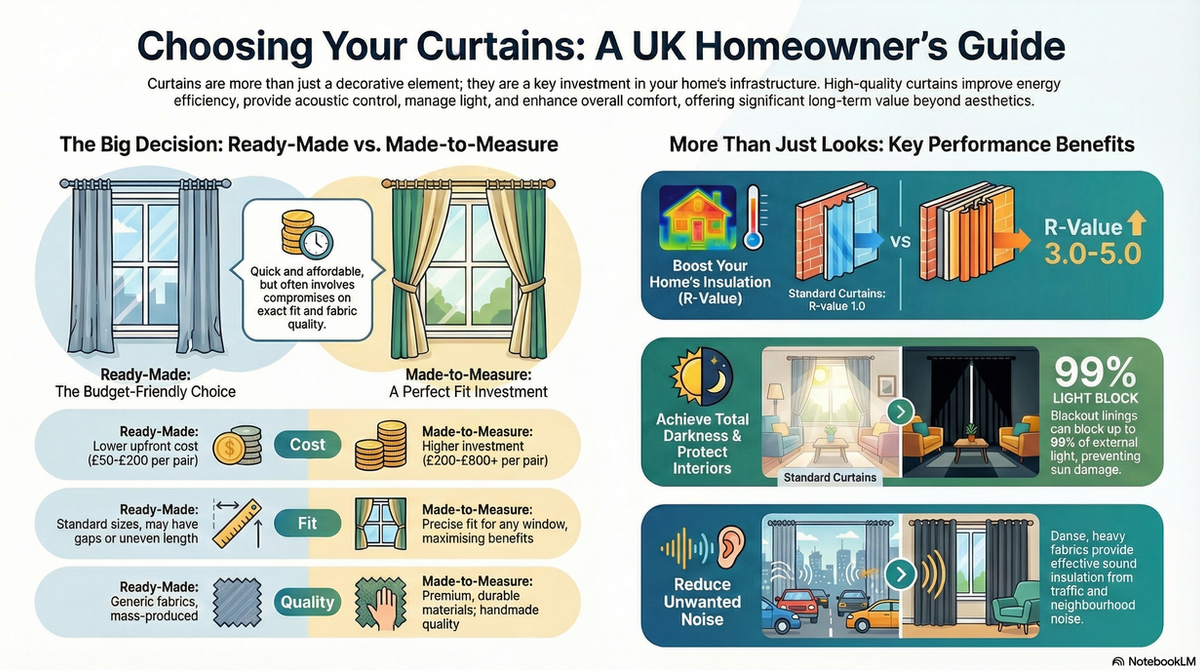
Curtains & Blinds explained
Replacing an old, worn-out vertical blind system not only refreshes the look of your room but can also improve thermal insulation. Modern blackout materials are often thicker and more durable, helping to keep heat in during the winter and reflect solar gain during the summer months.
The cost of vertical blackout blind replacement depends heavily on the window size and the quality of the fabric chosen. Higher-end "thermal blackout" fabrics or motorised headrails will sit at the top end of the pricing scale.
| Item | Low £ | High £ | Notes |
|---|---|---|---|
| Small Window (up to 1.2m) | £110 | £180 | Includes supply and professional fitting. |
| Standard Window (up to 1.8m) | £160 | £280 | Mid-range blackout fabric and headrail. |
| Large Patio Door (up to 3m) | £300 | £550 | Heavier duty track required for wide spans. |
| Vane Replacement Only | £40 | £120 | Replacing slats while keeping the old headrail. |
| Labour (Hourly Rate) | £45 | £75 | Typical UK tradesperson rate (min. 1 hour). |
| Disposal Fee | £10 | £30 | Removal and recycling of old blinds. |
Pro Tip: If your existing headrail is in perfect working order, you can often save 50-60% by simply ordering "replacement vanes" in a blackout fabric. Ensure you check the hanger style (usually a plastic peg) matches your current carriers.
While many UK retailers sell "trim-to-fit" blackout blinds, achieving a professional finish is harder than it looks. Blackout fabrics are heavier than standard polyester, meaning secure fixing into the lintel or window frame is critical to prevent the track from sagging over time.
Hiring a professional ensures that the blinds are compliant with UK Child Safety Regulations. Fitters have the right tools to drill into tough concrete lintels or steel RSJs often found above UK windows, which can easily defeat basic domestic DIY drills.
All internal blinds installed in the UK must comply with BS EN 13120:2009+A1:2014 regarding child safety. This is a legal requirement, not an option.
Yes. You don't always need a new headrail. You can purchase blackout "replacement vanes" which simply hook onto your existing carriers. Just ensure you measure the length of an existing slat accurately from the very top of the fabric to the bottom.
The fabric itself is 100% light-proof, but the system is not. You will always have a small amount of "light bleed" at the top (near the headrail) and at the sides. For total darkness, you would need a "zipped" roller blind system with side channels.
Blackout fabrics have a special coating that blocks all light from passing through the material. Dim-out fabrics are tightly woven to reduce light significantly but will still allow a soft glow to permeate the room.
Chainless vanes have weights sewn into a pocket at the bottom of the slat, removing the need for the plastic connecting chain. They are increasingly popular in the UK as they look neater and are safer for pets who often get caught in the bottom chains.
Most blackout vanes are made of PVC or have a special coating, meaning they can be wiped down with a damp cloth. Unlike standard fabrics, they should never be put in a washing machine, as this will crack the blackout lining.
This guide was written with AI assistance and is intended for general information only. Prices are estimates based on UK averages and may vary by region. Always get at least three quotes and consult a qualified professional before starting any work.
Ask follow-ups in plain English. The AI explains options, sequencing and what to ask the curtains & blinds — so you walk in informed.
Installing conservatory blinds is one of the most effective ways for UK homeowners to reclaim their living space. While conservatories offer beautiful light, th...
READ GUIDE →GuideVenetian blinds are a staple in UK homes, offering a classic look with excellent light control. However, because they rely on a complex system of cords, pulleys...
READ GUIDE →GuideProfessional curtain installation is about more than just aesthetics; it ensures your window treatments are level, secure, and operate smoothly. For UK homeowne...
READ GUIDE →GuideA snapped or frayed curtain cord can render even the most expensive window dressings useless. In the UK, many homes still rely on corded tracks or Roman blind s...
READ GUIDE →GuideVertical blinds are a practical and popular choice for UK homes, particularly for large patio doors and bay windows. While they are durable, the moving parts wi...
READ GUIDE →GuideWooden shutters, often referred to as plantation shutters, are a premium window treatment that offers a timeless aesthetic for UK homes. Beyond their visual app...
READ GUIDE →