Instant
01 · Ask
Ask the AI a follow-up
Got more questions about drop Kerb Installation? Describe the bit you're unsure about — the AI explains options, sequencing and what to ask the driveways.

Council-approved drop kerb — application, vehicle crossing build and final inspection.
You've read the brief on drop Kerb Installation. Now lean on us to find the right driveways — and stay in control of the job.
Got more questions about drop Kerb Installation? Describe the bit you're unsure about — the AI explains options, sequencing and what to ask the driveways.
Costs, timelines, pitfalls and the right questions to ask before any driveways starts on drop Kerb Installation.
Itemised quotes from up to 3 local drivewayss on drop Kerb Installation — so you can compare like-for-like, not lump sums.
Ready when you are
Enter your postcode and get free quotes from local pros.
Four moves that separate a smooth job from a nightmare.
Finding gas or water mains too close to the surface can stop a project or significantly increase costs for "sleeving."
Applications are often denied if the proposed crossing is too close to a junction or a bus stop.
If the kerb is not installed with the correct fall, water may pool on the pavement or run into your garage.
If a mature council-owned tree is within a certain distance (usually 1-3 metres), the application may be refused to protect the root system.
Indicative UK ranges and what affects price.
By job type
Quote spread is typically ± 18% — always get 3 quotes.
Driveways quick-view
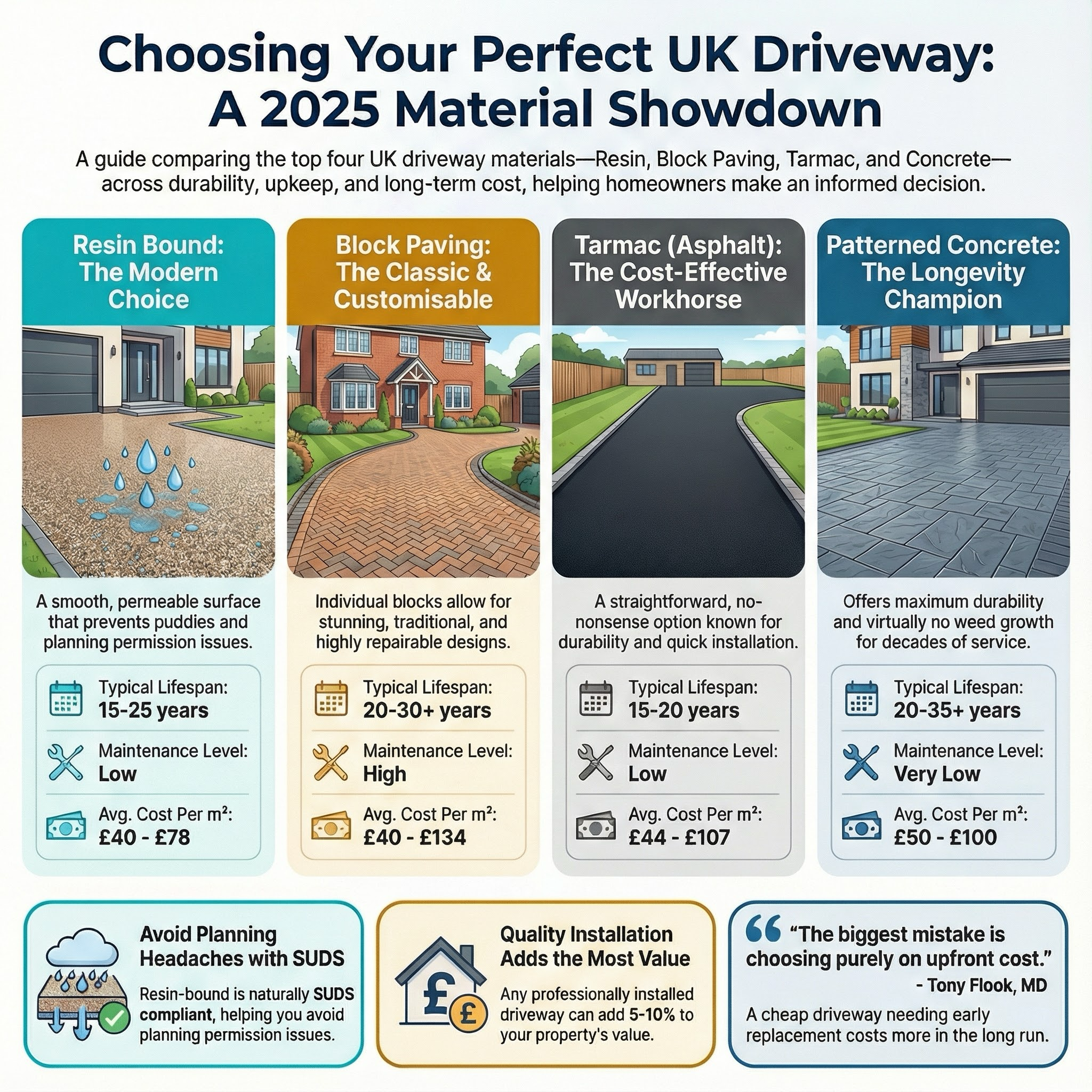
Driveways explained
Installing a drop kerb involves more than just swapping stones; it requires precise engineering to protect underground utilities and ensure the footway remains safe for pedestrians. This guide covers everything from council permits to the final tarmac finish.
The cost of a drop kerb varies significantly based on the width of the crossing (usually measured in 'kerb units') and your local council's specific fees. The figures below reflect realistic 2025/26 UK averages for a standard 3-to-4-metre crossing.
| Item | Low £ | High £ | Notes |
|---|---|---|---|
| Council Application Fee | £150 | £450 | Non-refundable, varies by borough. |
| Standard 3-4 Unit Installation | £1,000 | £1,800 | Includes labour, materials, and waste. |
| Extended Crossing (5+ units) | £1,800 | £3,000 | For wider driveways or shared access. |
| Utility Pipe Protection | £300 | £1,500+ | If gas/water mains need extra shielding. |
Price factors include the thickness of the pavement required by the council, the need to relocate street furniture (like lamp posts), and whether you are in a high-cost area like London or the South East.
This is not a DIY project. In the UK, it is illegal for an unqualified person to work on the public highway. You must hire a contractor with NRSWA (New Roads and Street Works Act) accreditation, often referred to as "Street Works" certification.
Most local authorities maintain a list of approved contractors; using an unapproved worker can result in the council removing the work at your expense.
When hiring a driveway specialist for a drop kerb, look for the following qualifications and ask these specific questions:
Questions to ask:
In most cases, no. However, if your home is on a classified road (A, B, or C road) or in a conservation area, you will likely need full planning permission before applying for the highways license.
No. This is illegal and can damage the pavement and any pipes underneath. If the council notices, they can install bollards to block your access or send you a bill for repairs.
A standard crossing typically consists of 3 or 4 flat "dropper" stones in the middle, flanked by two angled "taper" stones on either side.
Highways departments are often understaffed, and they must check your request against safety standards and utility maps. Expect a minimum of 6 weeks for a response.
The lamp post may need to be moved. This must be done by the council's lighting contractor and can cost between £1,500 and £3,000, which the homeowner must pay.
This guide was written with AI assistance and is intended for general information only. Prices are estimates based on UK averages and may vary by region. Always get at least three quotes and consult a qualified professional before starting any work.
Ask follow-ups in plain English. The AI explains options, sequencing and what to ask the driveways — so you walk in informed.
Combining paving slabs with artificial grass is one of the most popular garden transformations for UK homeowners. This pairing offers a "best of both worlds" so...
READ GUIDE →GuideGravel is one of the most versatile and cost-effective landscaping solutions for UK homeowners. Whether you are looking to create a low-maintenance border, a tr...
READ GUIDE →GuideInstalling garden slabs is one of the most effective ways to transform an underutilised outdoor space into a functional, all-weather seating area. Whether you a...
READ GUIDE →GuideA driveway is more than just a place to park; it is the first impression your home makes and a significant factor in its market value. In the UK, our fluctuatin...
READ GUIDE →GuideNeglected pathways and parking spaces are more than just an eyesore; they represent a significant slip hazard and can lead to expensive structural damage. Over ...
READ GUIDE →GuideA brick-paved patio is a timeless addition to any British garden, offering a durable and aesthetically pleasing space for outdoor entertaining. Unlike large pav...
READ GUIDE →